Osprey and Weakfish by Audubon, John James
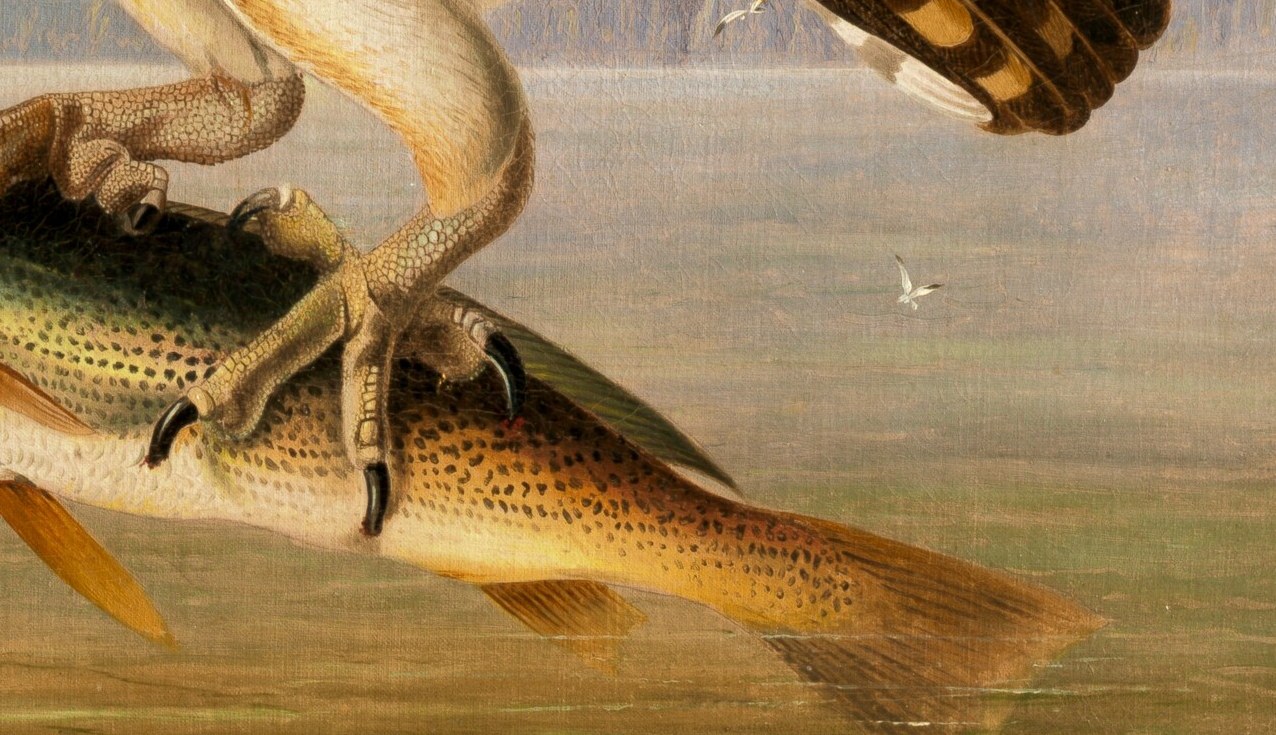
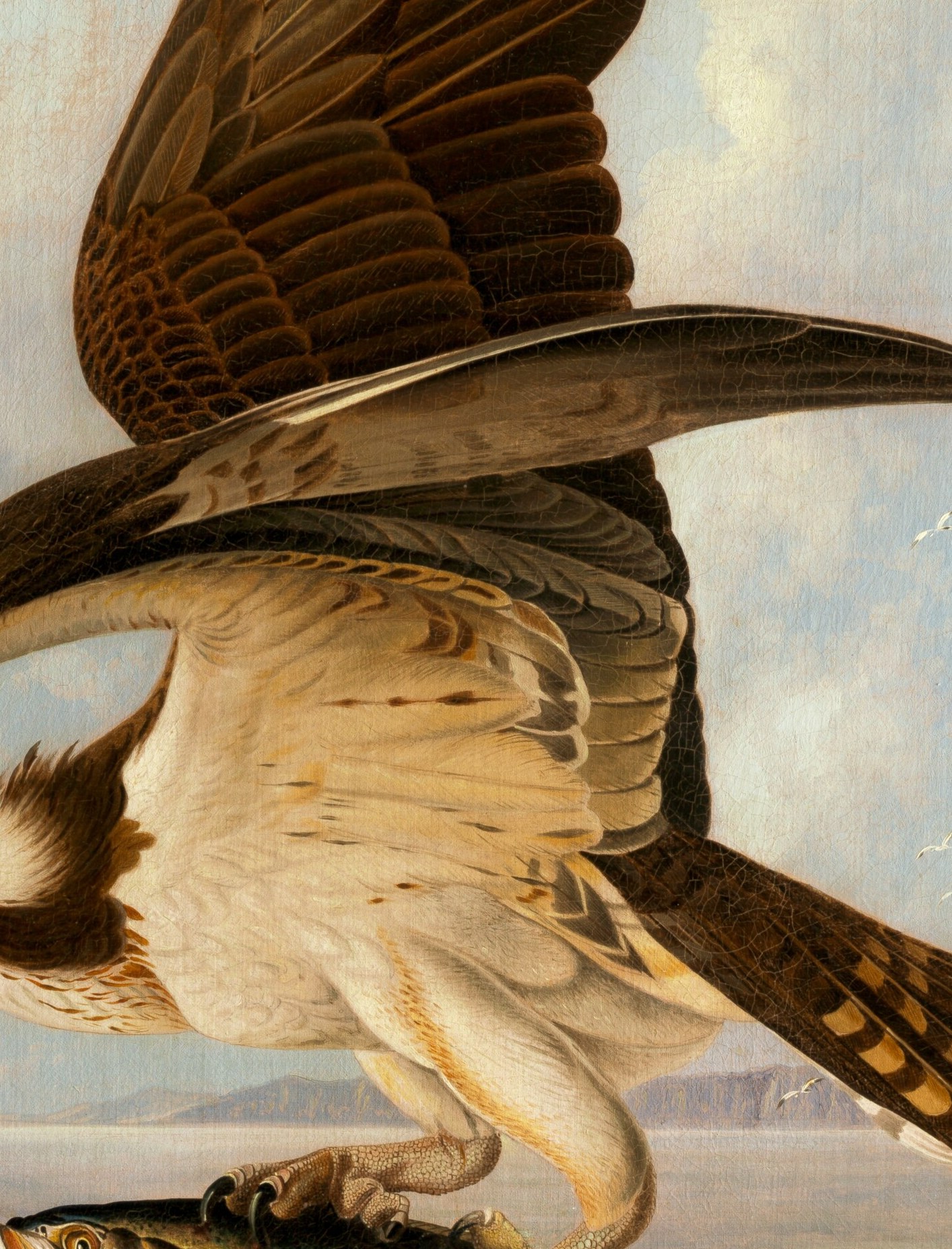
This is 'Osprey and Weakfish' by John James Audubon, painted in 1829.
It's an unusual work in his career, an oil on canvas, not a watercolor. By the time he painted this, Audubon was deep into his all-consuming project to document every bird in North America. The main event was 'The Birds of America,' a series of 435 hand-colored engravings printed on enormous sheets of paper. But those engravings cost a fortune to produce, and Audubon was perpetually broke. To keep the lights on, he painted independent oil works like this one, selling them directly to patrons and collectors.
Look at the osprey's eye and the talons locked around the fish. You can see Audubon's specific trick: he posed freshly-killed specimens on wires and boards in his studio, so he could render every feather and scale with surgical precision. The shimmer on the weakfish's body is a study in white and blue highlights, meant to show it was pulled right from the water.
In the end, his financial gamble worked. Complete sets of 'The Birds of America' now rank among the most expensive books ever sold. A single set fetched $11.5 million at auction. This painting, a side hustle to fund that masterpiece, is part of the same desperate, brilliant bet.
Details
Transcript
Before he painted this, Audubon was bankrupt and in debtor's prison. His plan to get out: paint every bird in North America life-size. The finished book had 435 plates. This was not one of them. He painted this oil in 1829 to sell to a private collector and fund the engravings. A single set of his finished books sold at auction for $11.5 million.