Arrival of the Boats by Jacob Maris
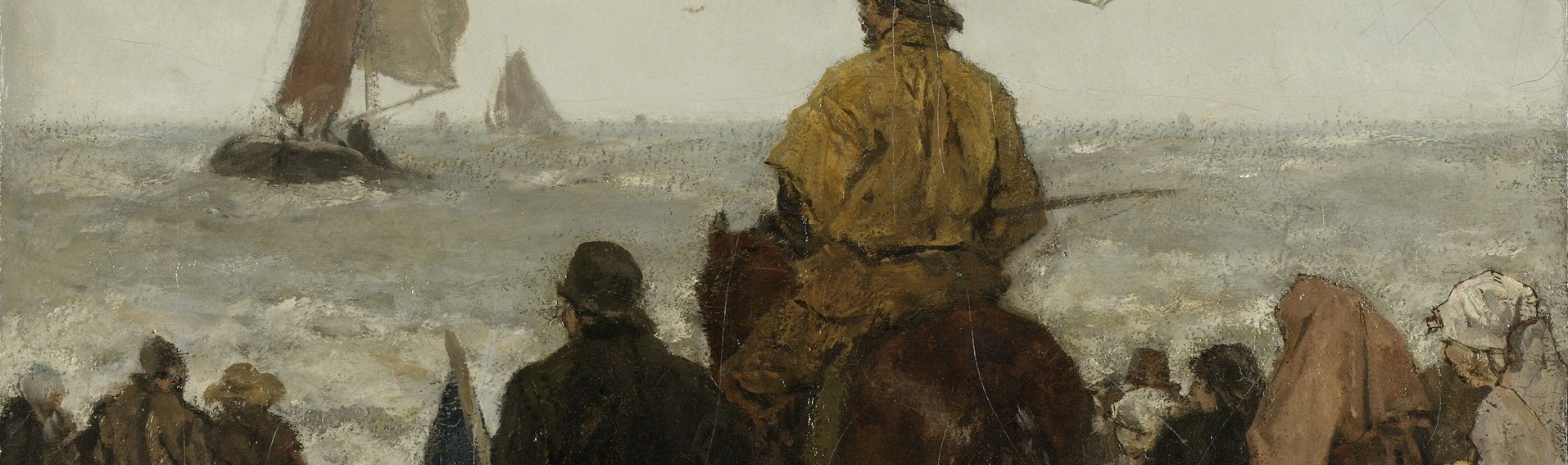
Jacob Maris, a prominent artist of the Hague School, painted *Arrival of the Boats* in 1892. This oil painting, housed at the Rijksmuseum, exemplifies his focus on capturing the daily life and atmospheric conditions of the Dutch landscape and coast.
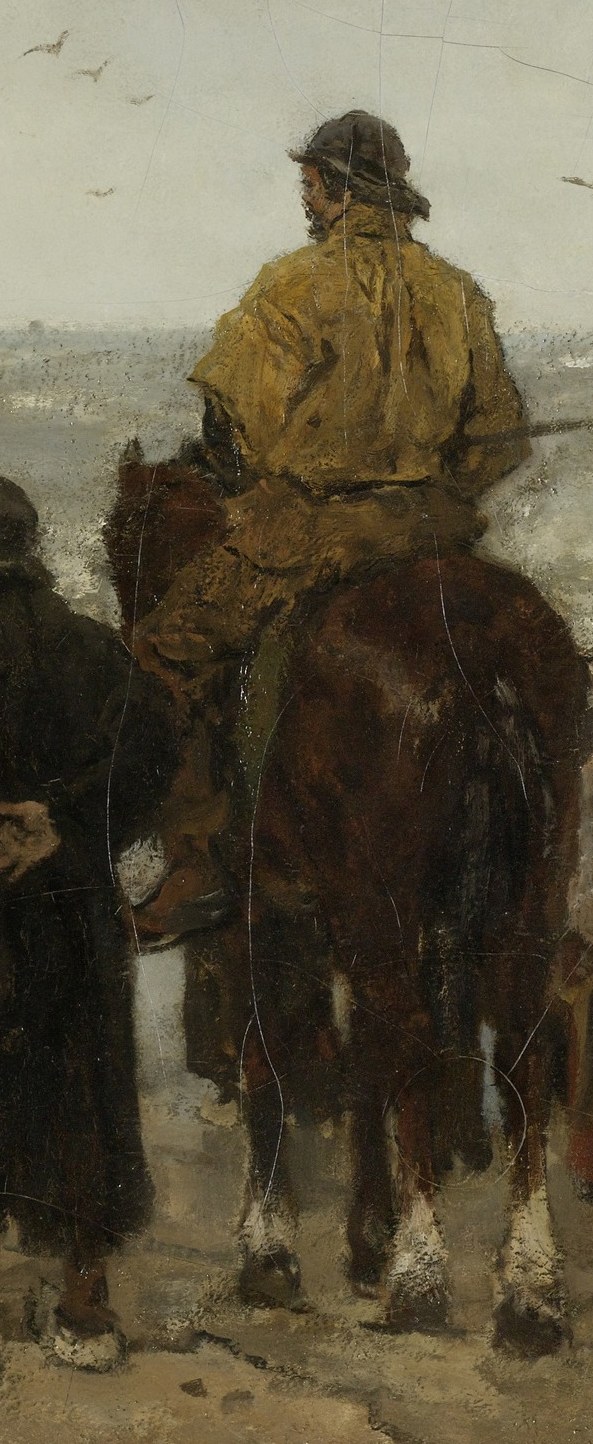
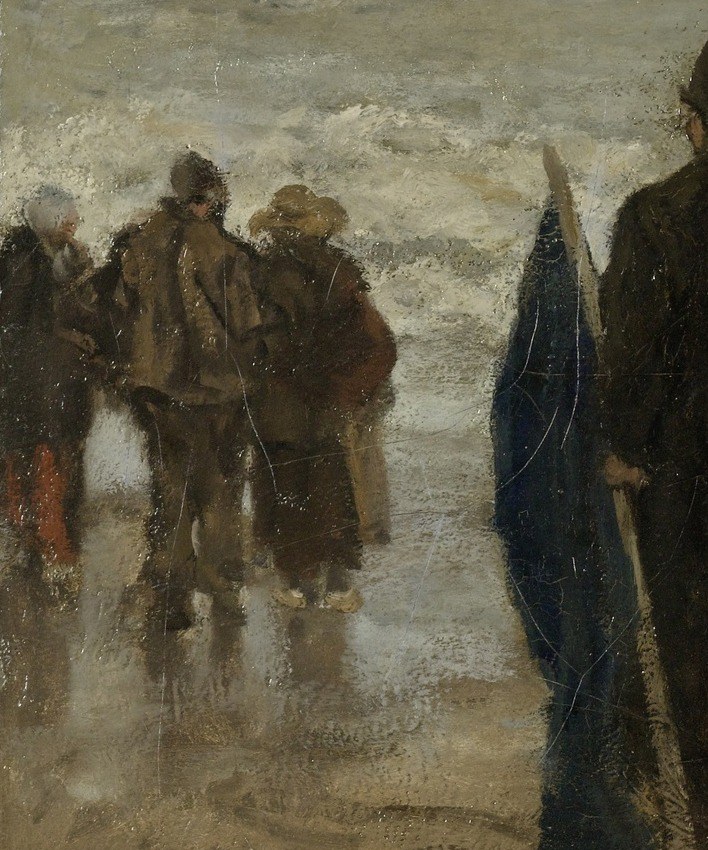
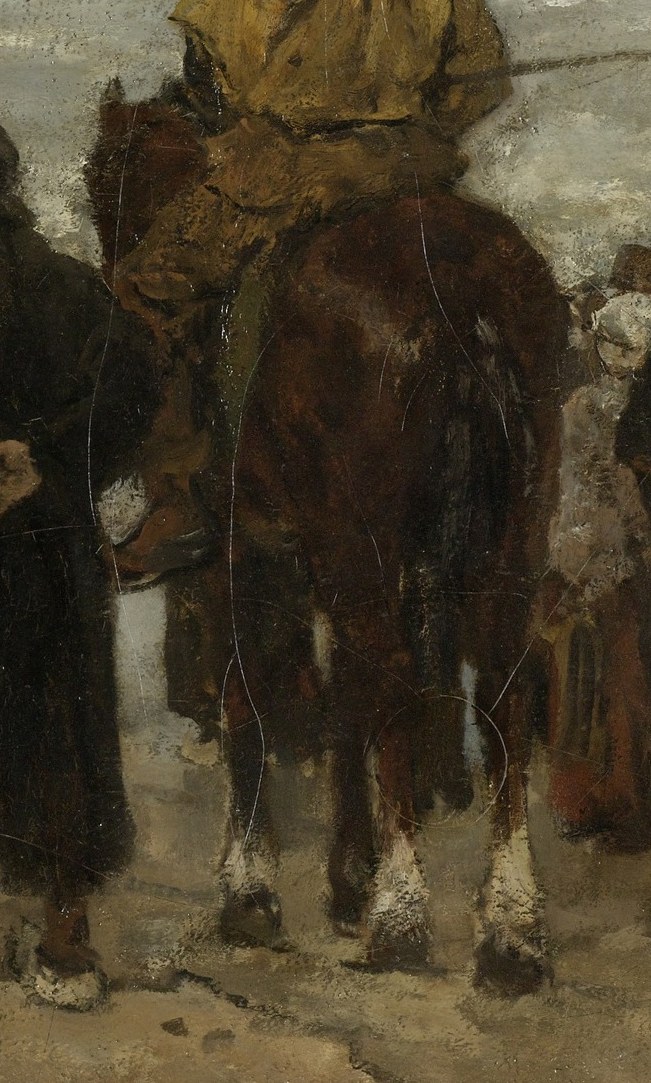
Look closely at the figures gathered on the sandy beach; their gazes are drawn towards the sailboats with red sails and other distant boats arriving on the horizon. The central horseman in a yellow coat and the huddled groups suggest a communal anticipation of the day's maritime activity.
Maris was known for his loose, rapid brushstrokes, a technique that gives the painting a raw, immediate quality, akin to a sketch. This approach beautifully conveys the transient effects of light and the dynamic mood of the sea and sky, making him one of the most influential Dutch landscape painters of his era.
This painting is a vivid historical witness to a late 19th-century coastal community, relying on the sea for its rhythm and livelihood. What details capture your eye the most?
Details
Transcript
In the late 19th century, Dutch coastal life centered on the sea. This painter was a leader of the Hague School, capturing everyday scenes. Look at the horseman in yellow, observing the incoming vessels. Many villagers gather, their eyes fixed on the distant boats. The loose, rapid brushstrokes capture the light and atmosphere. It’s a naturalistic snapshot of a working beach, full of life.