Young Ladies of the Village by Gustave Courbet
View the artwork: Young Ladies of the Village →
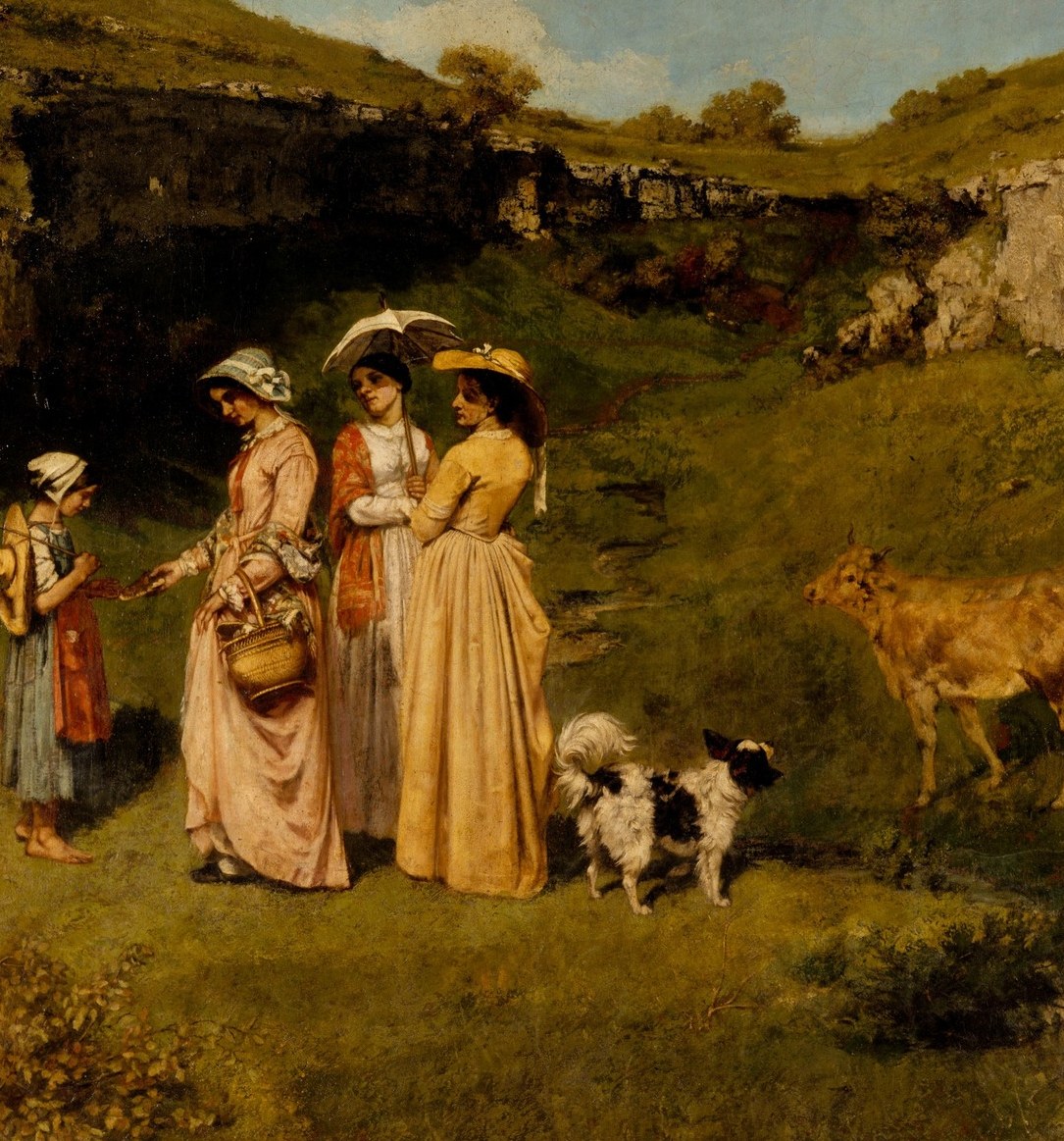
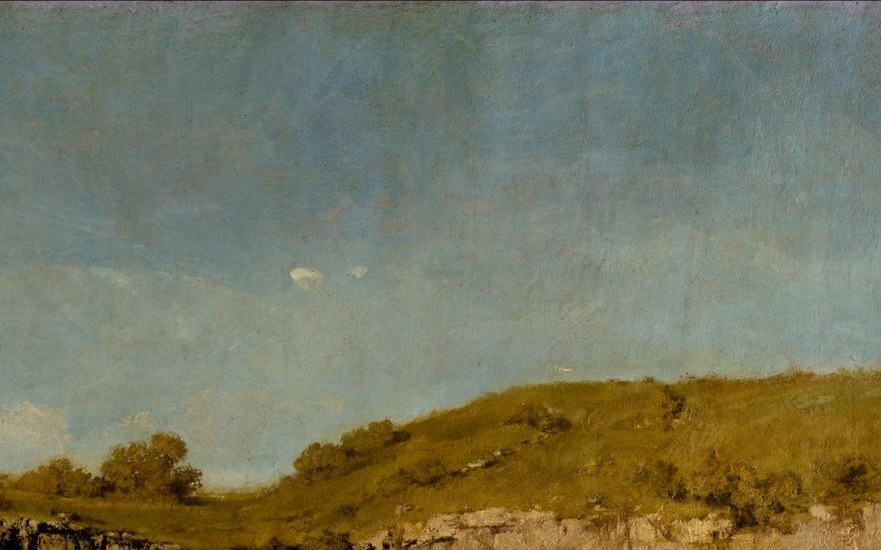
Gustave Courbet painted his three sisters, Zélie, Zoé, and Juliette, into this nearly two-meter-tall canvas, but not to flatter them. He set them in the rugged Communal near Ornans, dressed in simple, outmoded dresses that lacked the fashionable crinolines of the 1850s. Critics at the 1852 Paris Salon ridiculed the painting as provincial and unrefined precisely because of these deliberate choices.
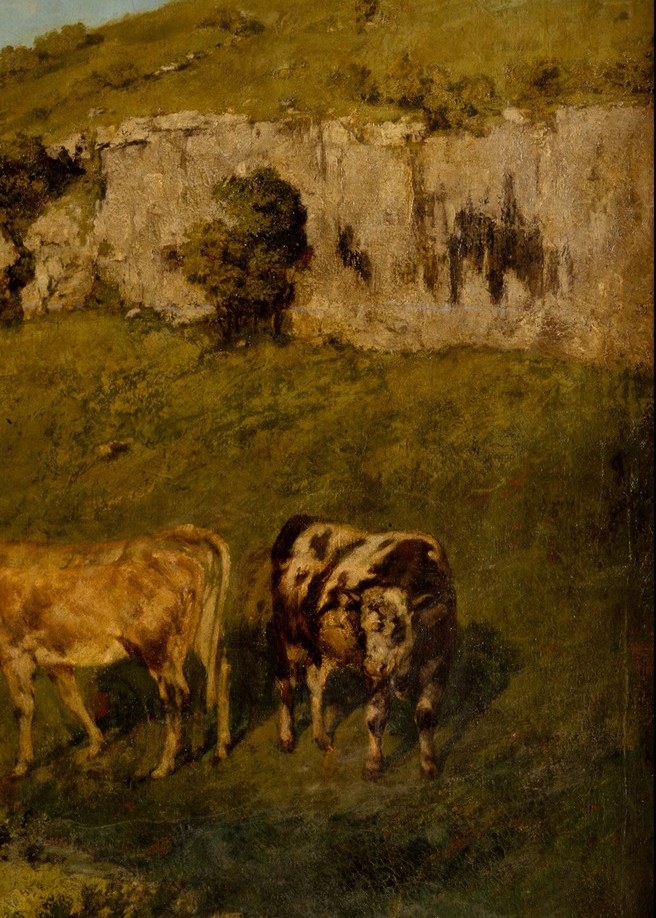
Look first at Zélie's outstretched arm. She offers bread to a barefoot young cowherd, the smallest figure in the frame. That gesture, the exact point of contact between bourgeois and rural worlds, is the narrative hinge Courbet built the entire composition around. Then scan downward. A tiny white lapdog stands directly beside working cattle, a class contrast planted where most viewers never look.
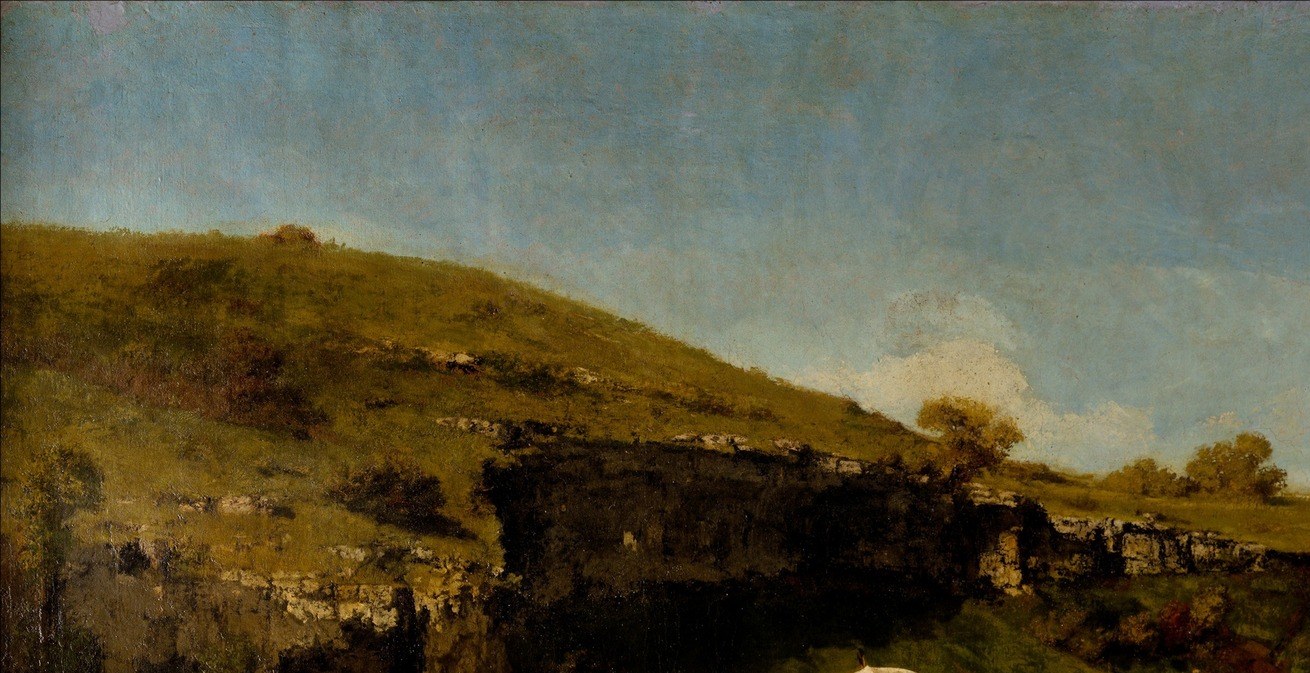
Courbet was the leader of the Realism movement, committed to painting only what he could see. Here he painted his homeland's limestone geology with documentary precision and dressed his own sisters in deliberately plain clothes. The result was a painting that challenged every convention about what deserved to be shown on a monumental scale.
Next time you see a country scene, ask yourself: who is being shown, and what are they wearing?
#arthistory #courbet #realism
Details
Transcript
These three women are the artist's own sisters. Zélie offers a piece of bread to a barefoot cowherd. Courbet dressed them in deliberately unfashionable dresses. Critics mocked these gowns as absurd for a country walk. Look lower. A small white lapdog stands beside working cattle. The dog is a class symbol Courbet planted at ground level.