Harvest Scene by Winslow Homer (American, 1836–1910)
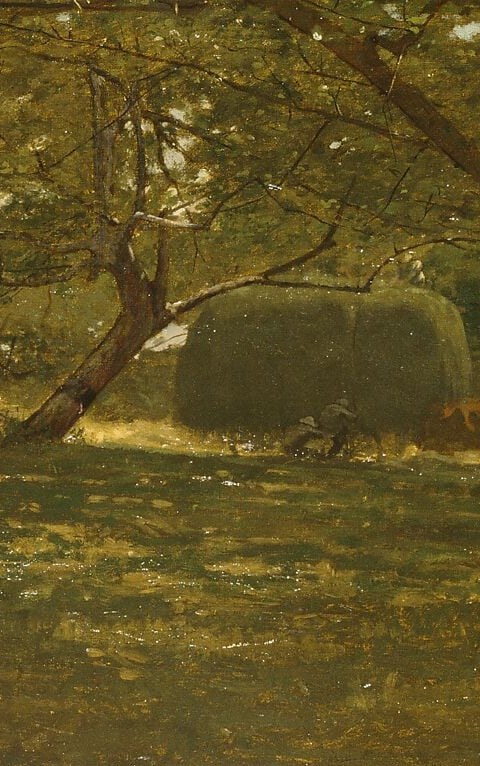
Winslow Homer's Harvest Scene, painted around 1873, is on view at The Metropolitan Museum of Art's American Wing. It looks like a serene study of a vanishing rural America, but it was born from a professional crisis. Homer had just abandoned a successful career as a commercial illustrator to be taken seriously as a painter, and the New York art world did not applaud.
Look at the base of that large central tree. Homer loads the oil paint heavily there, creating a tactile crust that separates the rough bark from the smooth, luminous gold of the cut field. He was teaching himself what oil paint could do. This is an artist in transition, building a landscape from density and weight, not just line.
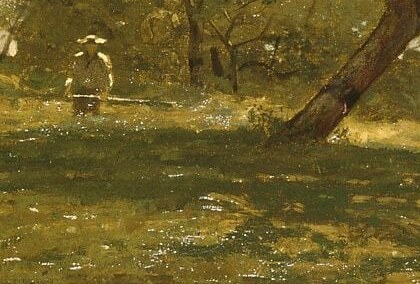
His former colleagues at Harper's Weekly had dismissed his ambition. The art establishment saw an illustrator playing with a palette. Homer's answer was this canvas: a document of American light and labor that owed nothing to narrative convention. The solitary worker on the left and the women in white caps are not posed. They are just working, and Homer's close study of them was a challenge to anyone who thought he could not see, or paint, at the highest level.
He left illustration for good not long after. The painting is the quietest declaration of independence you will ever see.
Details
Transcript
It feels like a perfect late-summer afternoon. Golden fields, quiet labor, a tree holding the sky. But in 1873, this painting was an act of professional war. Homer had just quit illustration to become a fine artist. His old colleagues mocked him. So he made this. Every loaded brushstroke was a reply. He proved them wrong with a field of wheat.