Madonna and Child with Saints Francis and Jerome by Francesco Francia
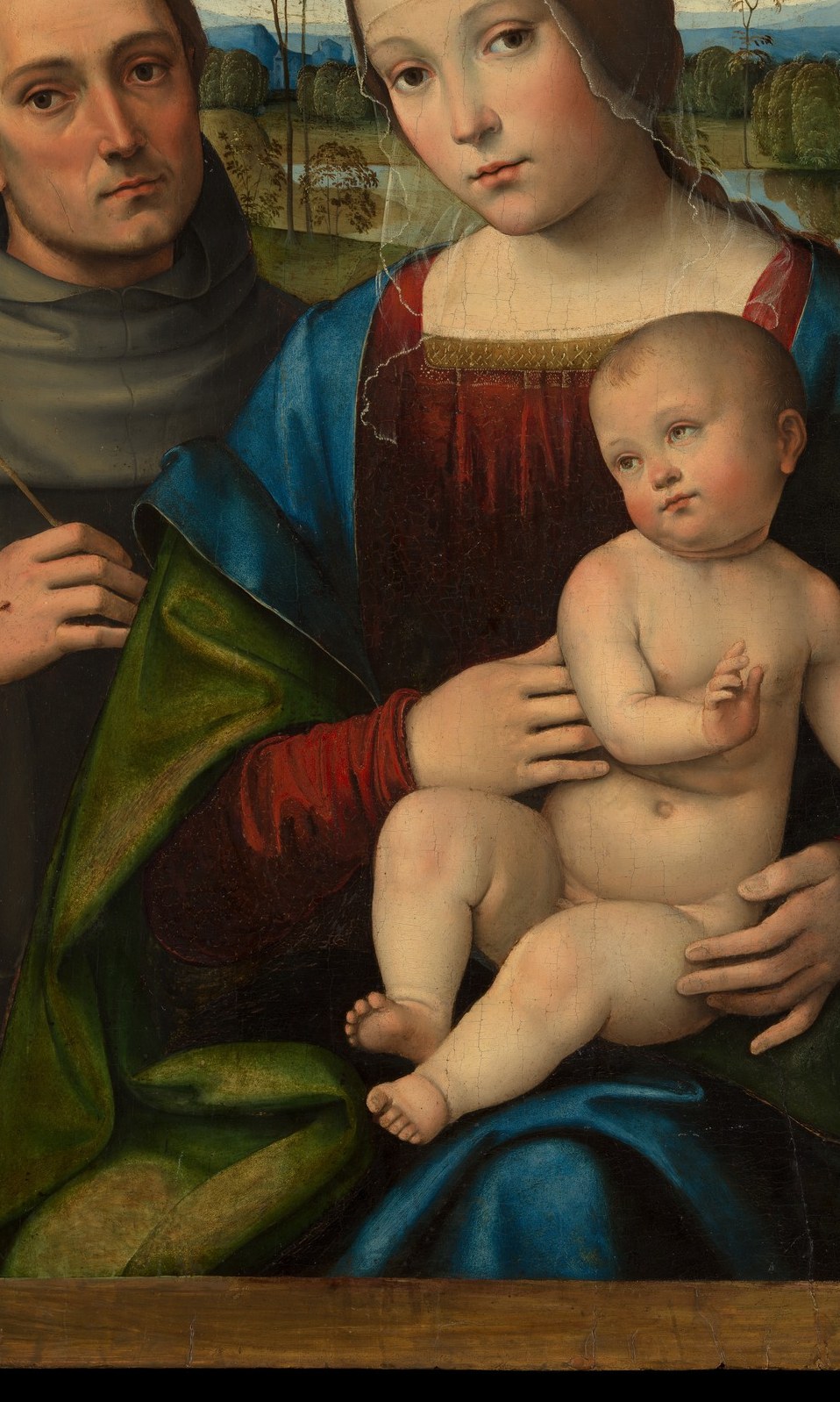
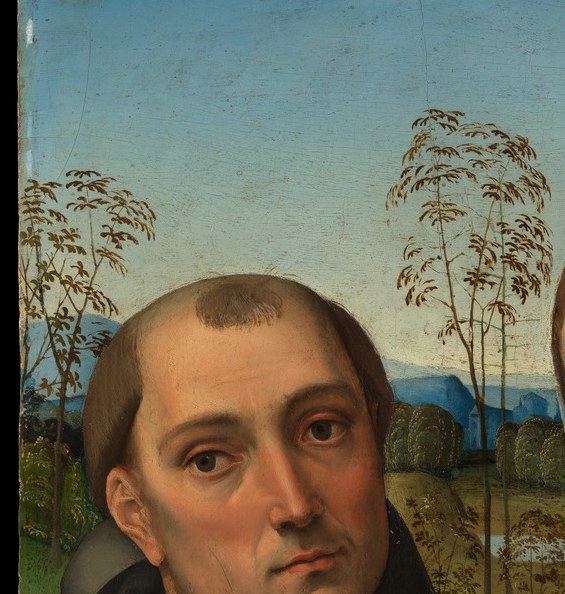
Francesco Francia's 'Madonna and Child with Saints Francis and Jerome' (1505) has been quietly overlooked, sitting at a fame rank of 1459 despite its painter's extraordinary reputation in his own time. Francia was not only Bologna's leading painter but also its trusted mint master, a goldsmith whose eye for precious materials passed directly into his tempera.
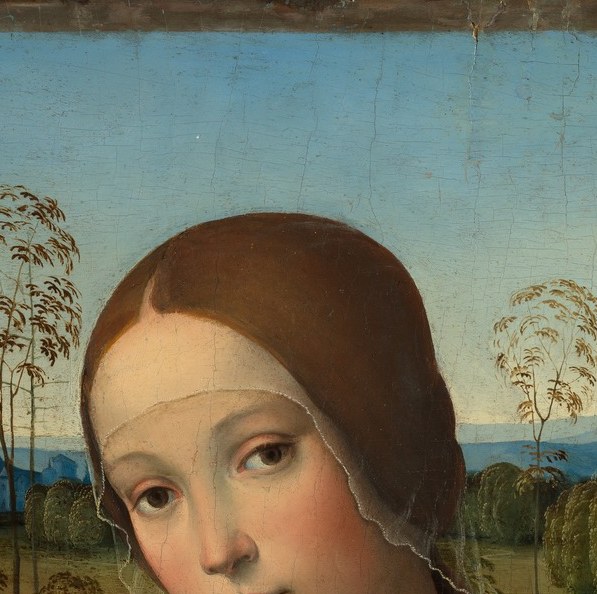
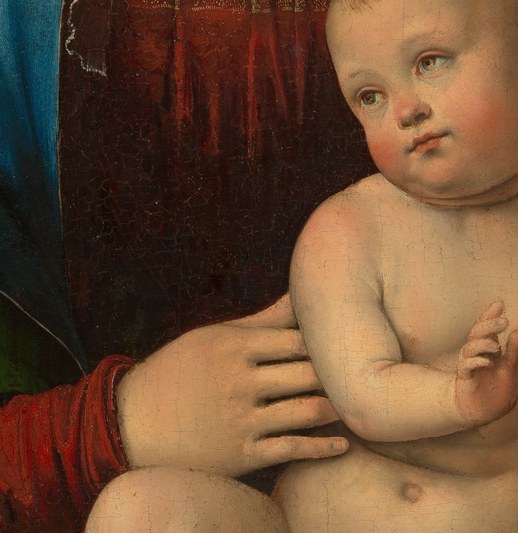
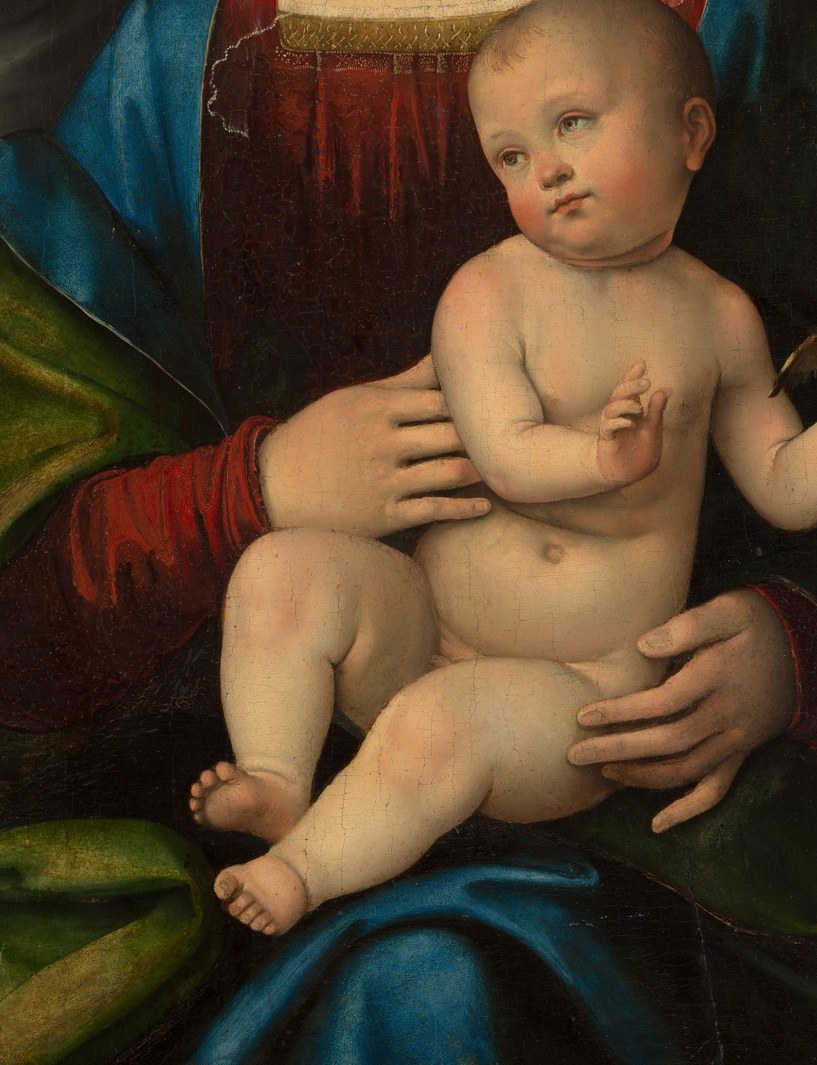
Look into the blue of Mary's mantle. That is pure ground lapis lazuli, the most expensive pigment in the Renaissance, applied with the precision of a man who weighed gold for a living. The Virgin's face carries the soft, downcast grace Francia learned from Perugino, while the Christ Child looks outward with startling directness. To either side, Saint Francis displays the stigmata wounds and Saint Jerome holds his book of scholarship.
Then there is the story Vasari tells. In 1508, the young Raphael sent his 'St. Cecilia' to a church in Bologna. Francia, then in his sixties, was asked to install it. Upon seeing the painting, he was so overcome by its superiority to his own work that he fell into a deep melancholy and died not long after. True or not, the legend has clung to him for five centuries, coloring his reputation as the master who came just before the earthquake.
The painting lives at the National Gallery in London. What do you think actually overwhelmed the old master: a younger man's genius, or the sudden shadow of a future he had helped make possible?
Details
Transcript
It seems like the perfect Renaissance altarpiece. Mary, serene. Two great saints in quiet devotion. Francesco Francia was Bologna's most honored painter. He was also the city's mint master, trusted with its gold. That perfect blue is ground lapis lazuli, weighed in gold. Francia's art was gentler than Florence, softer than Venice. But when Raphael sent a work to Bologna, Francia saw it and died.