Three Potowotomie Indians by Catlin, George
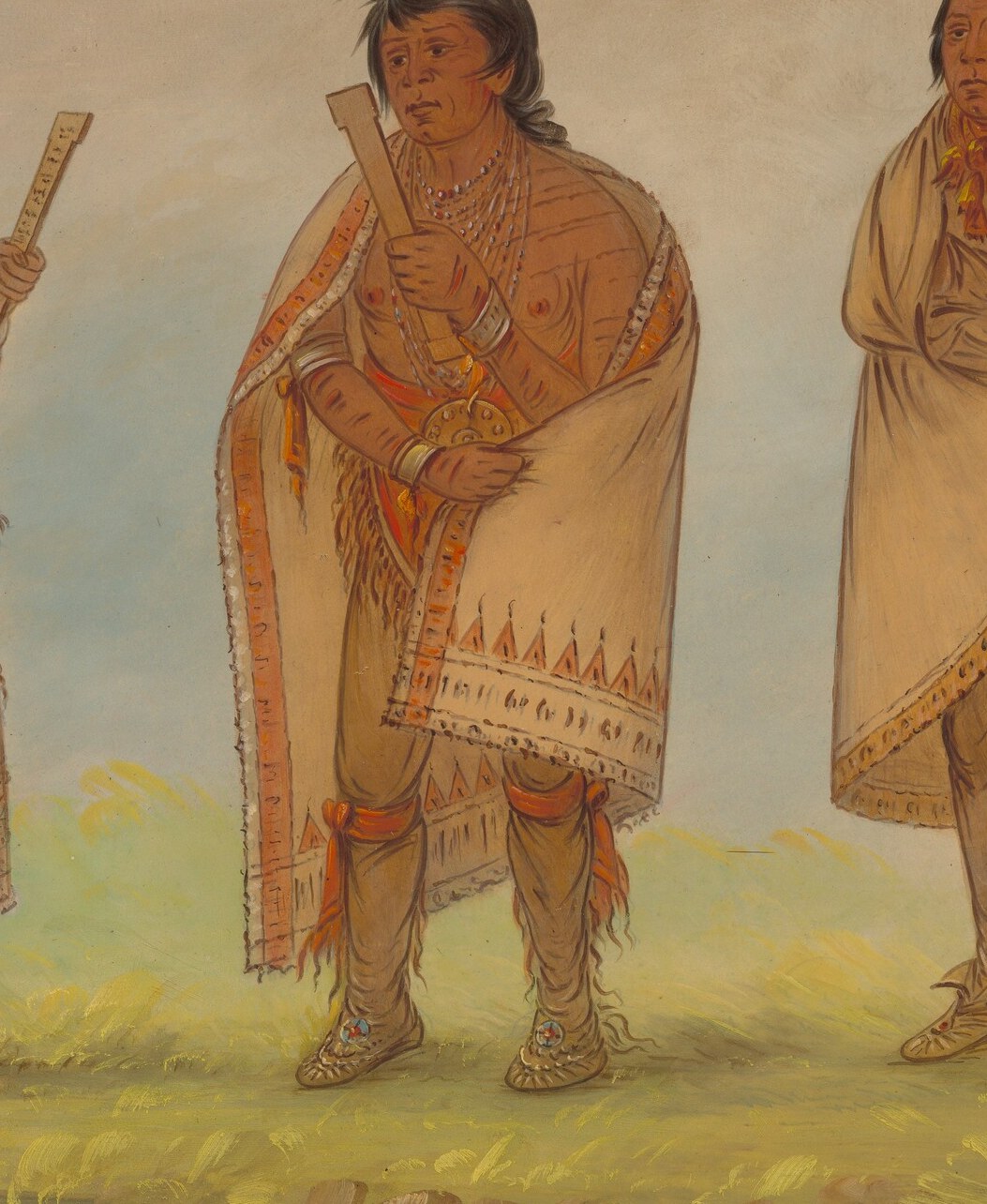
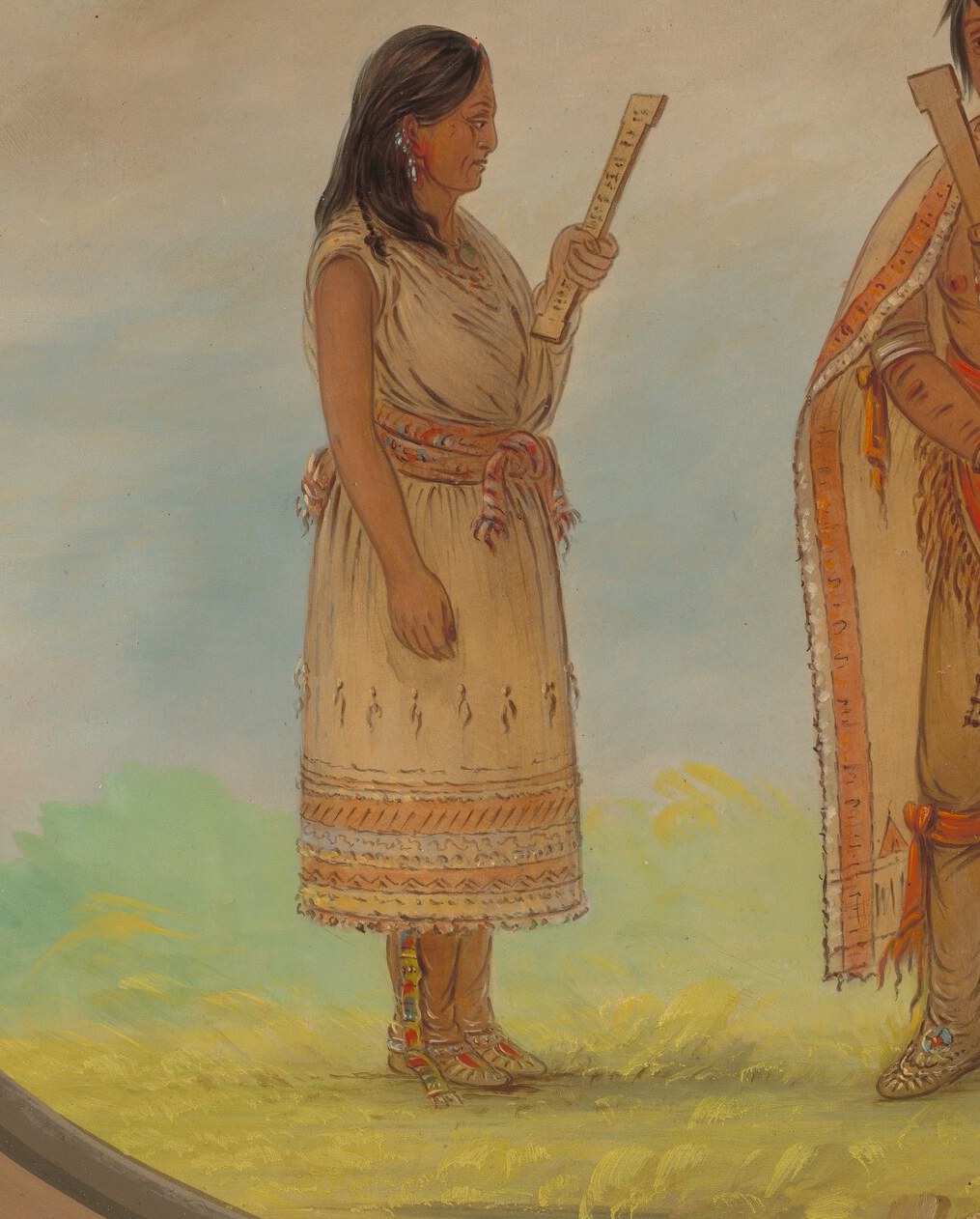
George Catlin’s “Three Potowotomie Indians” (1865) is not a casual group portrait. It is a careful document. Catlin, a lawyer who quit the bar to paint, traveled the American West five times in the 1830s. He believed he was recording a way of life that was disappearing. This painting, done decades later from his sketches, shows three leaders in full regalia.
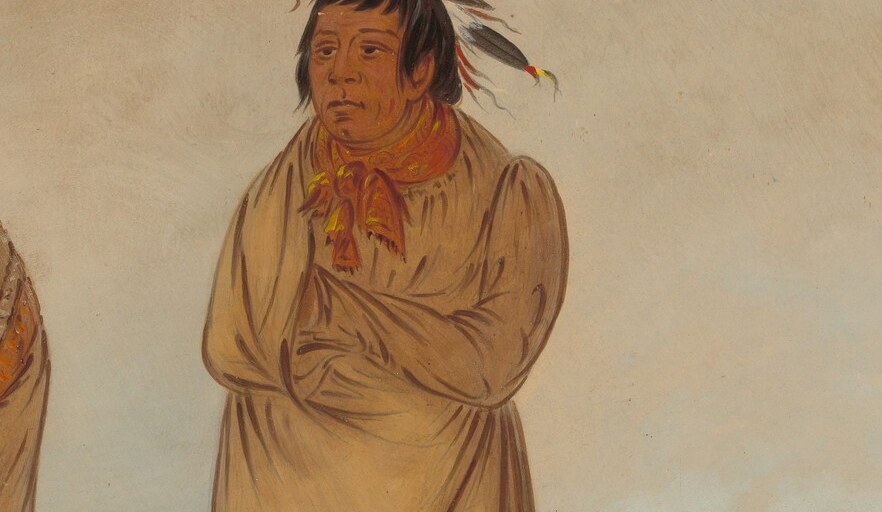
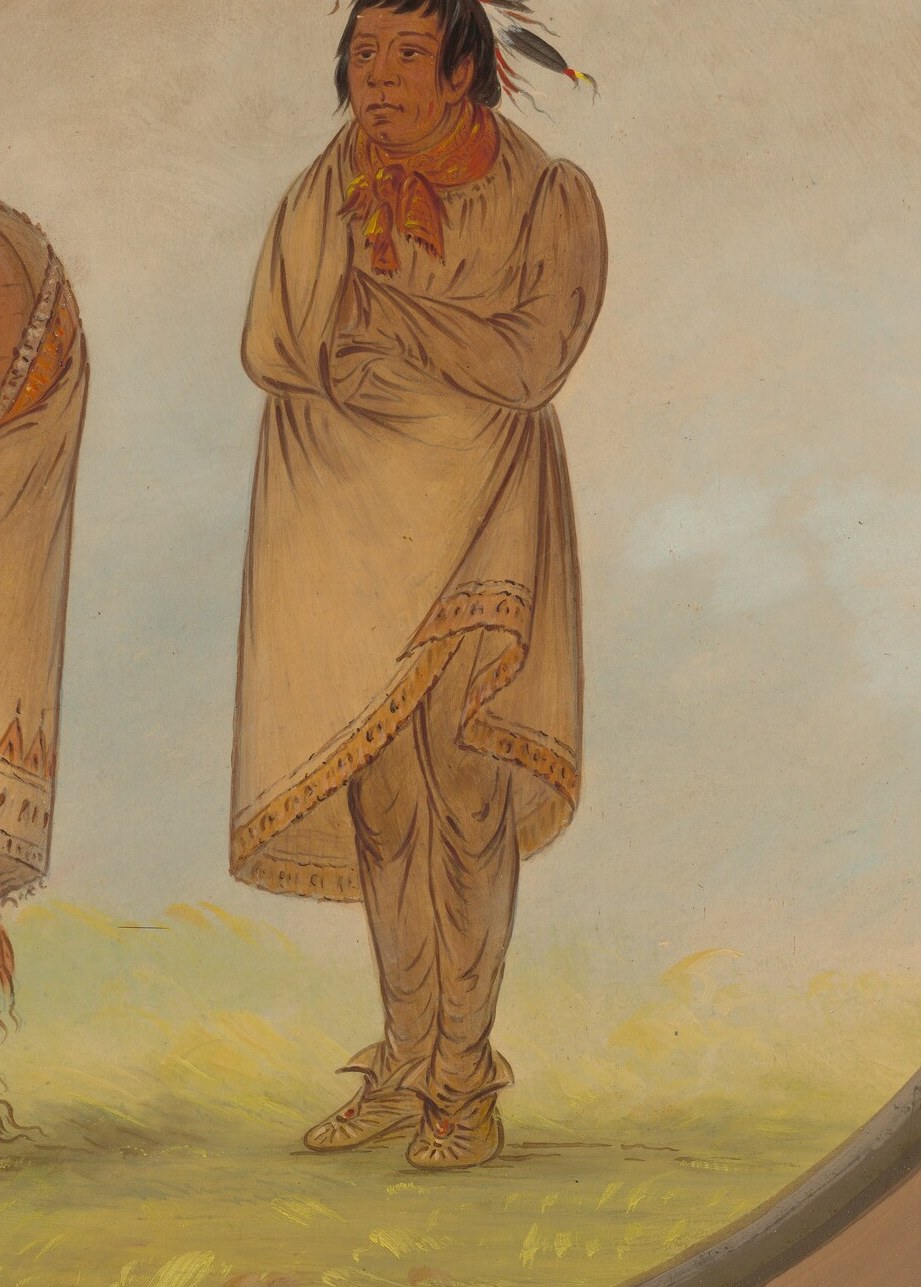
Every object here is a code. The man in the center holds a pipe, a ceremonial object used to open negotiations and seal agreements. The woman on the left carries a flat rectangular object, likely the written treaty itself, or a petition to be presented. The eagle feathers worn by the man on the right are not decoration; they are earned markers of bravery, worn by someone whose words carry weight.
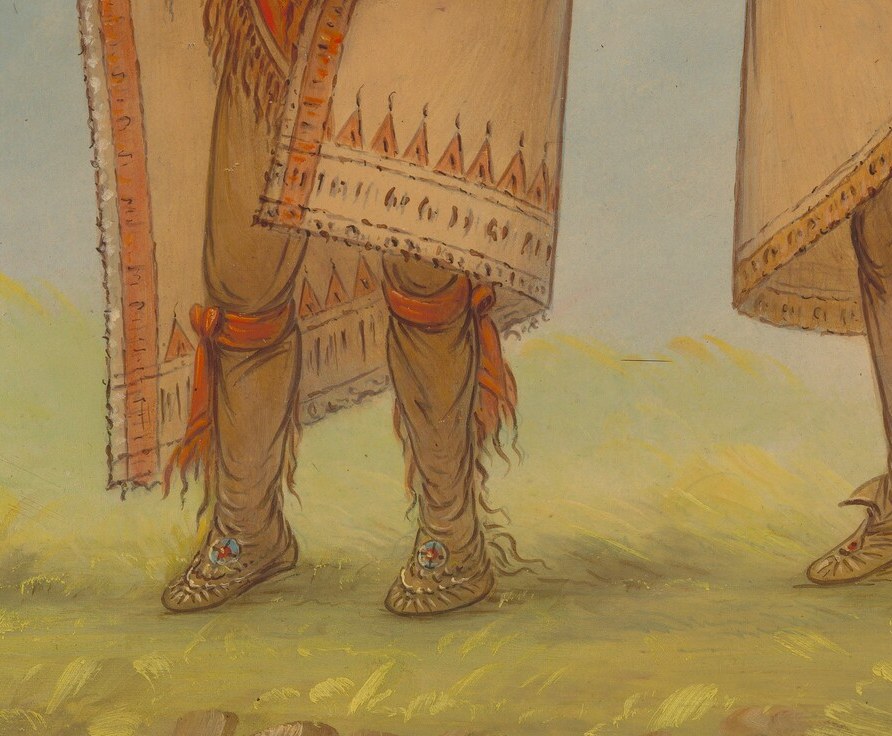
Catlin’s style is plain, almost folk-art in its directness. He paints the trim on the skirts, the texture of the feathers, and the posture of the hands with the same factual eye. The muted hills in the background fade away so that nothing distracts from the cultural information the clothing and objects carry. The number “73” painted at the top reminds us this was once an inventory entry in a larger collection.
The hand on the chest is the emotional key. It suggests a man weighing heavy words. This is not a fantasy of the “noble savage.” It is a portrait of three diplomats, and the conversation they are having is about the future of their people. What do you think the man with the pipe has just said?
Details
Transcript
A lawyer turned painter made five trips west in the 1830s. This pipe marks him as a man of authority, permitted to lead council. The object she carries is likely a written treaty to be discussed. The eagle feathers, high on his head, signal a warrior of distinction. His hand on his chest answers: he is considering the terms. Three leaders, documented by Catlin for an audience that saw them vanishing.