Snap the Whip by Winslow Homer (American, 1836–1910)
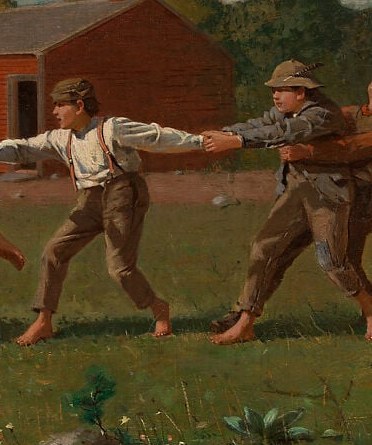
Winslow Homer painted Snap the Whip in 1872, and it lives now at the Metropolitan Museum of Art. The game it shows is exactly what the title says: a human chain whips across a field until centrifugal force snaps the end boys loose. Homer was a commercial illustrator before he taught himself oil painting, and you can feel that training in how cleanly the composition reads, the eye travels the chain left to right and lands on the two boys already tumbling into the grass.
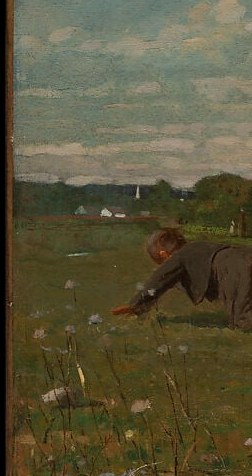
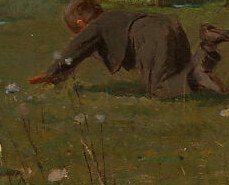
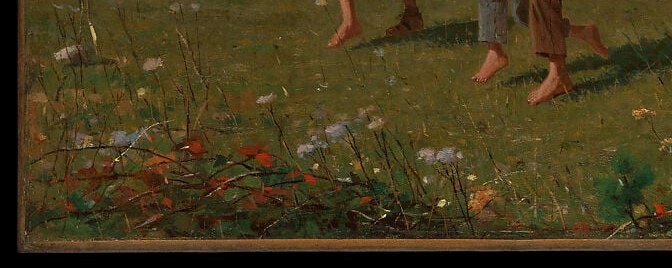
But the painting is more than its action. Once you see the dark dog standing alone in the mid-ground on the left, the scene shifts from a posed arrangement to a full, lived afternoon. That dog is a quiet witness, easy to miss, and it deepens the whole world. Down in the foreground, Homer broke his brushwork into flecks of color, wildflowers in the summer grass that reward anyone who leans in close.
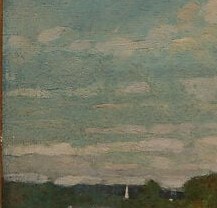
Homer was building something deliberate here. This is post-Civil War America, and he chose to paint barefoot boys on a sunlit field in front of a red schoolhouse, a vision of irretrievable childhood and rooted community. The white farmhouse barely visible on the far left horizon anchors the schoolyard inside a wider rural life. Every boy is dressed differently; these are not generic symbols. They are specific kids on a specific day.
The game is about trust and the moment it breaks. Homer painted both halves of that truth, the linked hands in the center and the fallen boys at the edge, and then he surrounded them with a whole country summer most people scroll right past.
Details
Transcript
A chain of boys tears across a summer field. The game is snap the whip. The anchor boy plants his feet and leans back hard. His whole body is the hinge the others depend on. At the far end, two boys have already been flung loose. But look past the tumbling boys, into the mid-ground shadow. A dark dog has been watching the whole game. And under all that motion, Homer painted a full field of wildflowers. He did this in 1872, building an American pastoral one overlooked detail at a time.