A Game of Horse and Rider by Fragonard, Jean Honoré
Jean Honoré Fragonard painted A Game of Horse and Rider around 1778, during the last years of the ancien régime. It hangs today in the National Gallery of Art in Washington, D.C. The canvas is a window into a very specific, very fragile moment: the leisure of the French aristocracy, captured just over a decade before the Revolution would sweep it away.
Look first at the man in the red vest, his arms thrown wide in invitation. He anchors a game of blind man’s bluff called Horse and Rider, in which a blindfolded child stumbles after laughing playmates. The tangle of children on the ground, the woman lying contentedly in the grass, the distant boats on the water, all of it is lit by the dappled, golden light that was Fragonard’s signature.
Fragonard had been the star of French painting since his triumph at the Royal Academy in 1765. But by 1778, the taste that made him famous was souring. The king was dying. Voltaire died that same year. Rousseau, too. A new moral seriousness was taking hold in the arts, and Fragonard’s shimmering Rococo idylls were beginning to look like a world that no longer existed.
That is what makes this painting quietly devastating. It is not just a scene of play. It is a record of a society at play, preserved in oil, by a painter who could feel the ground shifting under his feet.
Details
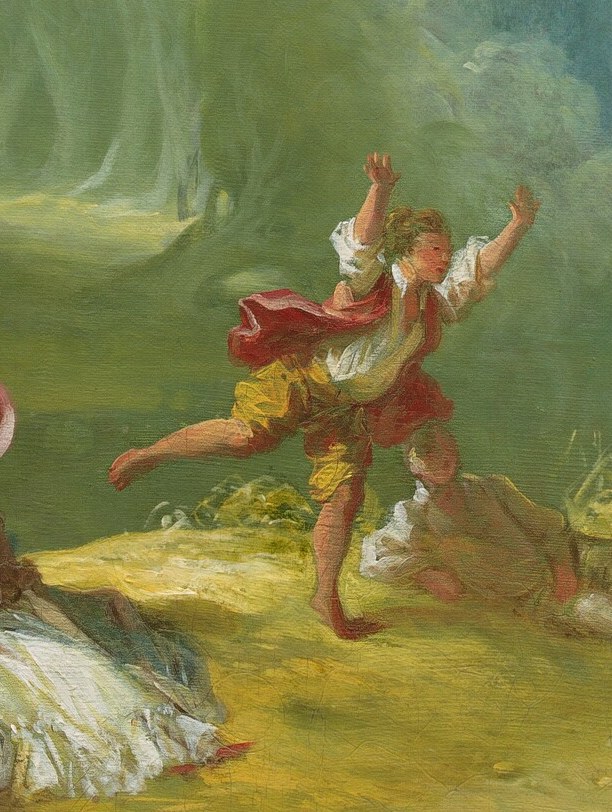
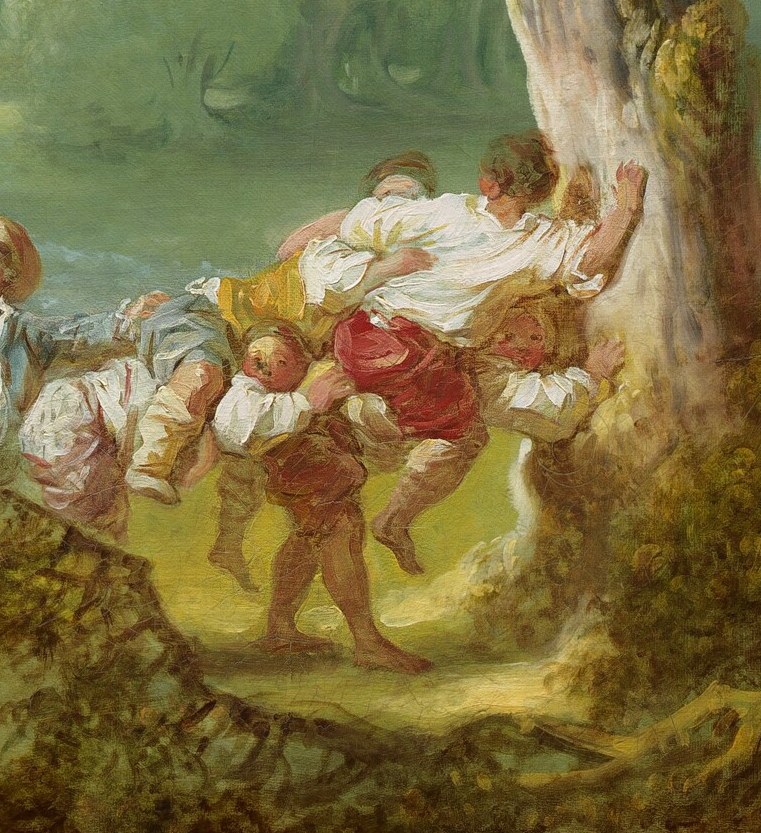
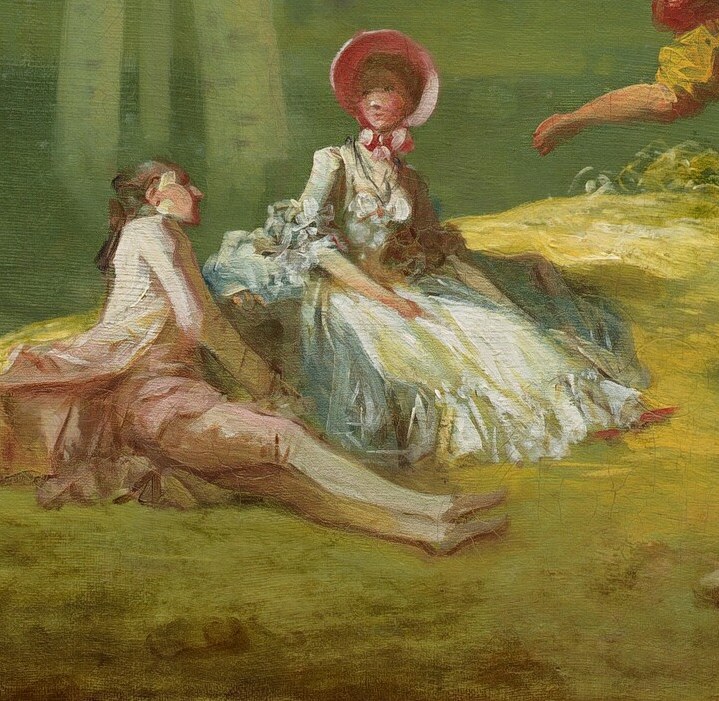
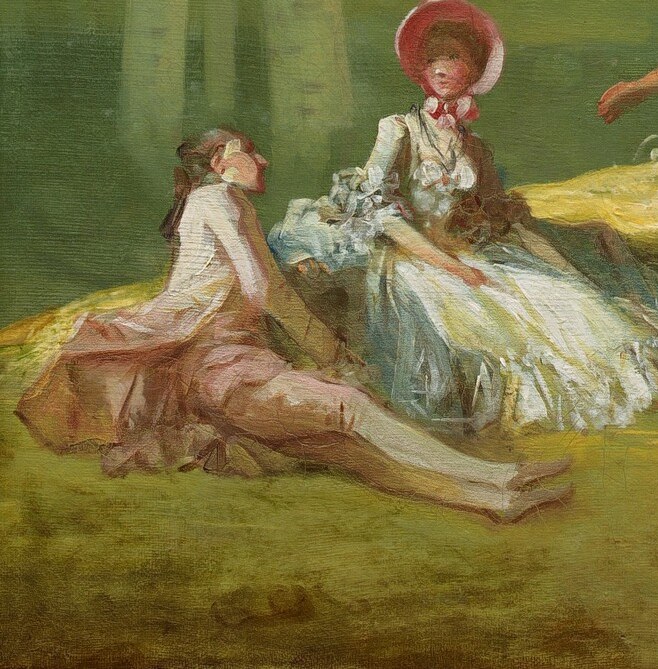
Transcript
France, around 1778. The old king is dying. But here, under the trees, the afternoon is all play. The game is called Horse and Rider. A blindfolded child tries to catch the rest. This painter was 46. The world he painted was vanishing. Soon, no one would pay for silks and leisure in a glade.