Arques-la-Bataille by John Henry Twachtman
In "Arques-la-Bataille," painted by John Henry Twachtman in 1885, a serene river winds through soft green hills beneath a pale, expansive sky. This oil on canvas, housed in a private collection, showcases the artist's masterful handling of light and color.
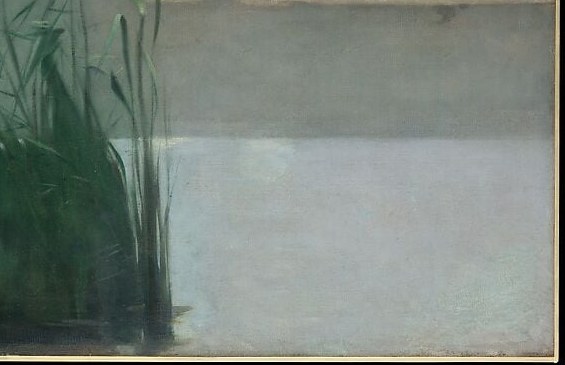
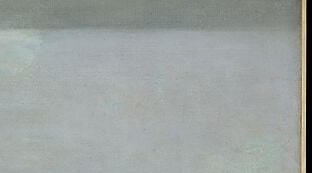
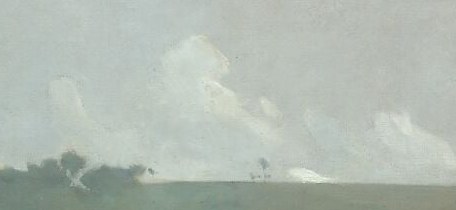
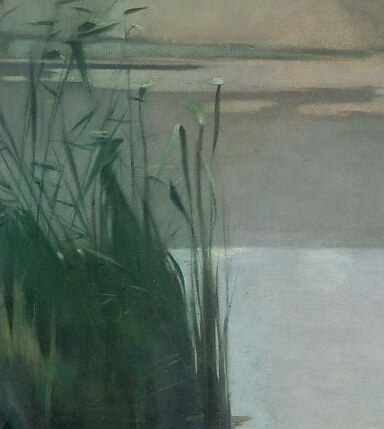
Observe how Twachtman uses thick, visible brushstrokes to create a palpable texture, especially on the water's surface where light reflects. These loose applications allow colors to merge softly, capturing the fleeting effects of light and contributing to the painting's tranquil, atmospheric quality.
Twachtman, an American Impressionist, created this work during his studies in France. He deliberately excluded the local village and ruined castle, focusing instead on evoking the emotional resonance of nature rather than topographical accuracy. This piece marks his shift towards a brighter palette and immediate observation, laying the groundwork for his later, more abstracted landscapes.
His experimental style placed him among "The Ten," a group of American artists who sought to exhibit their works as a stylistically unified group. What details do you notice in his brushwork?
Details
Transcript
This painter uses soft edges to build a tranquil landscape. Look at the water, reflecting the sky and distant light. Twachtman applied paint thickly, in visible, loose brushstrokes. He captures light's momentary effects before they shift. This method creates a palpable texture, almost abstract up close. It's all paint, merging softly to evoke a vast atmosphere.