Maternity by Melchers, Gari
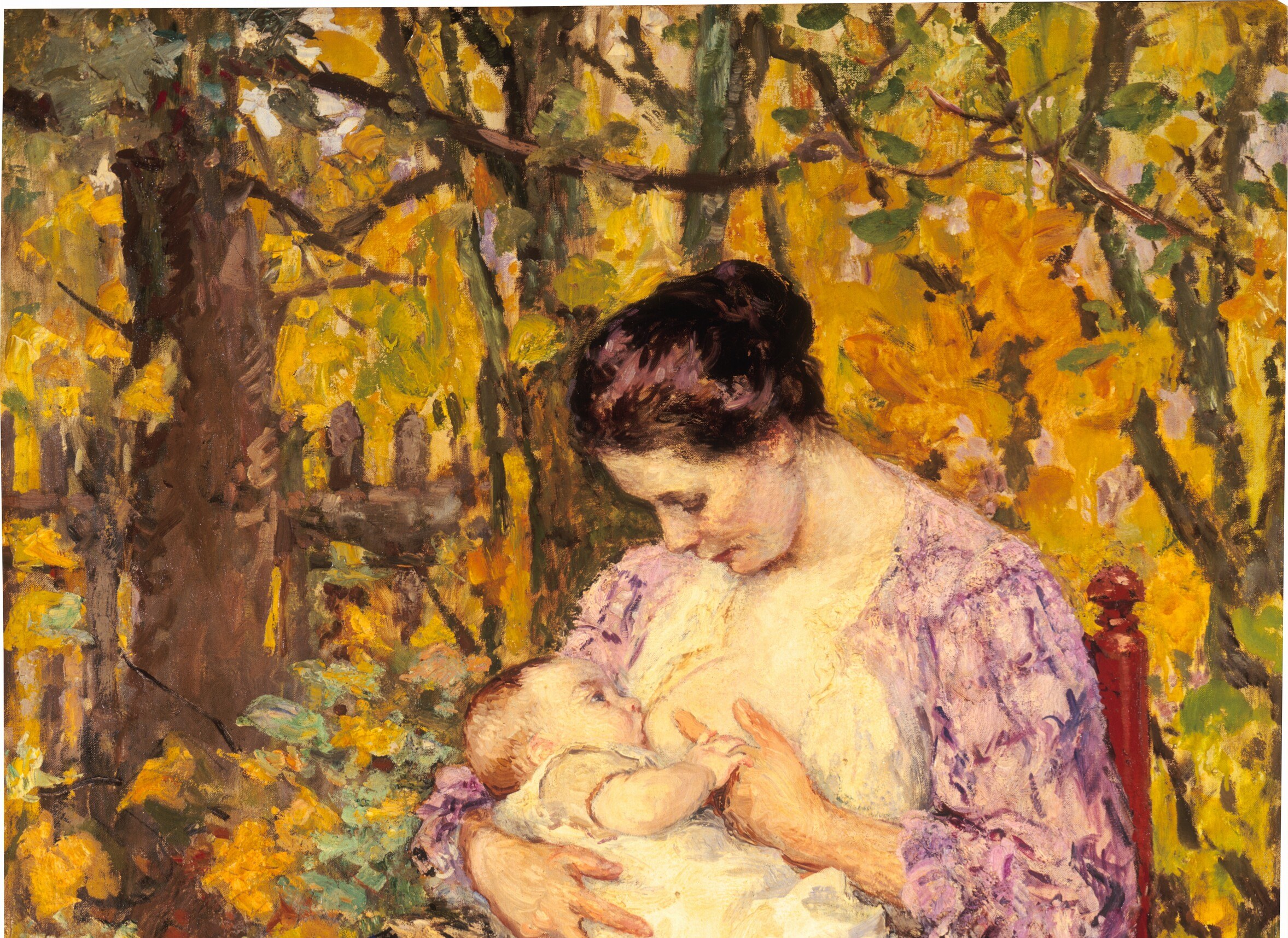
This is Maternity, painted around 1913 by the American artist Gari Melchers. It hangs in the Smithsonian American Art Museum. Melchers painted it in the small Dutch village of Egmond, where he lived for years, far from the art capitals of the world.
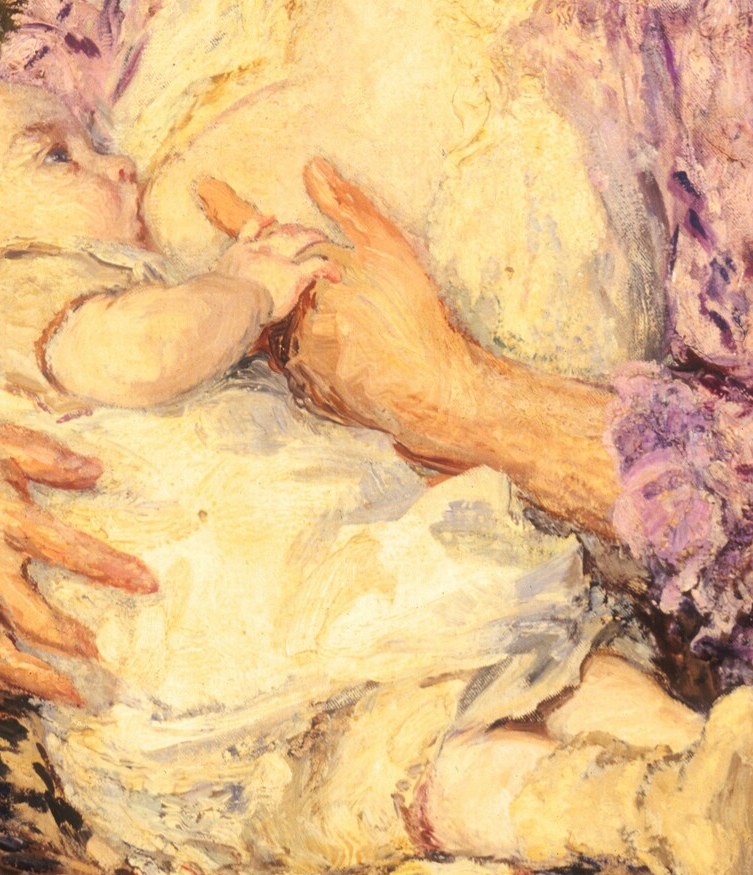
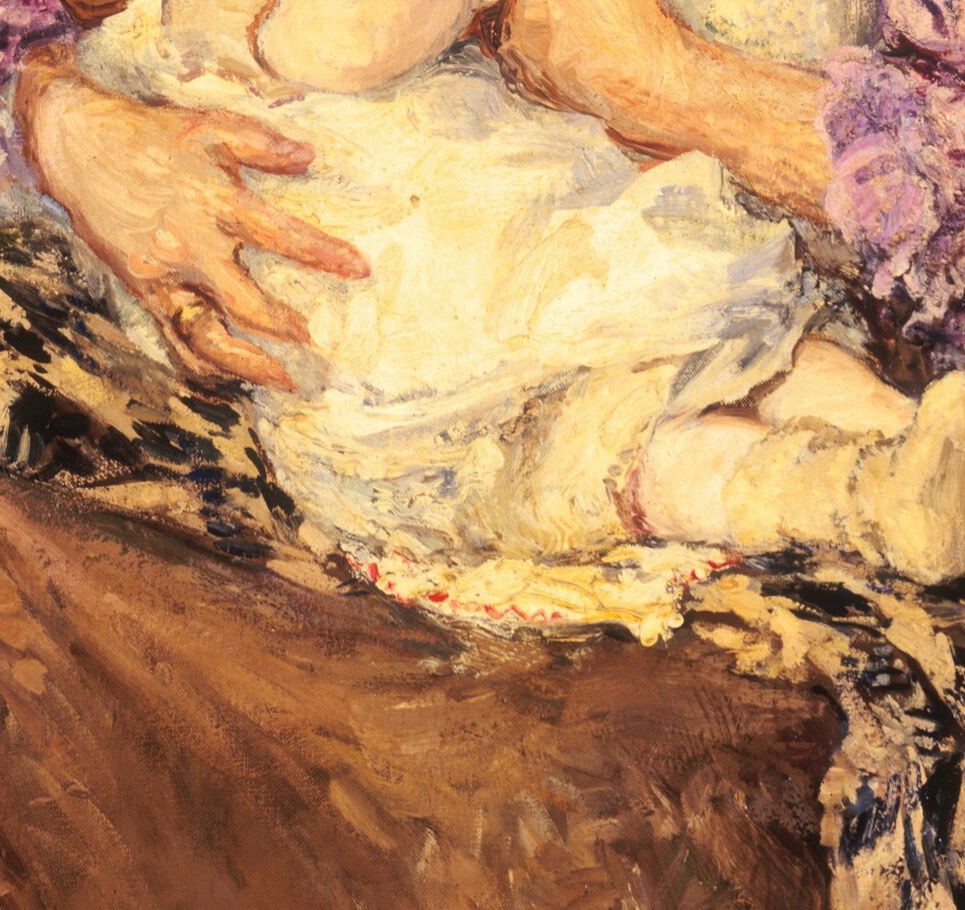
Look at the mother's hands. They are not idealized; they are a working woman's hands supporting a heavy, solid child. The white dress she wears is not a bridal or allegorical costume, but the simple, luminous cotton of a real Dutch villager. Behind her, dappled sunlight falls through a garden in full leaf, painted with quick, confident strokes that capture the fleeting light of a single morning.
Melchers was a prominent figure at the time, but he chose to paint the quiet life around him, his wife, the local villagers, domestic moments of unremarkable peace. This painting was made on the very edge of a catastrophe. In 1914, the First World War would tear through the communities Melchers had painted. The stillness in this canvas is not just a record of a garden, but of an entire world about to be swept away.
In the end, the painting's real subject may be simpler and more durable than any history: the way a mother looks at her child, as if nothing else in the world exists. What do you see in that gaze?
Details
Transcript
A mother and child, in a garden. The light is dappled, mid-morning. She wears the clothes of a Dutch villager, around 1913. The white dress is a working dress, not a costume, not a metaphor. These hands are not posed. They hold a real, heavy child. The painter was an American who had moved to a quiet fishing village. He painted his neighbors, his wife, the life outside his door. But history was knocking. Within a year, a world war would begin. She holds the one thing the coming century can't touch.