Flowers in a Crystal Vase by Manet, Edouard
In 1882, Edouard Manet was dying. His legs were paralyzed, and he spent his days sitting in a chair, unable to walk through the Paris streets he had painted for decades. So he turned to flowers.
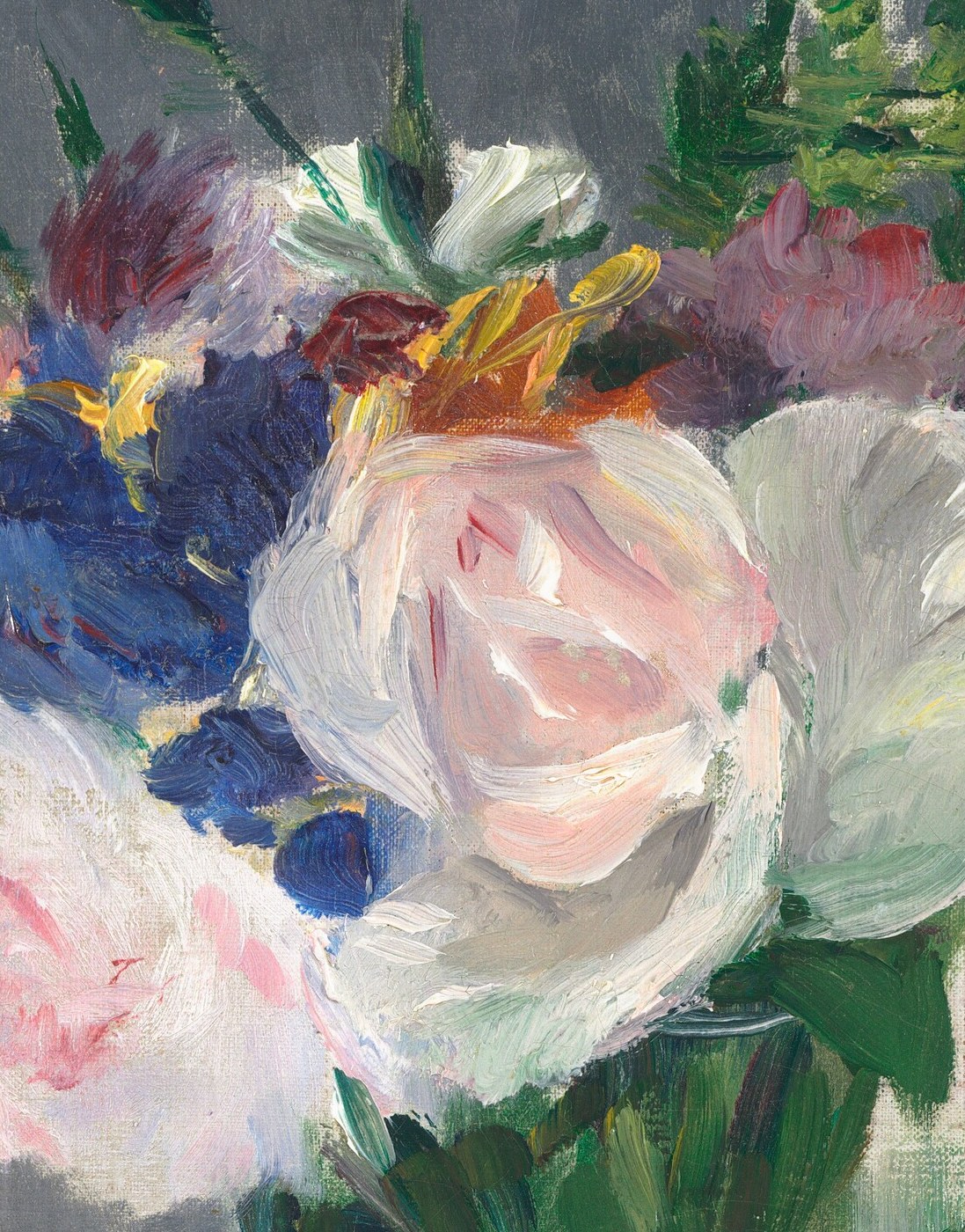
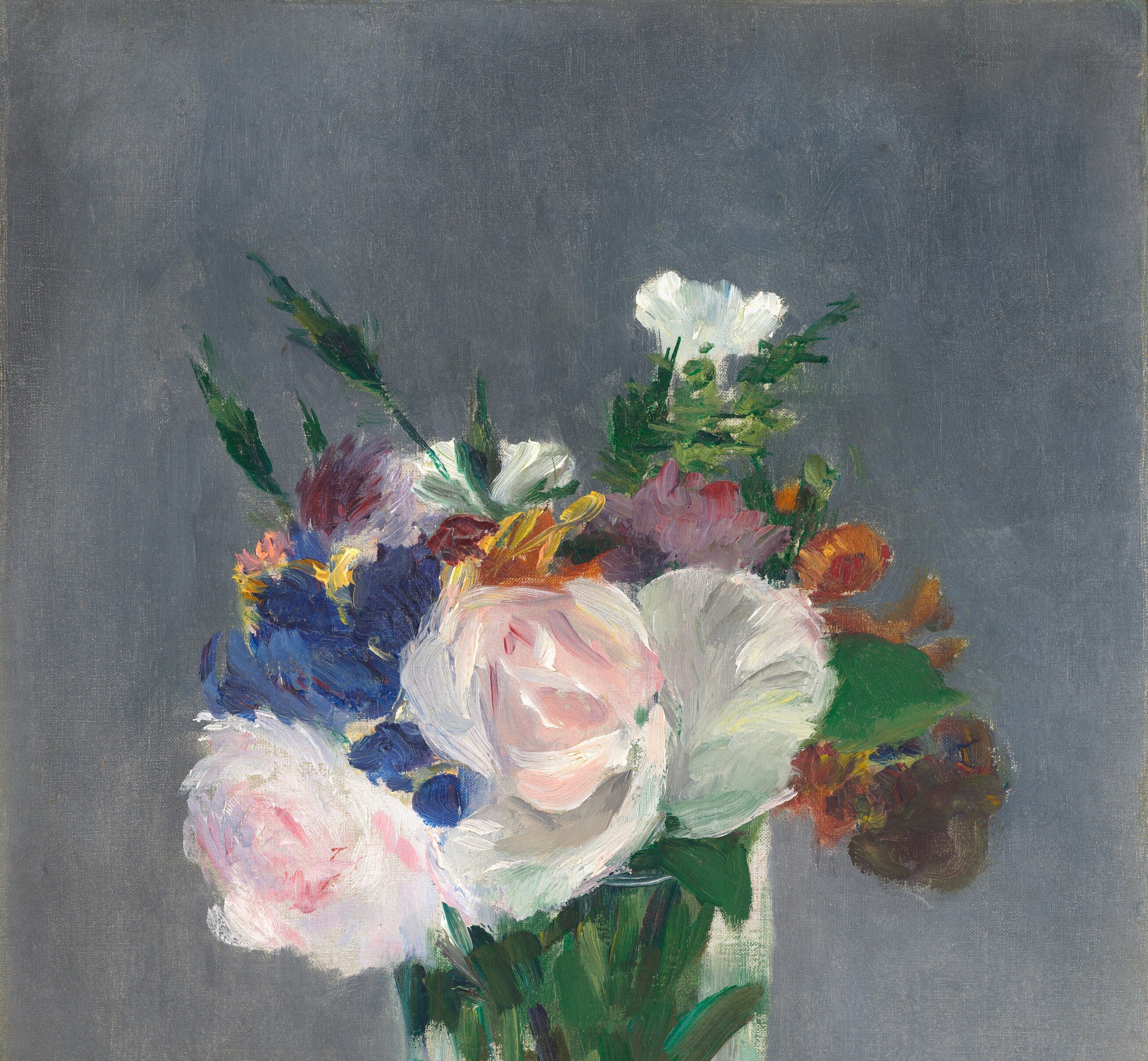
'Flowers in a Crystal Vase' (c. 1882) is in the collection of the National Gallery of Art, Washington, D.C. The painting shows a lush pink rose at the center, a blue iris, white blossoms, and scattered buds in a faceted crystal vase. The background is a flat grey-green, stripped of all distraction.
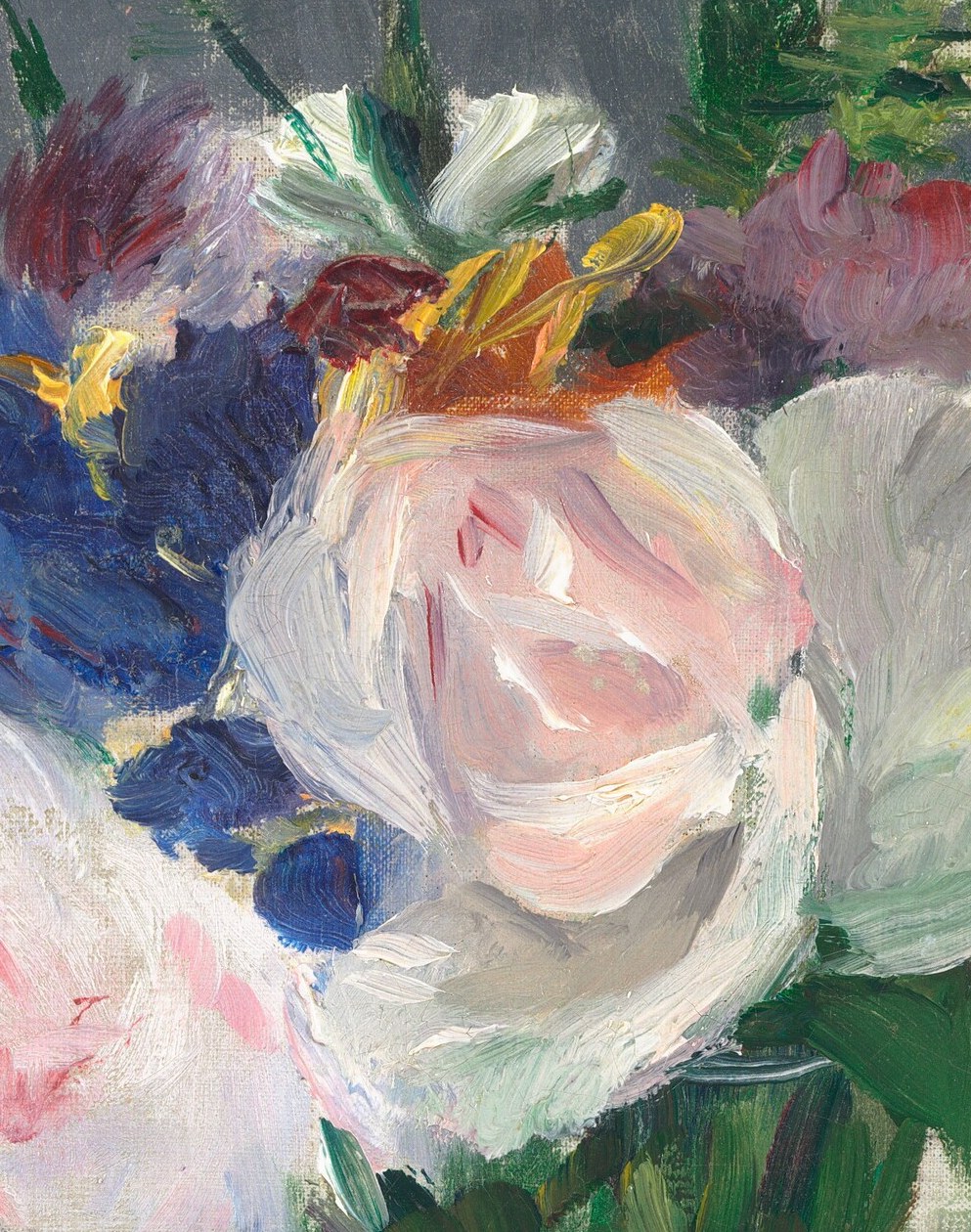
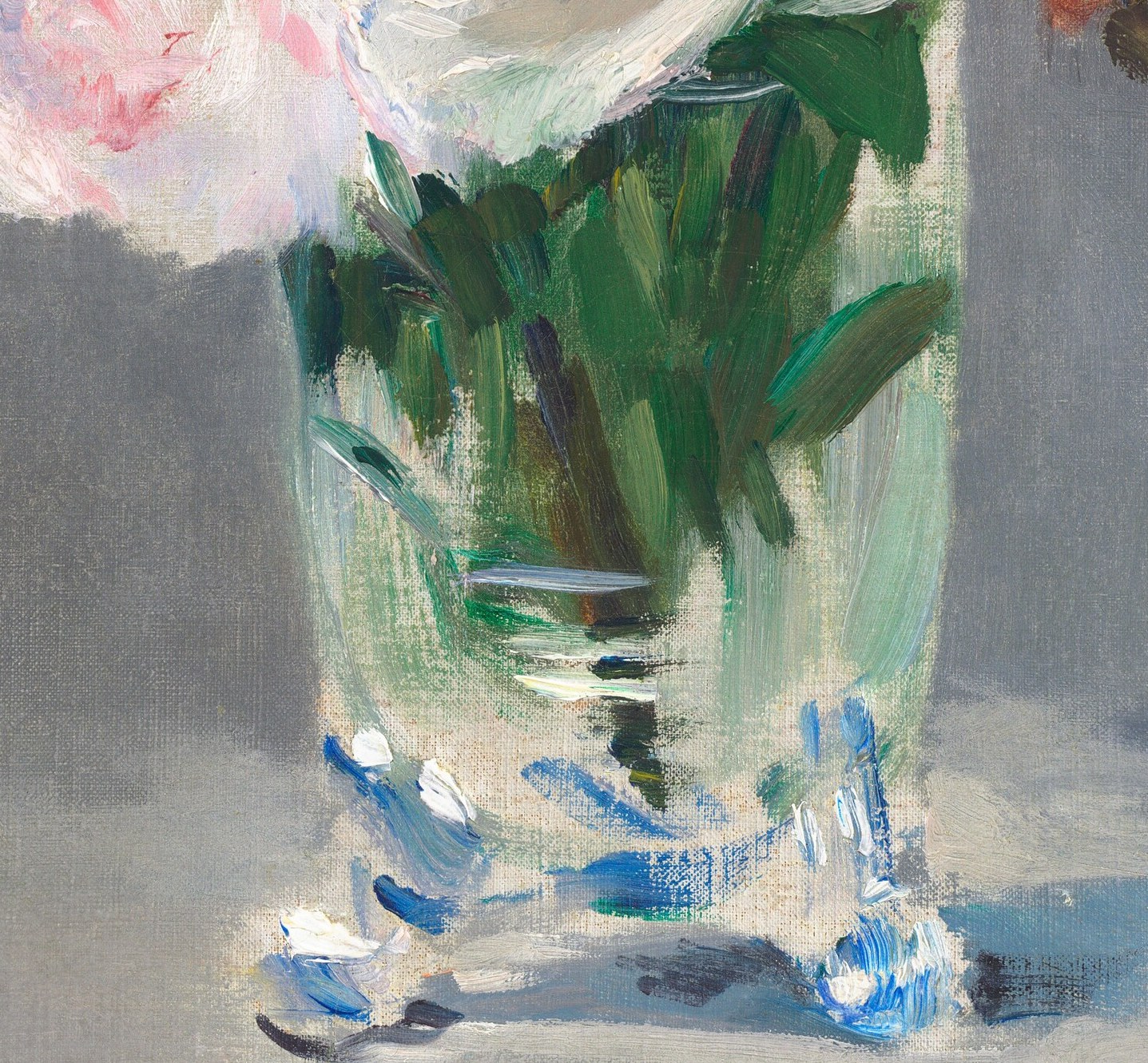
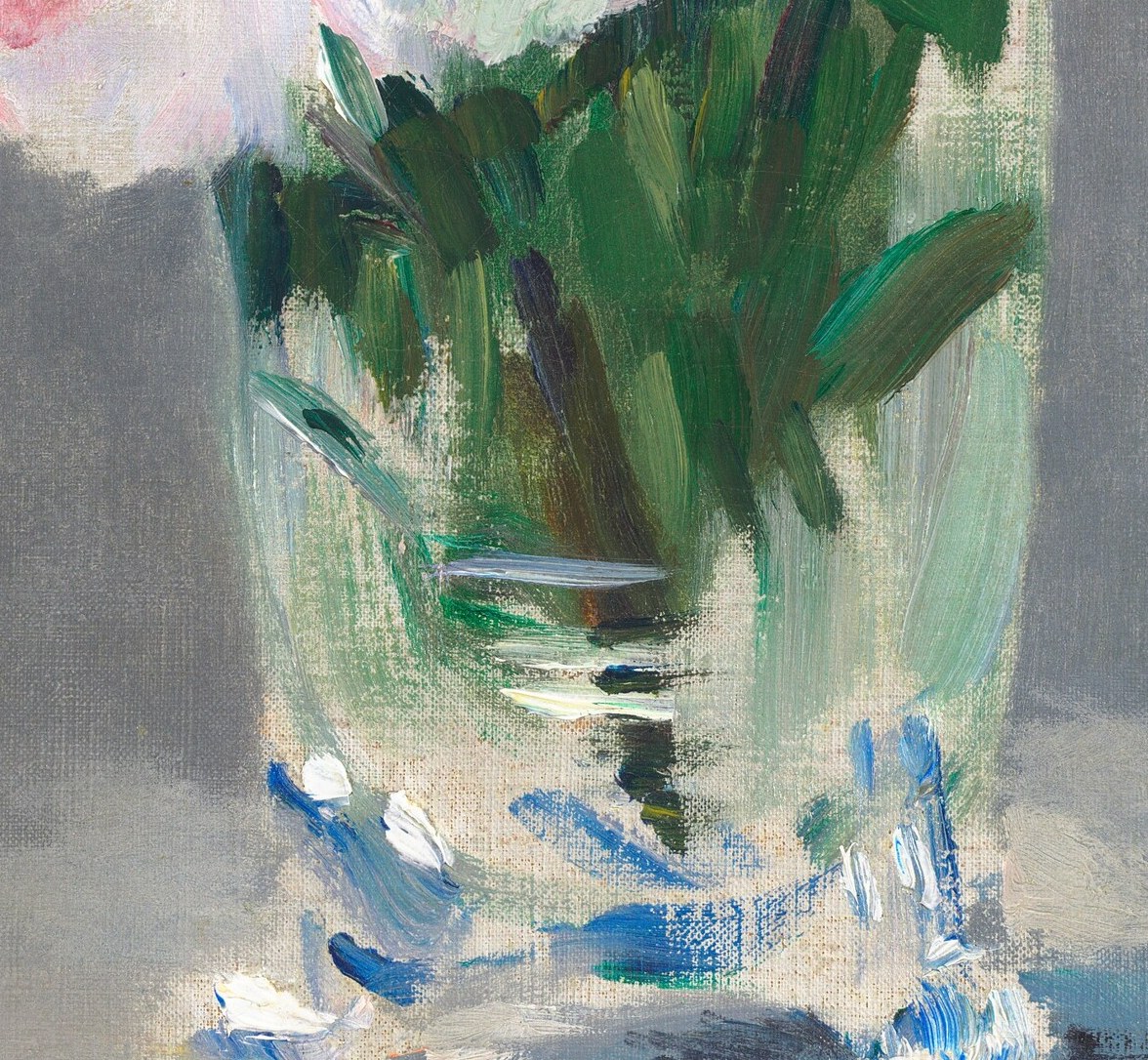
What makes this work extraordinary is the gap between what you see and how it was made. The rose petals are built with thick, sculptural impasto ridges that catch real light on the canvas. But the vase, the transparent crystal holding everything up, is a few quick strokes of grey, white, and pale blue. He wiped paint away in places, leaving bare canvas to suggest the glass catching the room. He painted what light does, not what a vase looks like.
Manet died the following year, at 51, leaving behind a body of work that changed painting forever. This small, intimate still life is a painter's final lesson: economy, precision, and knowing exactly when to stop.
Details
Transcript
It looks like a bouquet. Nothing more. But Manet painted this in 1882, the last year of his life. His legs were going. He could barely stand. So he sat down and painted flowers. Look at the petals. The paint is thick, like butter. Now look at the glass. A few grey and white dashes. And suddenly, it's crystal. He was too weak for detail. He painted what light does.