The Forest of Coubron by Corot, Jean-Baptiste-Camille
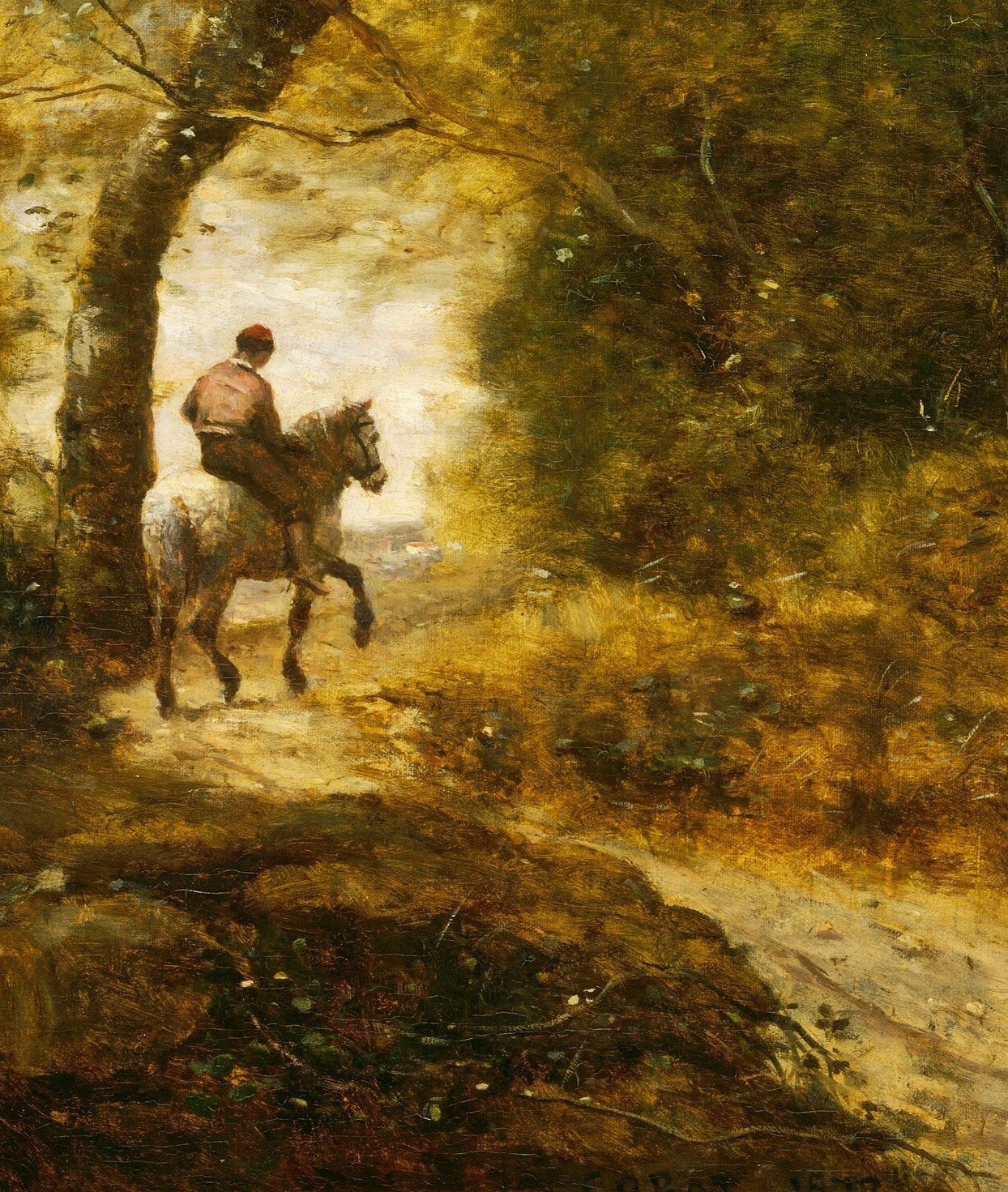
The Forest of Coubron, painted by Jean-Baptiste-Camille Corot in 1872, is an eyewitness to a specific kind of silence. The year it was painted, France was beginning to recover from the Franco-Prussian War and the violence of the Paris Commune. This forest scene, now in a private collection, shows absolutely none of that. It is a record of what the land offered that the nation could not: continuity, retreat, and a place to walk quietly into.
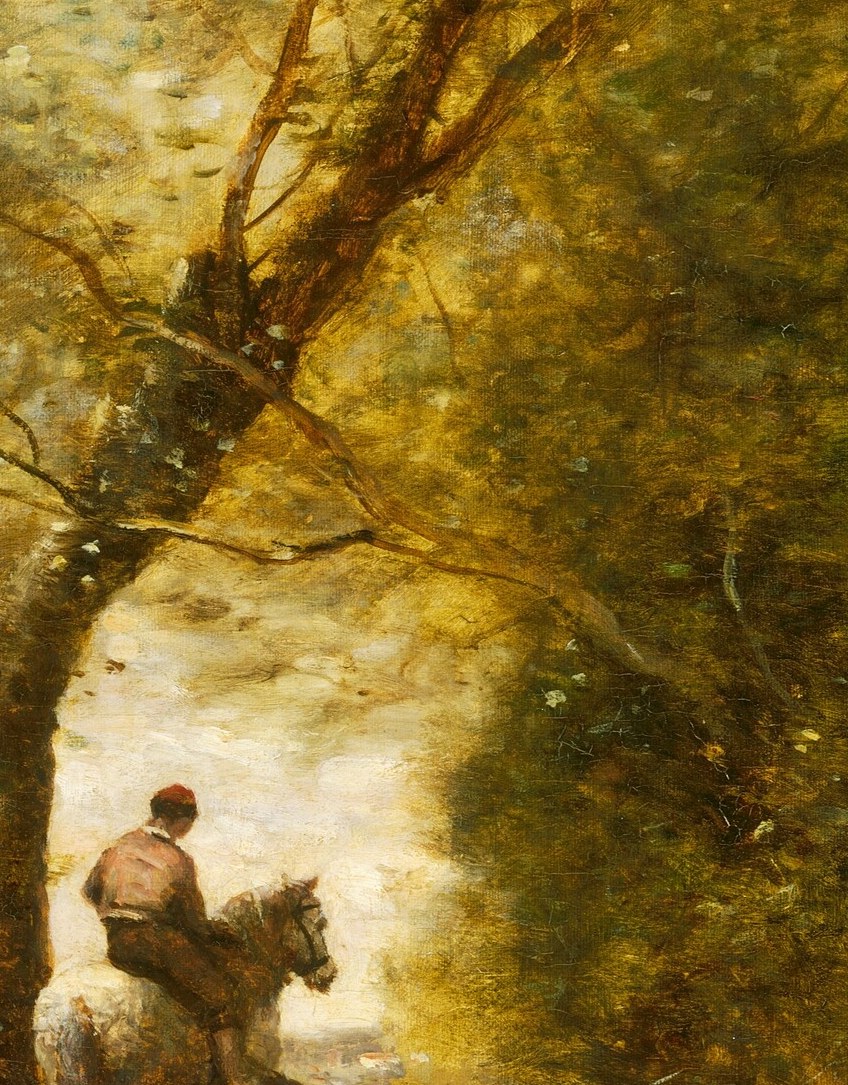
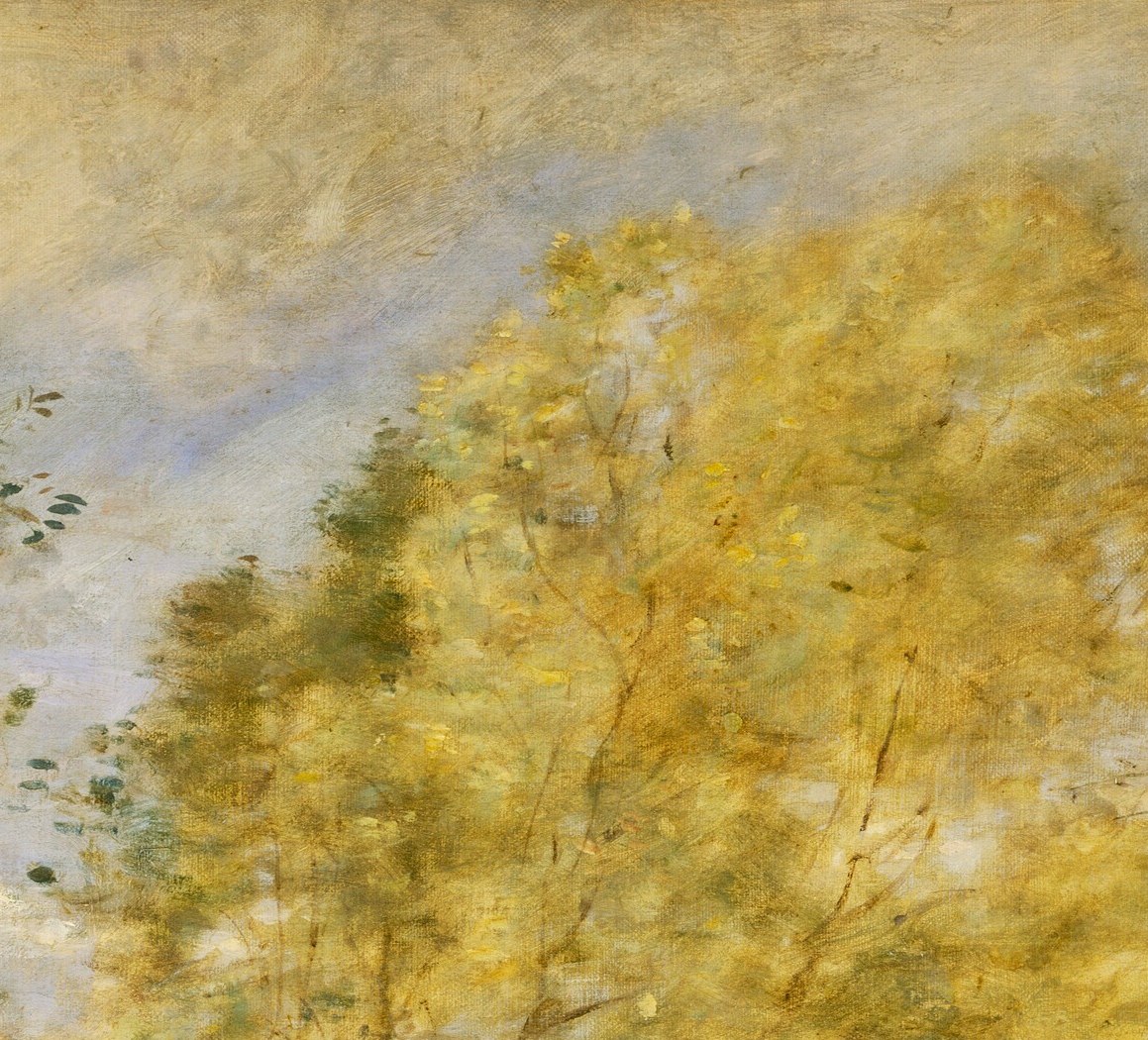
Look at the lone rider on the winding path. He is barely more than a few gestural strokes, easy to miss against the scale of the trees, but he gives the entire scene its human dimension. The path curves toward the viewer, inviting entry rather than rushing the eye out. Above him, the pale silver sky opens through the canopy, the single cool breath against the warm ochres and ambers in the foliage to the right.
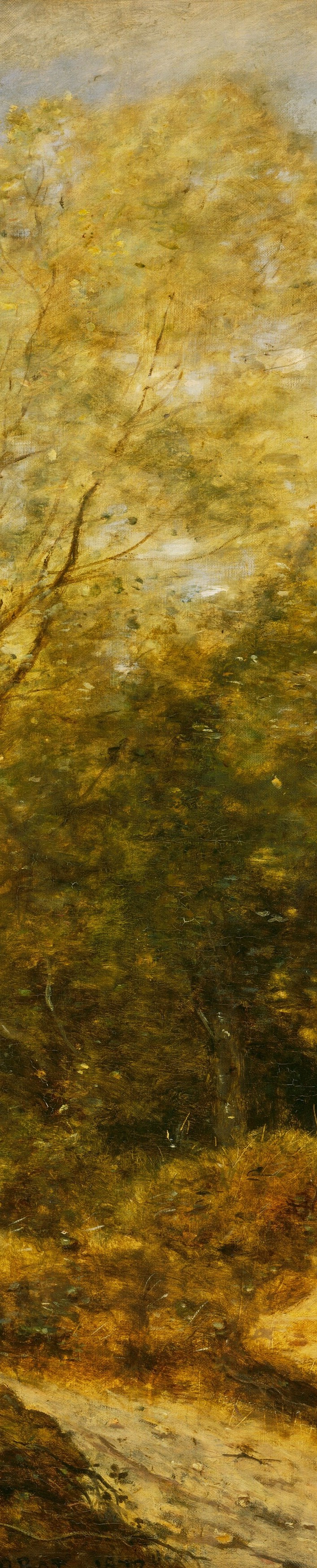
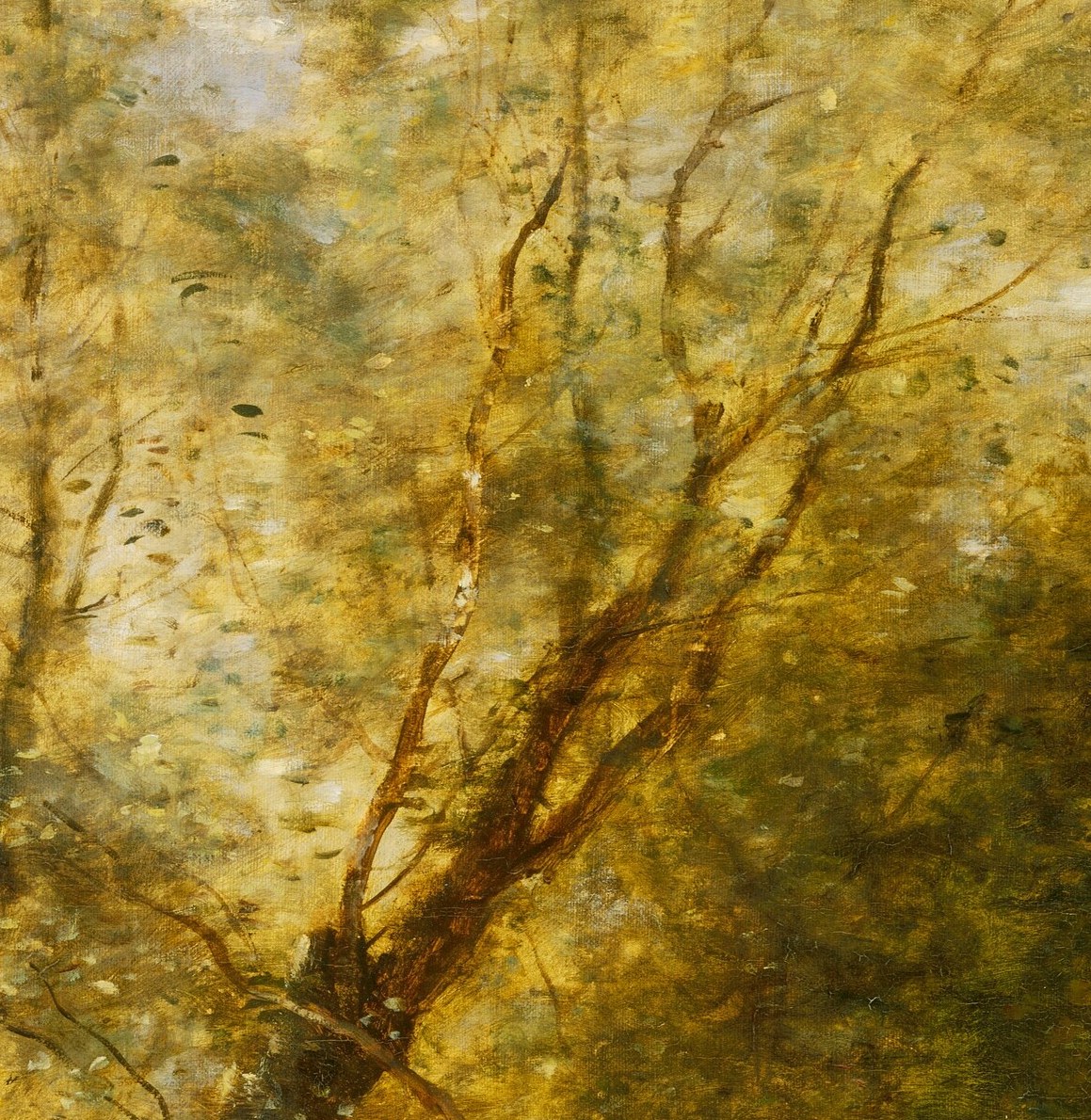
Corot was 76 years old in 1872. He had spent a lifetime bridging the composed structure of classical landscape with the direct, atmospheric observation of the Barbizon School. He carried his paints into the woods in a portable box and worked en plein air long before the Impressionists made it famous. His glazing technique built this scene from layers of mist and soft light, with the darkest shadow pooled at the base of the dominant right tree anchoring the entire composition.
There is no monument in this painting, no event. Just a forest path on an ordinary morning. That may be the point. After decades of political upheaval, an old painter went into the woods and recorded what was still standing.
Details
Transcript
1872. France is reeling. The Franco-Prussian War and the Commune have just ended. Corot paints this forest the same year. A lone rider moves deeper into the woods. The path does not show destruction. It shows a way in. Corot was 76 years old. He had lived through two revolutions and a foreign defeat. In his last years, he paints almost no trace of what the country suffered.