Classical Landscape with Figures by Henri Mauperché
This is Henri Mauperché's Classical Landscape with Figures, painted in 1654 and now at The Metropolitan Museum of Art. The museum acquired it in 1953 as a gift, for which the donor had paid just $600. Adjusted for inflation, that is a little over $6,500 today, a quiet price for a large, fully realized 17th-century French Baroque landscape.
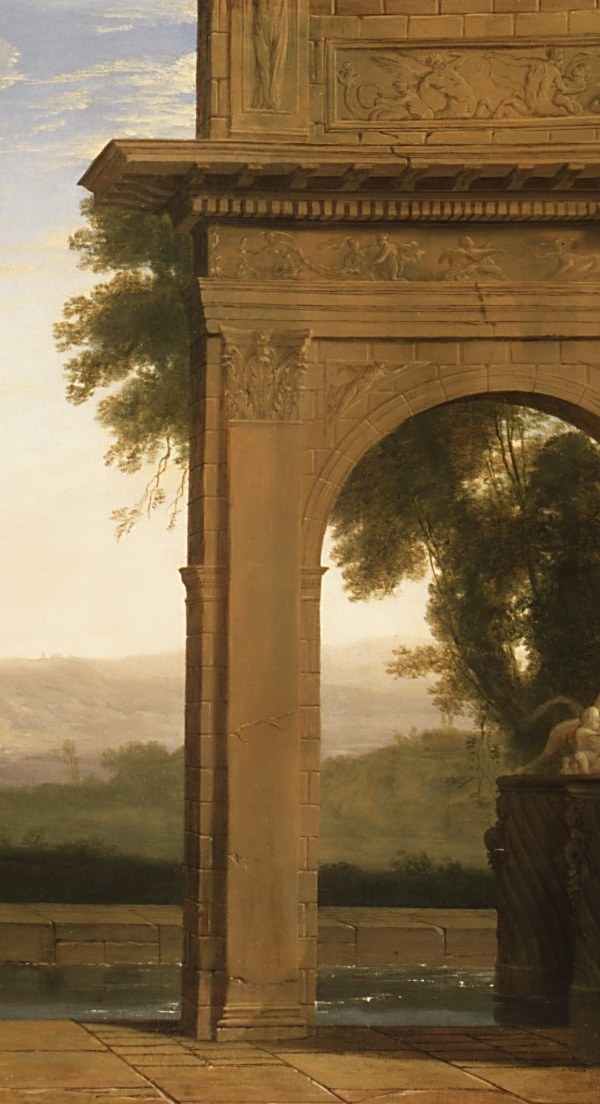
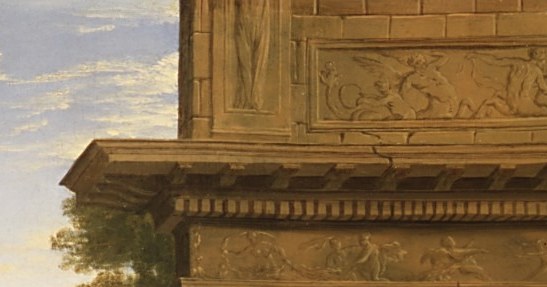
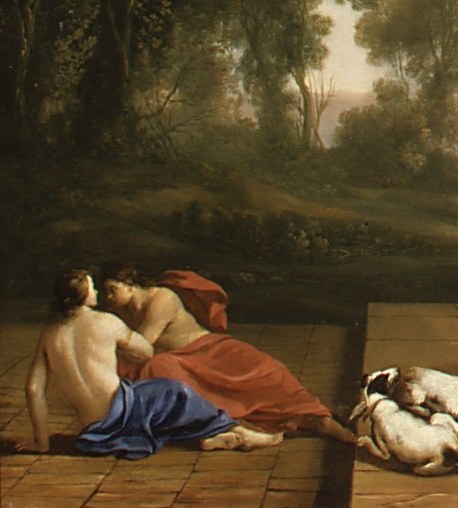
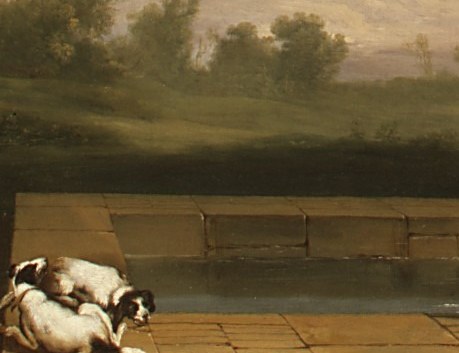
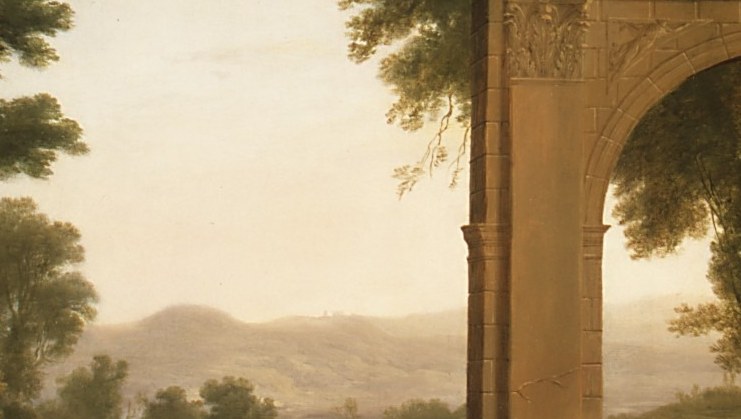
Look at the monumental stone arch dominating the right side of the canvas. It is pure invention. Mauperché, a Parisian artist who never traveled to Rome, specialized in the capriccio: an idealized, imaginary landscape where meticulously painted classical ruins frame tranquil pastoral scenes. The carved keystone and deep shadow inside the arch are where his architectural fantasy feels most physical. Down in the foreground, two figures rest in vibrant blue and warm orange robes, a chromatic conversation, while a small black and white dog keeps watch between them.
Mauperché was a founding member of the French Royal Academy of Painting and Sculpture in 1648, but his star faded after his death in 1686. For centuries, his capriccios were considered unfashionable period pieces and traded for modest sums. Only in the mid-20th century did museums and collectors begin to re-evaluate the French classical landscape tradition, quietly moving works like this from storage into permanent collections.
The painting's story is a reminder that an artwork's market value is a swing, not a fixed fact. What would this same canvas sell for at auction if it surfaced tomorrow, freshly attributed? Probably a great deal more than $600.
Details
Transcript
It entered The Met in 1953. The donor paid $600. Look at the massive stone arch. It fills the entire right side. The painter, Henri Mauperché, never saw real Roman ruins. He made them up. The style is called a capriccio. A blue-robed figure reclines in cool shadow. And a dog rests between them. Alert, but still. The real money story is the other end. It was nearly forgotten. For centuries, his capriccios were worth almost nothing. Just old-fashioned decor.