Saint James Major by Simone Martini
Simone Martini's Saint James Major, painted around 1318, is a devotional tempera on panel artwork, now housed in an unconfirmed location. This painting offers a window into the symbolic language of early 14th-century art, where every element contributes to the identity and narrative of the saint.
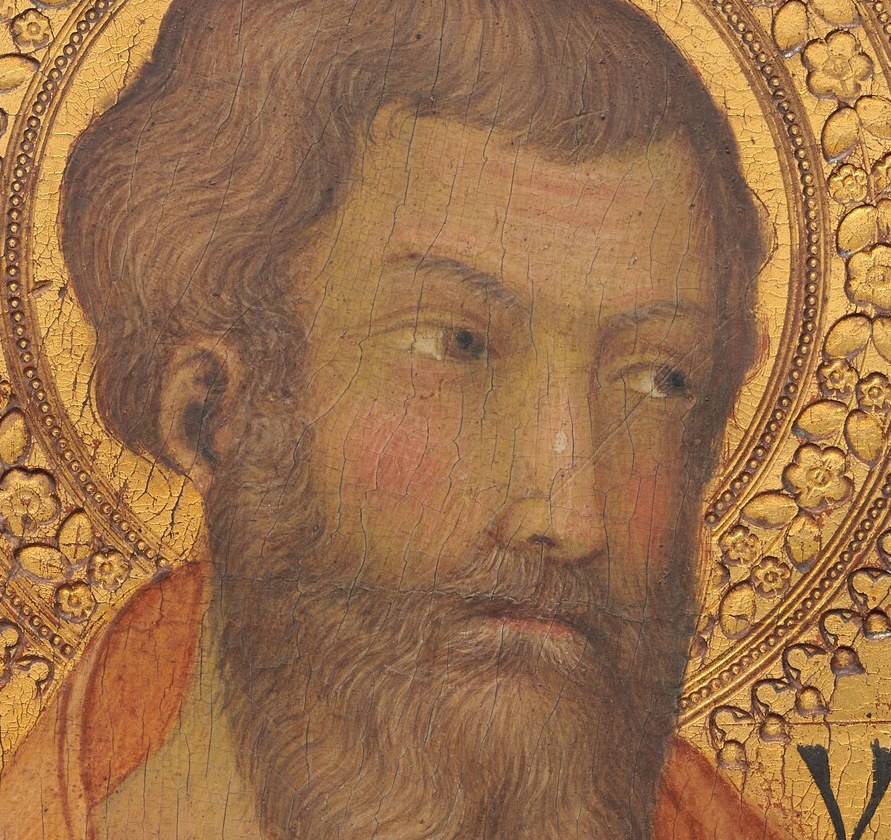
Look closely at the saint's attributes: the pilgrim's staff clearly marks him as a traveler, while the scallop shell is the iconic symbol of Saint James, denoting his pilgrimage to Santiago de Compostela. Even the inscription, 'SATUS', is a fragment of his name, reinforcing his identity.
Martini, a master of the Sienese Gothic style, used precise tempera techniques to give the painting its luminous quality and rich texture. This piece was likely part of a larger altarpiece or created for private devotion, inviting viewers to contemplate the spiritual journey and evangelistic mission of Saint James.
What other subtle details do you notice that speak to the painting's age and craftsmanship?
Details

Transcript
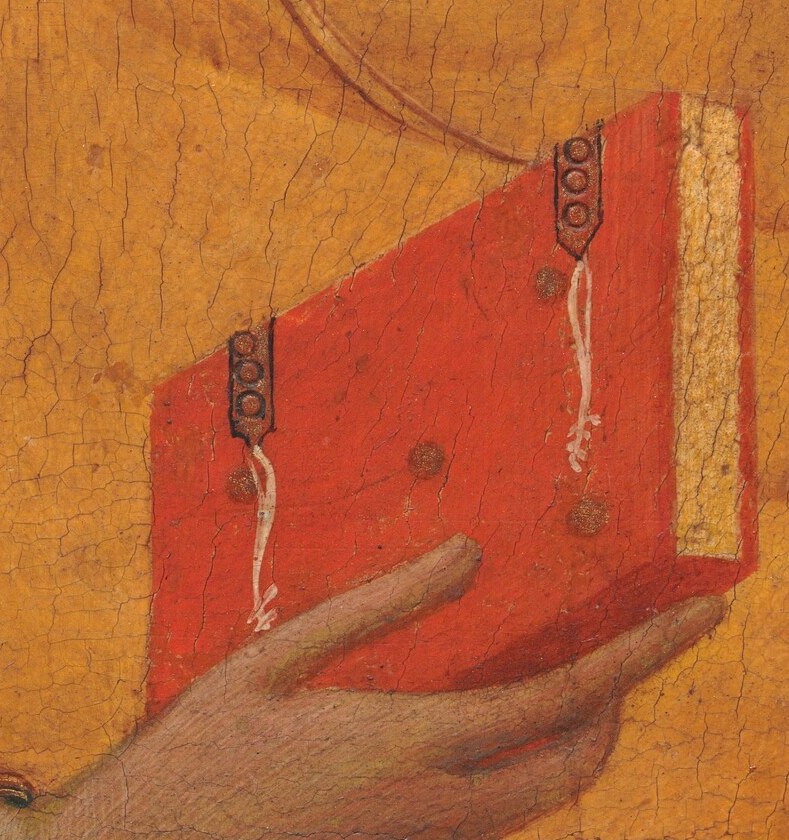
This solemn figure holds a key to his identity. His pilgrim staff marks him as a traveler. Look closely at the shell, a symbol of Saint James. The inscription below spells part of his name: SATUS. This painting dates to Simone Martini's hand, around 1318. He preaches the gospels, holding the sacred book.