Profile Portrait of a Young Man by American 19th Century
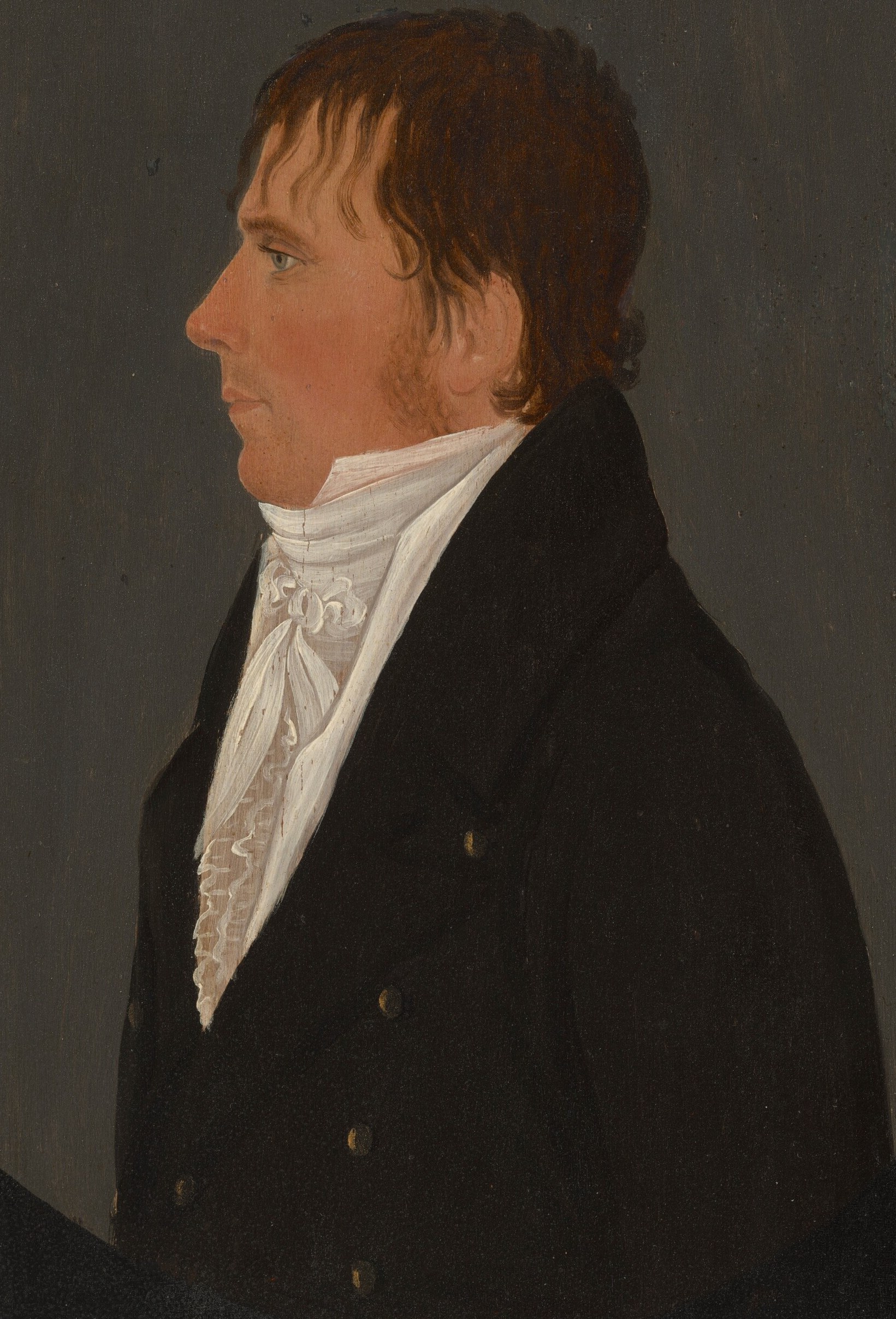
This is "Profile Portrait of a Young Man," painted around 1820 by an unknown American artist. It now lives in the collection of the National Gallery of Art, Washington, D.C. Though both the sitter and the artist remain unidentified, the painting is a remarkably well-preserved window into the social aspirations of early 19th-century America.
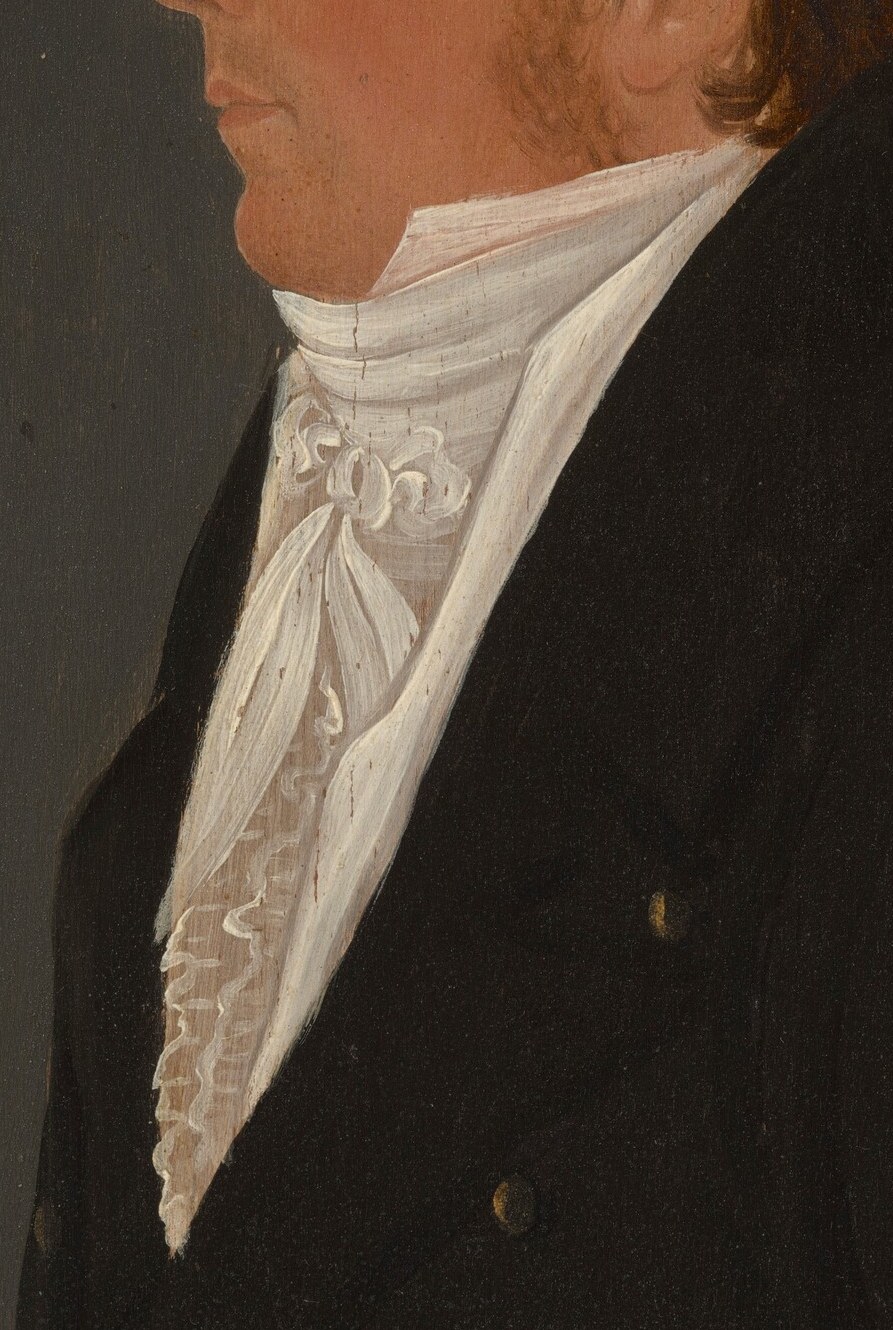
Look at the details he and the painter chose to highlight: the intricate folds of the white cravat, the glint of the gold coat buttons against the severe black coat. The dark, unadorned background throws everything into focus on his composed face and his sharp, aquiline profile. These were not just fashion choices; they were deliberate signs of gentility and self-discipline.
In many ways, a commissioned portrait on a wood panel like this was the era's calling card. It announced that the sitter had the means and the social standing to be remembered. The quiet dignity of his expression, the formal attire, and the polished brushwork all work together to sell a single, powerful idea: here stands a man of substance.
We may never know his name, but we know exactly how he wanted to be seen.
Details
Transcript
No artist. No sitter's name. Just a date: around 1820. And yet, his world is written into every fold of canvas and lace. The white cravat was a daily ritual of the American elite. The gold buttons are small, but they are meant to be noticed. His smooth face and calm, serious eyes are the ultimate status symbol. A portrait like this was a clear promise: I am respectable, I am in control.