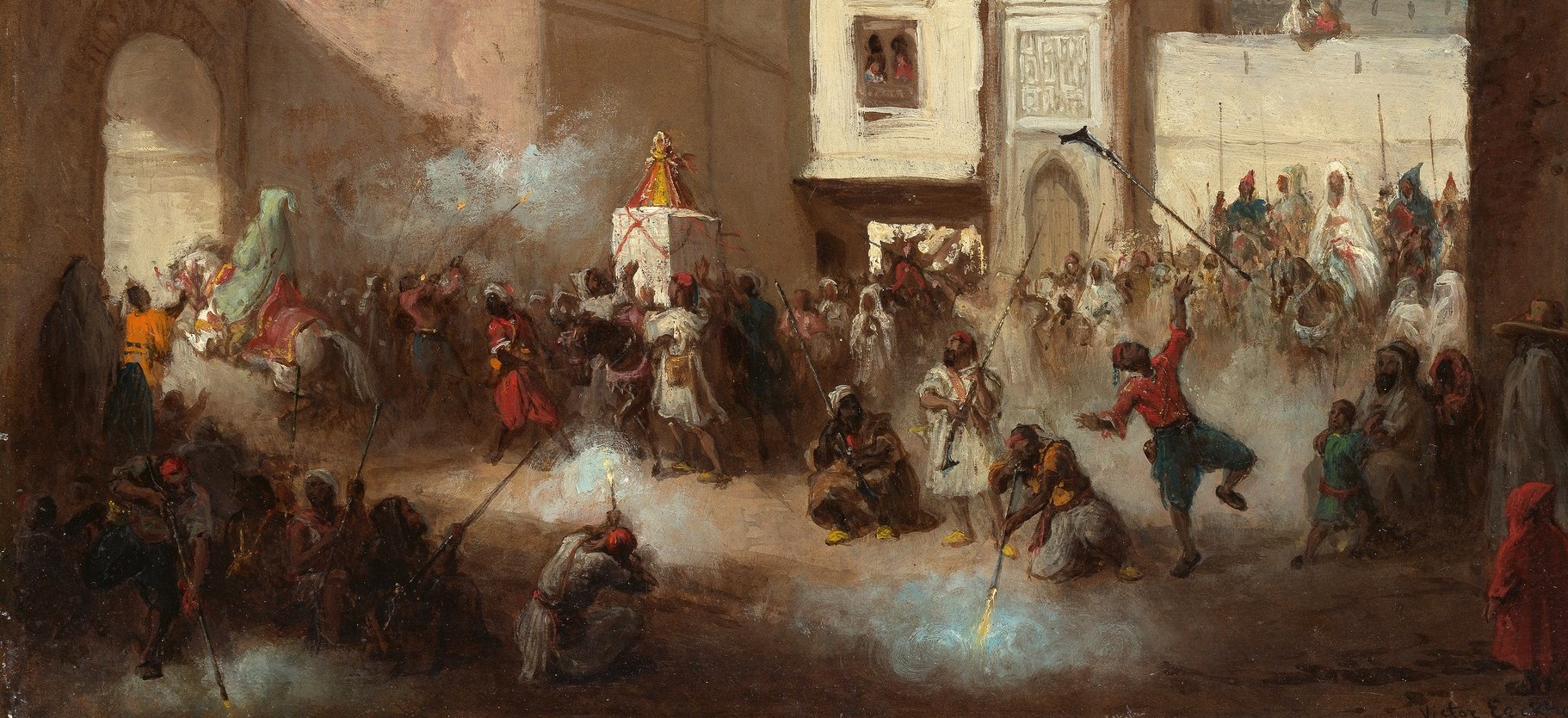
Wedding Procession by Victor Eeckhout
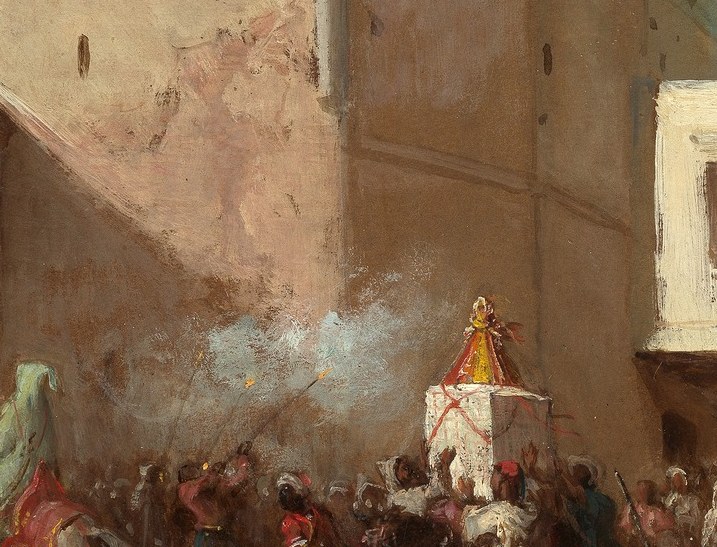
Victor Eeckhout's "Wedding Procession" (1860) is a oil painting of a celebration, but its most remarkable feat is capturing a moment photography of the era could not. In 1860, cameras were too slow to freeze the drift of smoke rising from a gun salute.
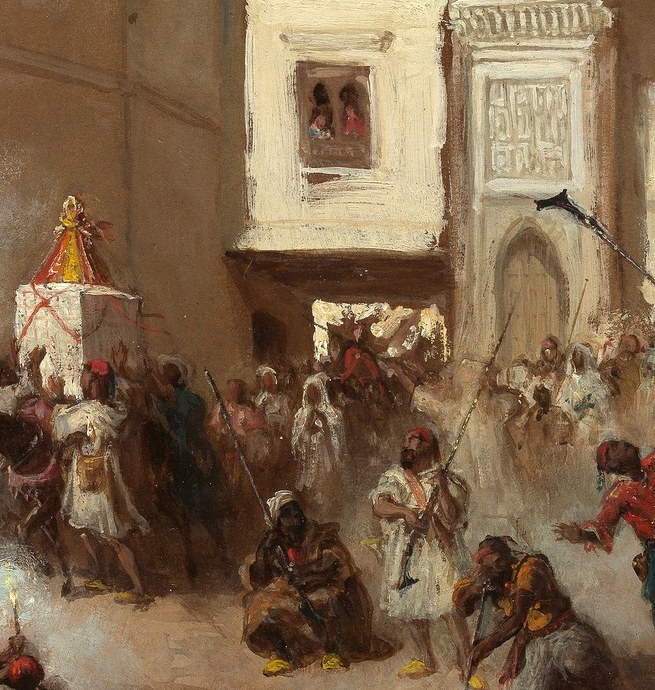
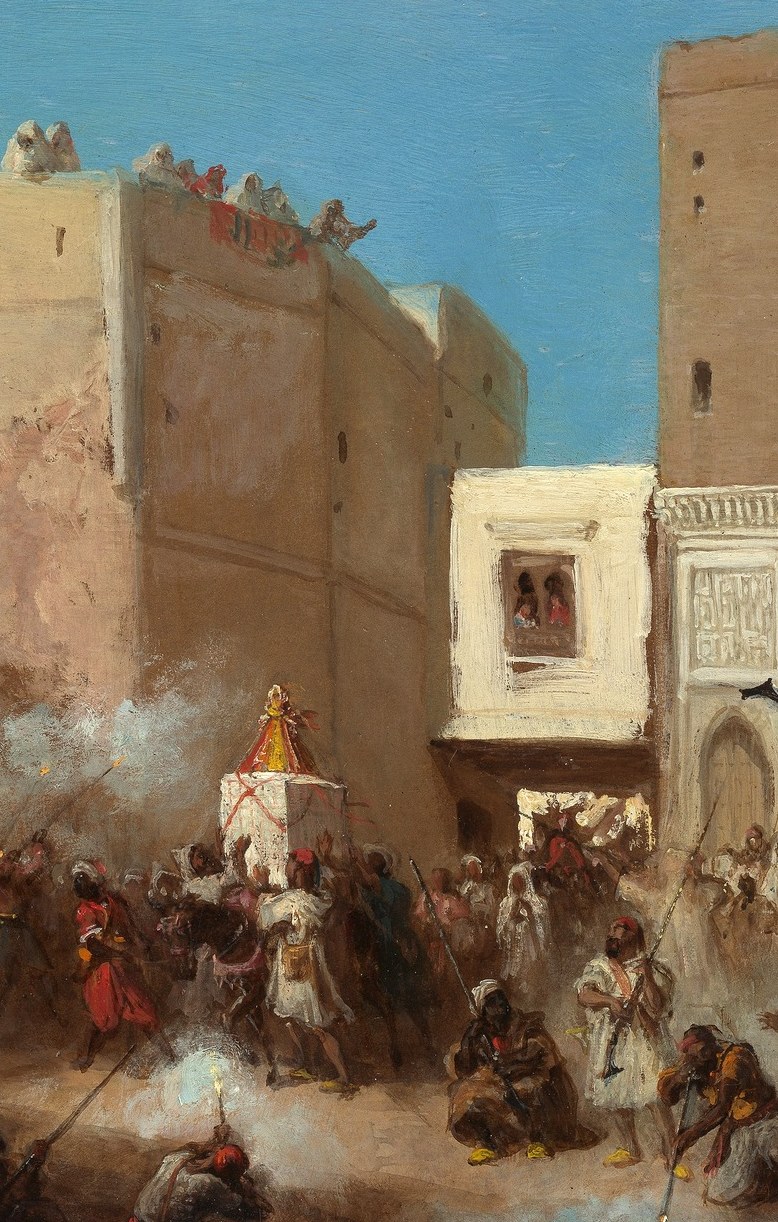
Look for the pale cloud at the center-left of the composition, above the ornate archway. It is easy to miss among the dense crowd of turbans and robes. That haze is the ghost of a sound, a volley fired in honor of the bride, suspended in oil paint. The horseman below it and the red-robed figures command attention, but the smoke rewards a slower look.
The work belongs to the Orientalist movement, a 19th-century European fascination with North African and Middle Eastern life. Eeckhout, a Belgian painter, specialized in these romanticized street scenes. Though painted through a Western lens, the details, the zellige-tiled doorway, the pale stucco walls, the rooftop spectators, suggest a real, observed city alive with festivity.
It was a sociology of joy, painted by a man who knew he could outlast the camera at its own game.
Details

Transcript
1860. No photographer could freeze this moment. A wedding procession surges through a North African street. Look past the crowd. There is a pale cloud rising. That is gunpowder smoke. A salute fired during the ceremony. Victor Eeckhout painted this single, vanishing second. He captured a sound with a brush.