Margaretha Boghe by Cleve, Joos van
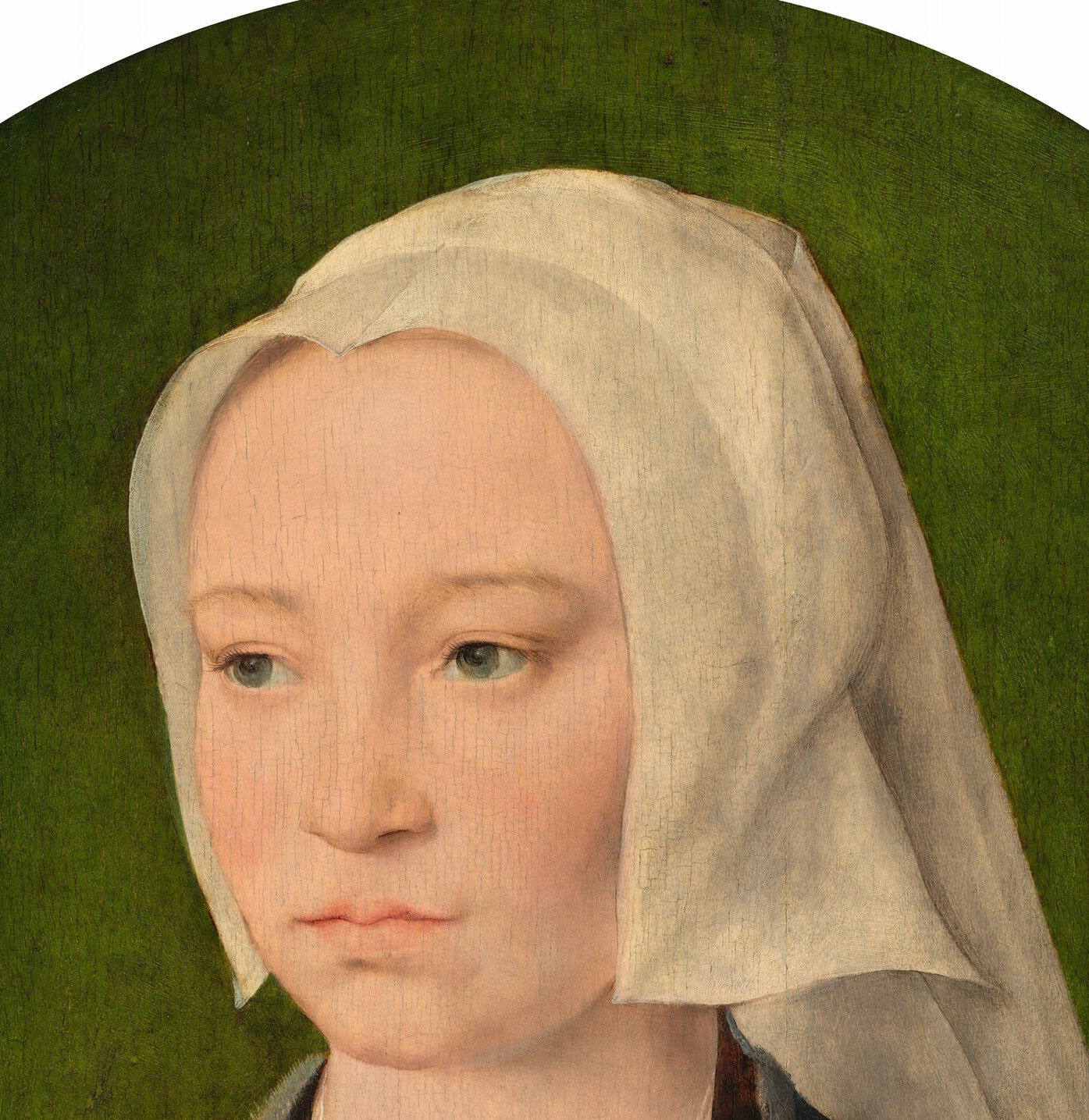
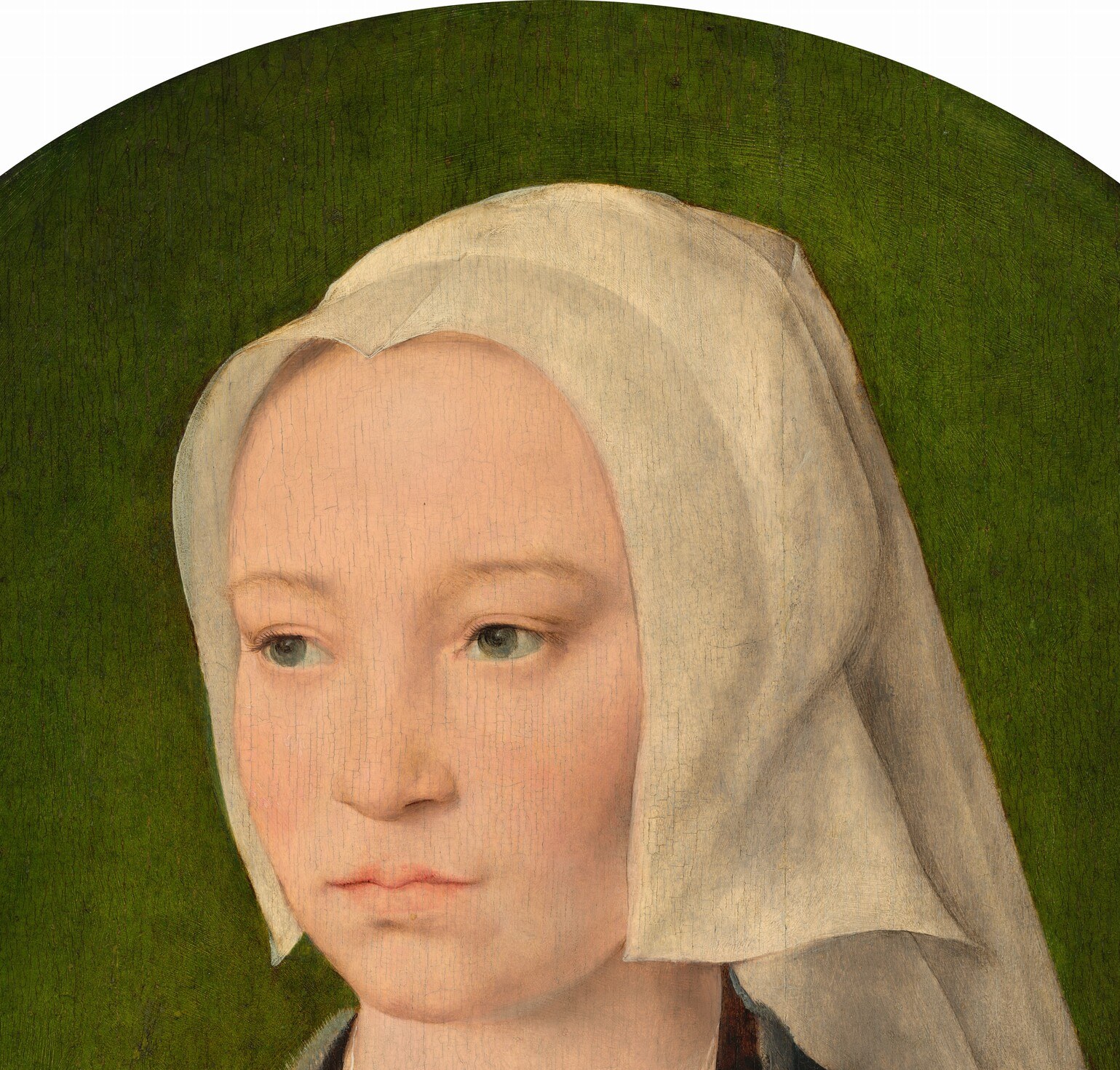
Margaretha Boghe, painted by Joos van Cleve around 1518, hangs in quiet command. It is one of the most psychologically complete portraits to survive from early sixteenth-century Antwerp. We know her name, her status, and the name of the artist who captured her, but almost nothing else. That silence is part of the painting’s power.
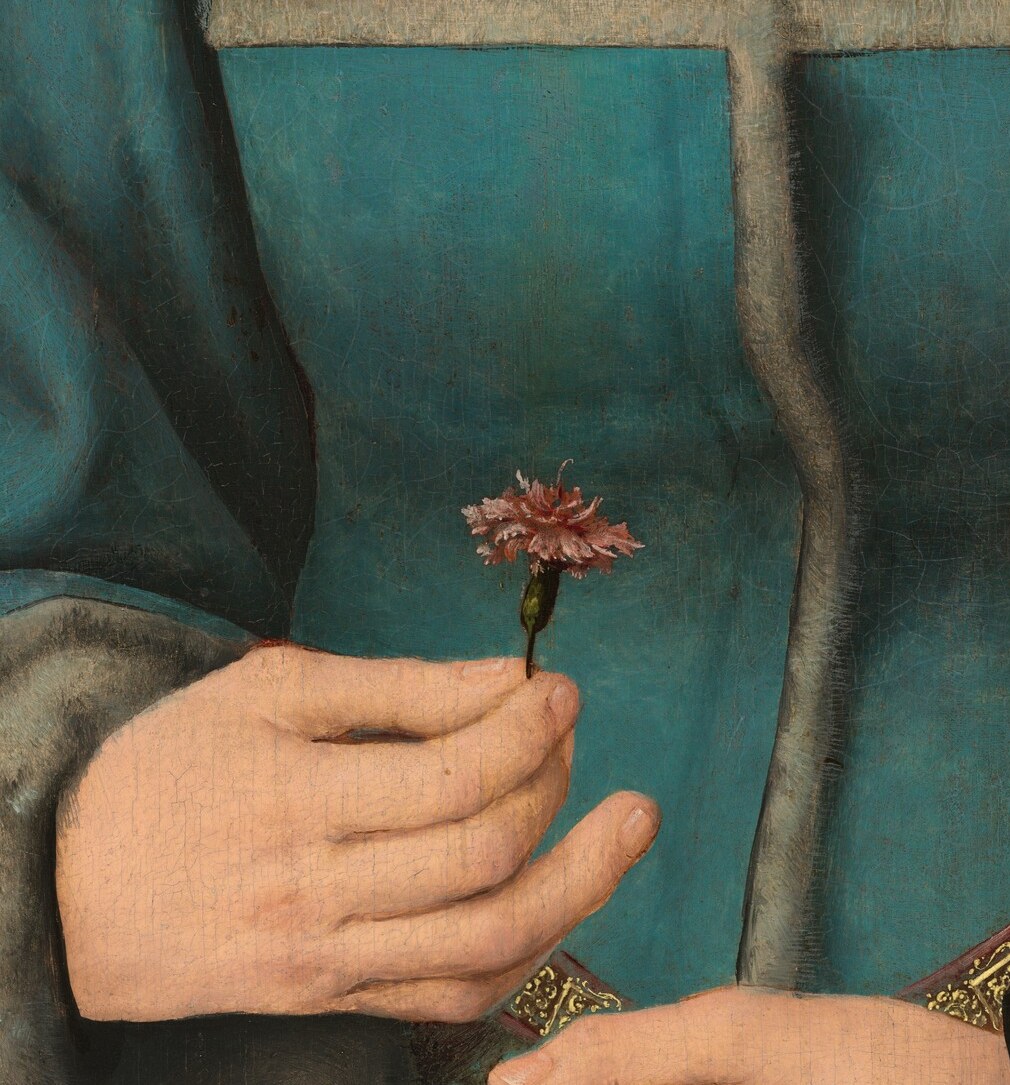
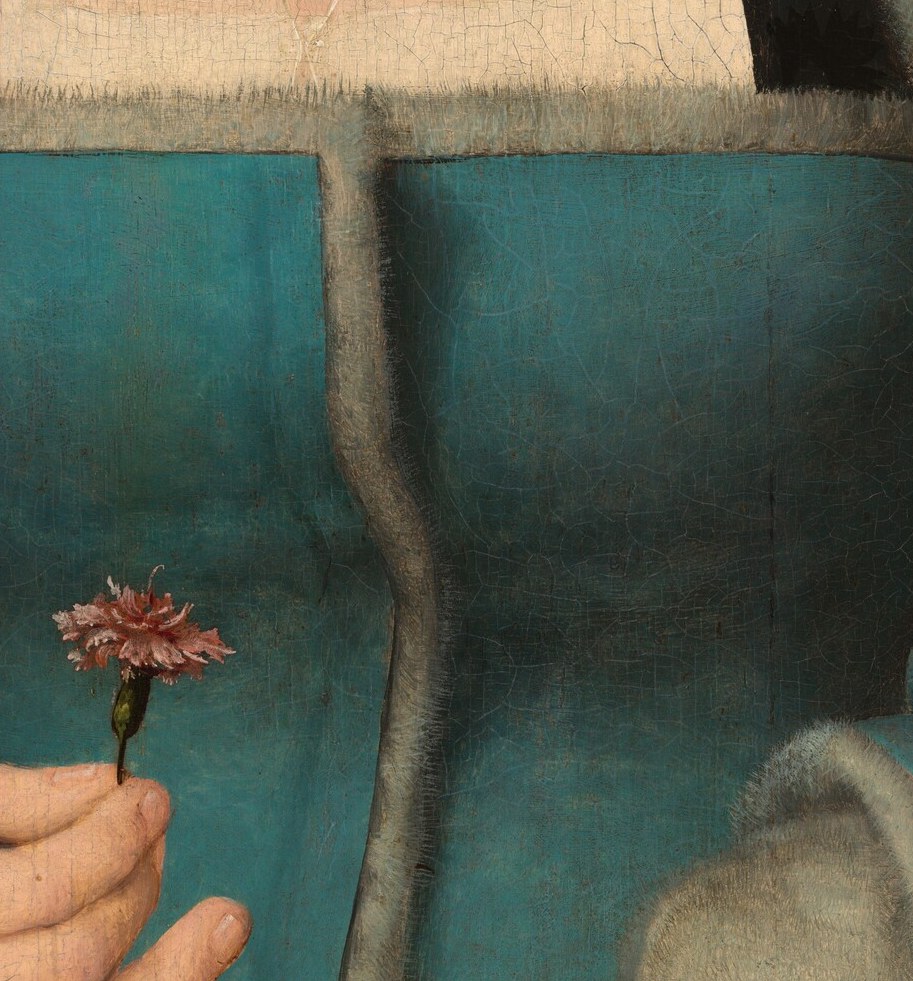
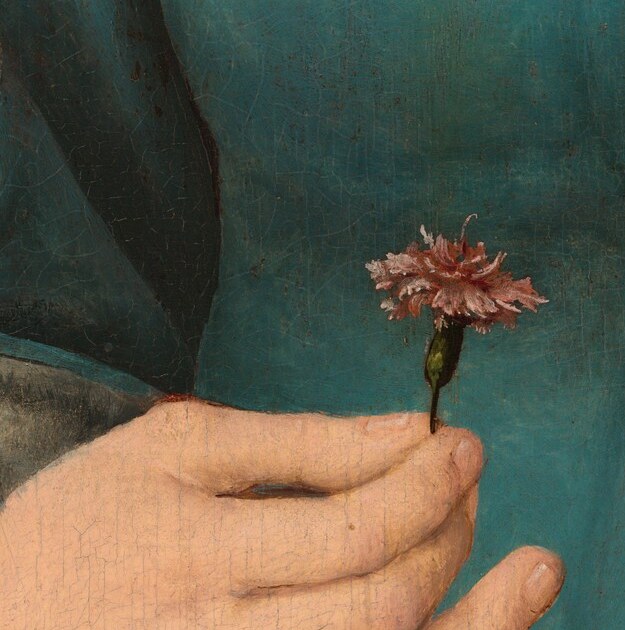
Look at her face first: the gaze is direct but the eyes are slightly downturned, creating a flicker of distance inside the intimacy. Then move to the red carnation in her right hand, a dual symbol of earthly betrothal and the Passion of Christ. The book under her left hand is worn at the cover, a devotional object she actually read. The gold ring is small but legible, and the teal dress, still vivid after five centuries, was made from azurite or smalt, an expensive pigment that declared her husband’s wealth.
Joos van Cleve was a leading Antwerp painter, co-deacon of the Guild of Saint Luke, and ran a large workshop that produced portraits, religious works, and royal commissions. But around 1520, his recorded activity thins, and by 1541 he is gone. This panel was made when he was at his full powers, blending Early Netherlandish precision with a new psychological weight.
Margaretha Boghe holds a carnation and a prayer book. She looks at us from a world that no longer exists. What do you think she would say if she could speak?
Details
Transcript
She looks out from 1518, steady and unreadable. Her left hand rests on a well-worn prayer book. The carnation she holds meant betrothal, and also the Passion. A gold ring confirms it. She was a wife. The artist ran a workshop with five pupils in Antwerp. Within four years of this portrait, his records vanish. She outlasted the painter. Her gaze still holds the room.