The Queen of Etruria and her Children by José Aparicio
This 1815 oil painting, "The Queen of Etruria and her Children" by José Aparicio, captures Maria Luisa I with meticulous detail. She wears several prestigious honors, including the Golden Fleece, a potent symbol of her elevated rank. The painting is housed in the Museo del Prado.
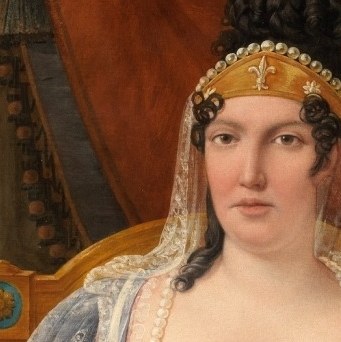
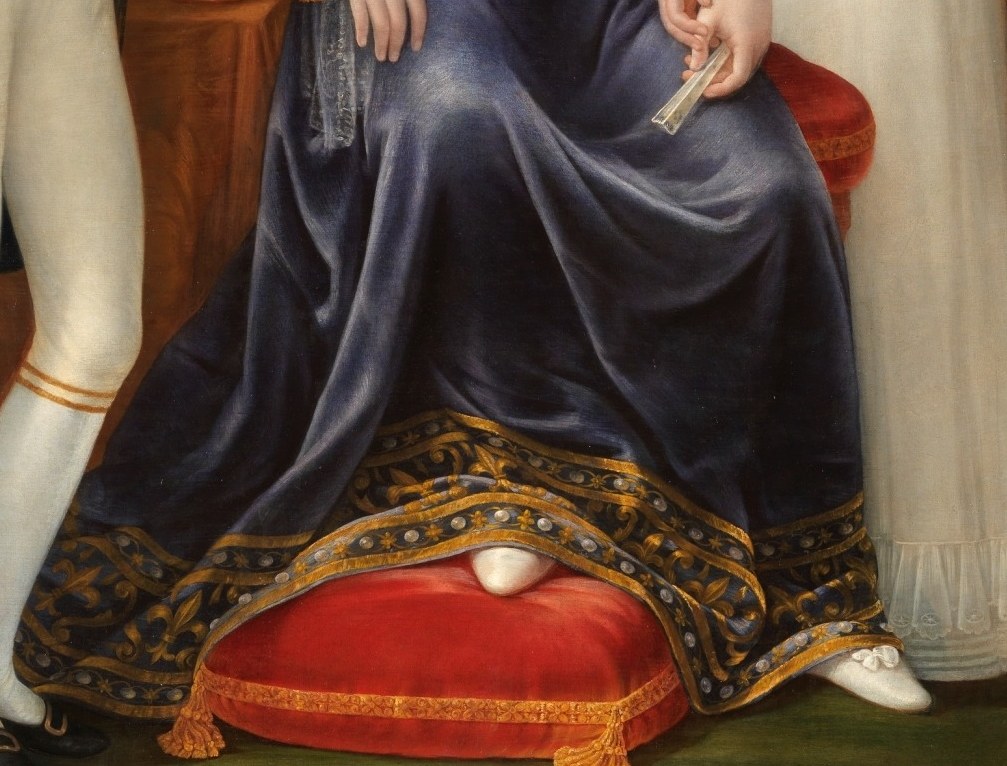
Note the queen's stern expression and the opulent velvet robe. Her medals, including the Golden Fleece and the Order of Charles III, are potent symbols of her power and the honors bestowed upon her.
Aparicio created this formal portrait during the reign of King Ferdinand VII, a period reflecting the artistic trends of Spanish Neoclassicism. The work serves as a historical document of aristocratic power in post-Napoleonic Europe.
See how the artist uses subtle details to convey status and authority.
Details
Transcript
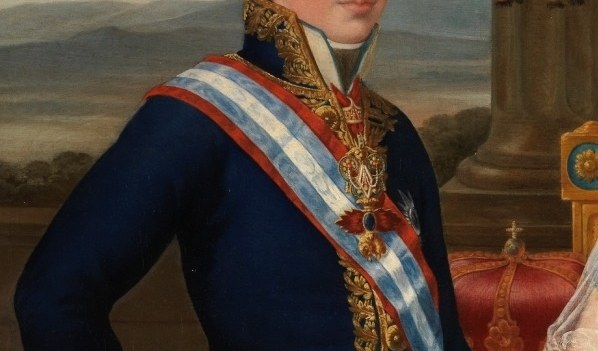
This queen looks stern and weary. Her velvet robe signifies immense wealth. Look at the medals on her chest. These are potent symbols of her honors. Her son stands with youthful confidence. His sash signals noble lineage. The painter completed this in 1815. She wears the Golden Fleece medal.