Portrait of a Young Man by Bellini, Giovanni
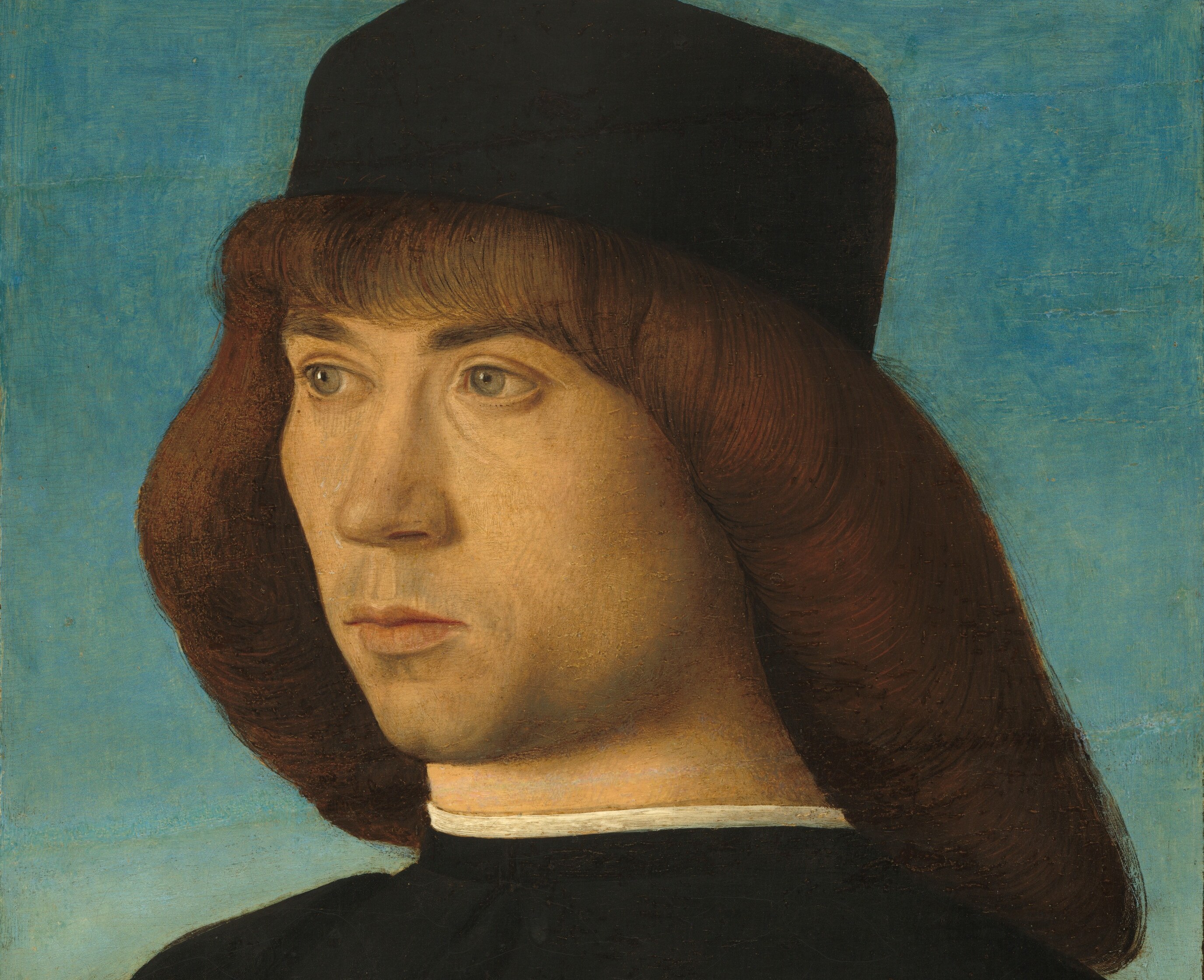
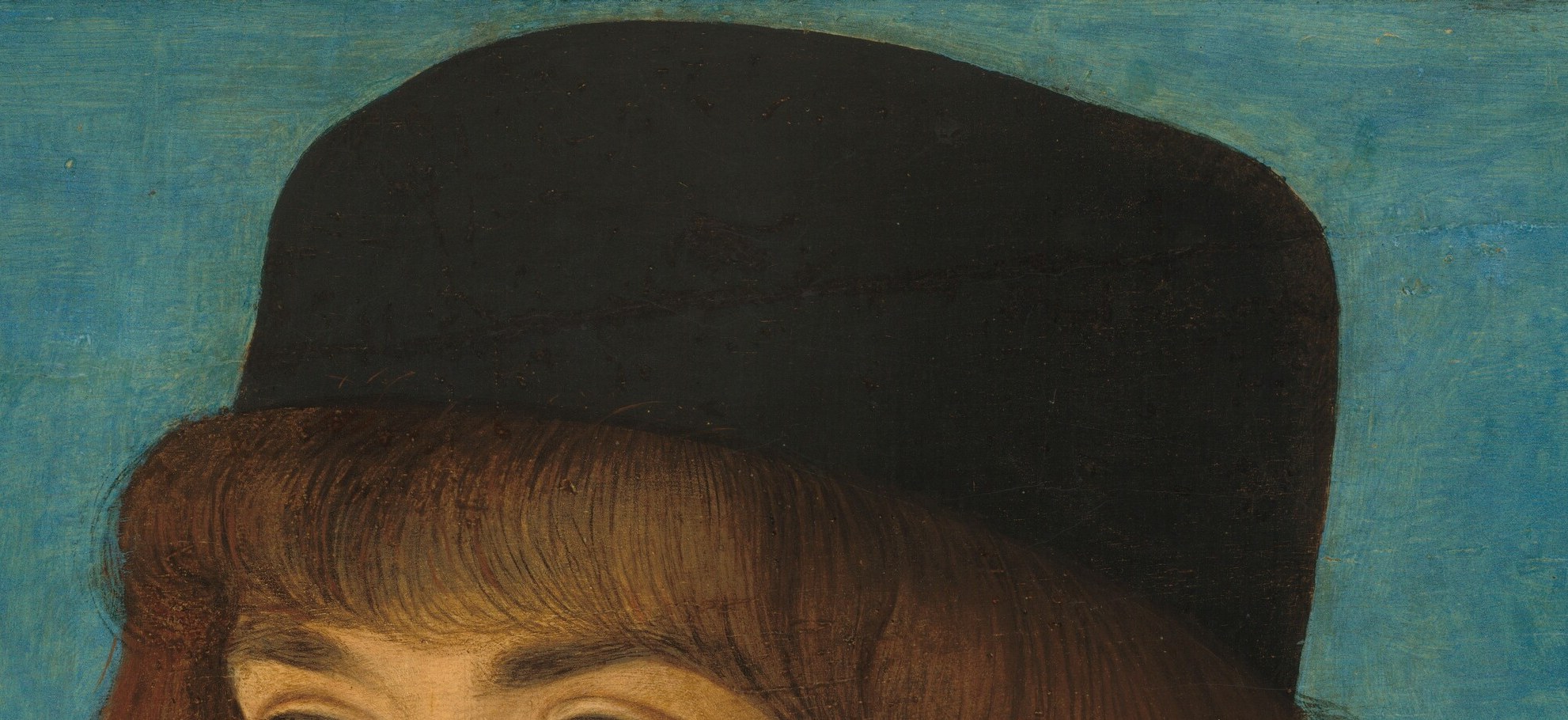
This is Giovanni Bellini's 'Portrait of a Young Man', painted in Venice around 1490 and now in the National Gallery of Art in Washington. It is one of the first portraits in Italian art where the sitter turns to face us directly, treating the viewer not as a subject to be ignored but as an equal to be met.
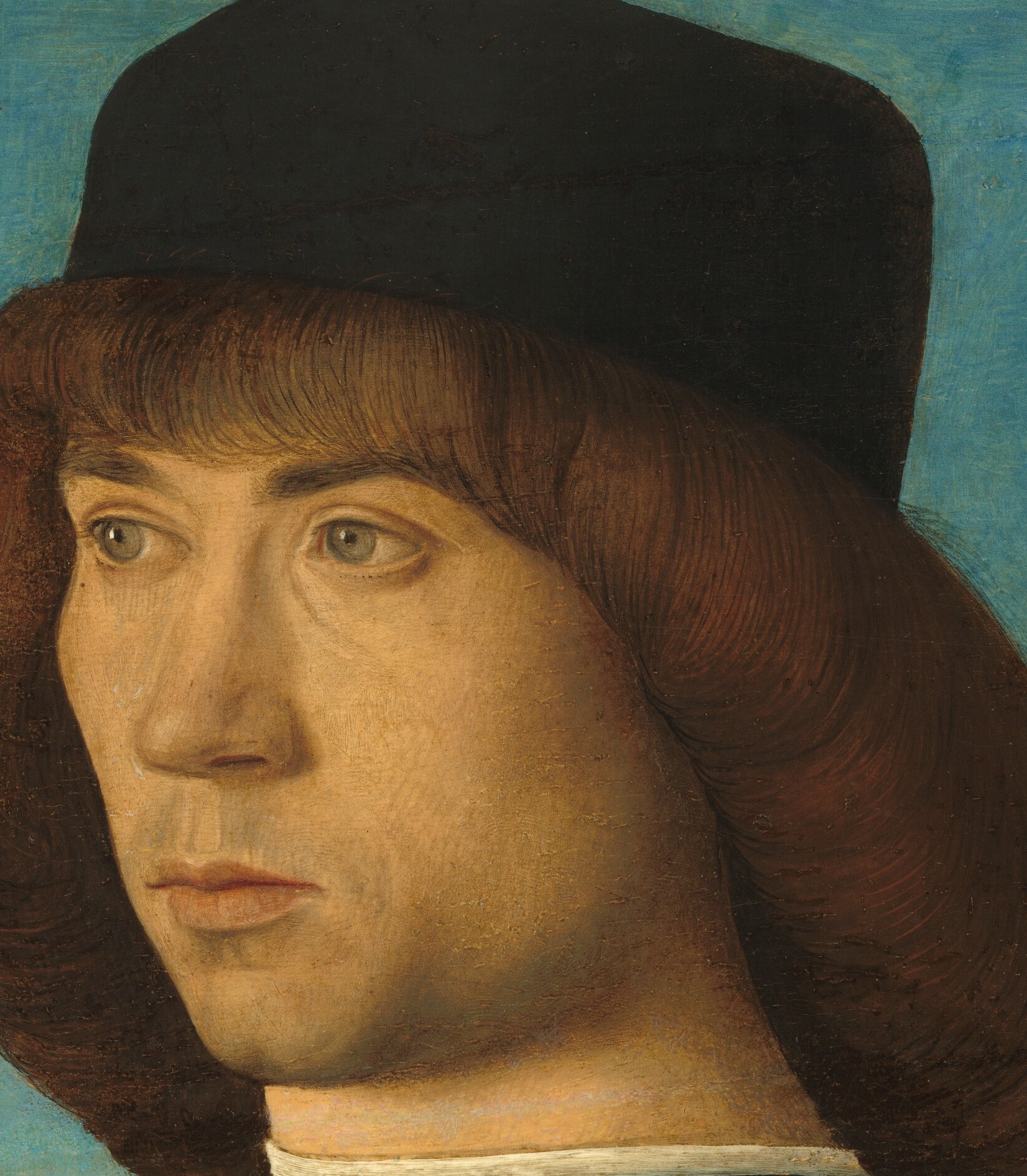
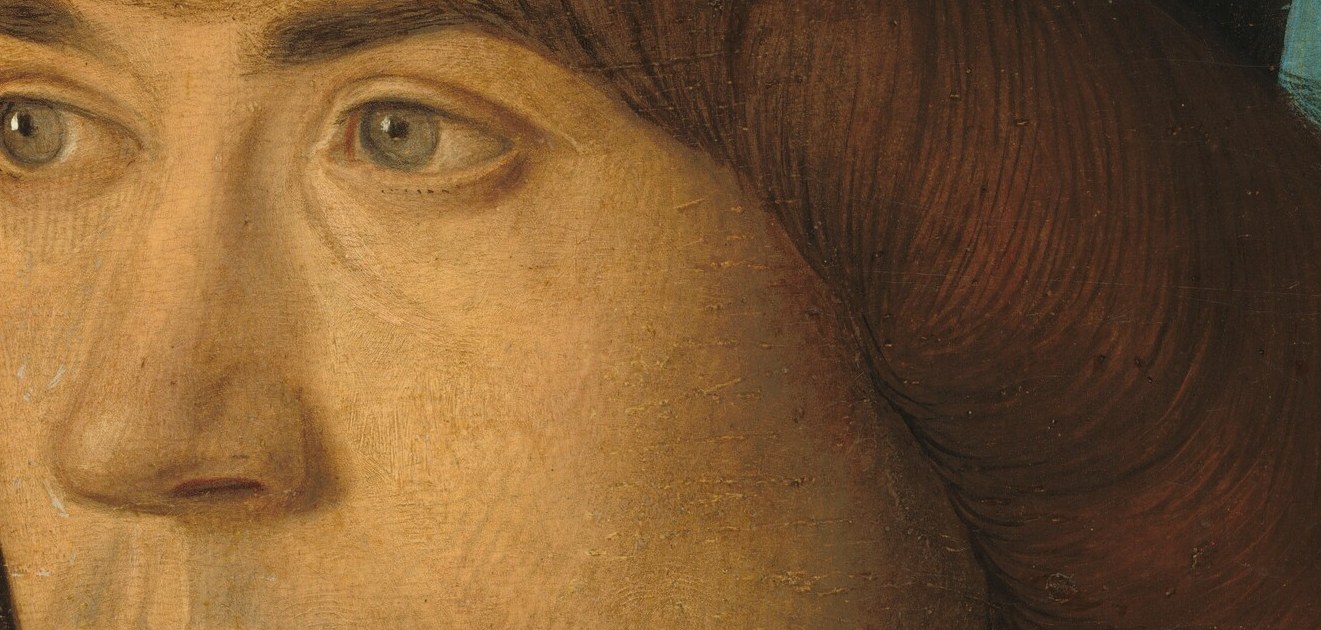
The revolution is in the eyes. Before Bellini, Venetian portraits almost always showed their subjects in strict profile, like the emperors on ancient coins. Here, the young man's unflinching gaze and the soft, atmospheric sky behind him assert a new kind of presence: he is a specific, living individual in a real world, not an icon.
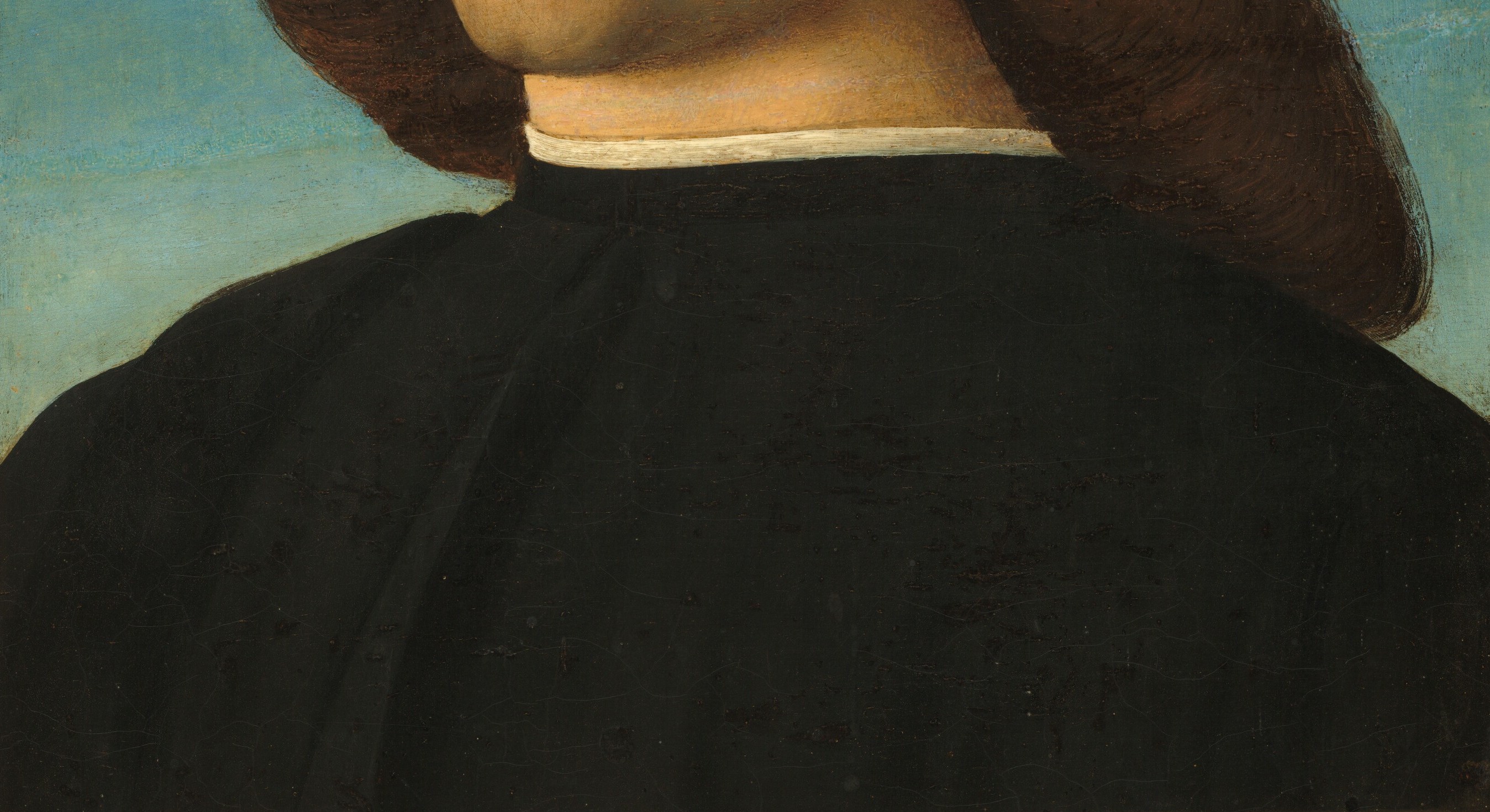
Bellini painted this on poplar with oil, using translucent glazes to build the skin from within. The expensive black of his gown signals civic sobriety rather than aristocratic flamboyance, and the brownish-red beret marks him as a professional or educated man of the Republic. The ledge at the bottom, borrowed from Netherlandish painting, separates his space from ours by just a few inches.
Five centuries later, the soft turn of his cheek and the firm set of his mouth still feel uncannily modern. What do you think this young man was thinking as he sat for Bellini in a studio filled with Venice's watery light?
Details
Transcript
Venice, around 1490. The Republic is at its peak. But look past the sky and stone. This face was a revolution. For centuries, portraits showed people in profile, like a coin. Bellini turned the sitter toward us and changed everything. That unflinching stare treats the viewer as an equal. The black gown cost more than color. It was dyed for civic virtue. He is no aristocrat. He is a man of education and means.