The Green Salon by Walter Gay
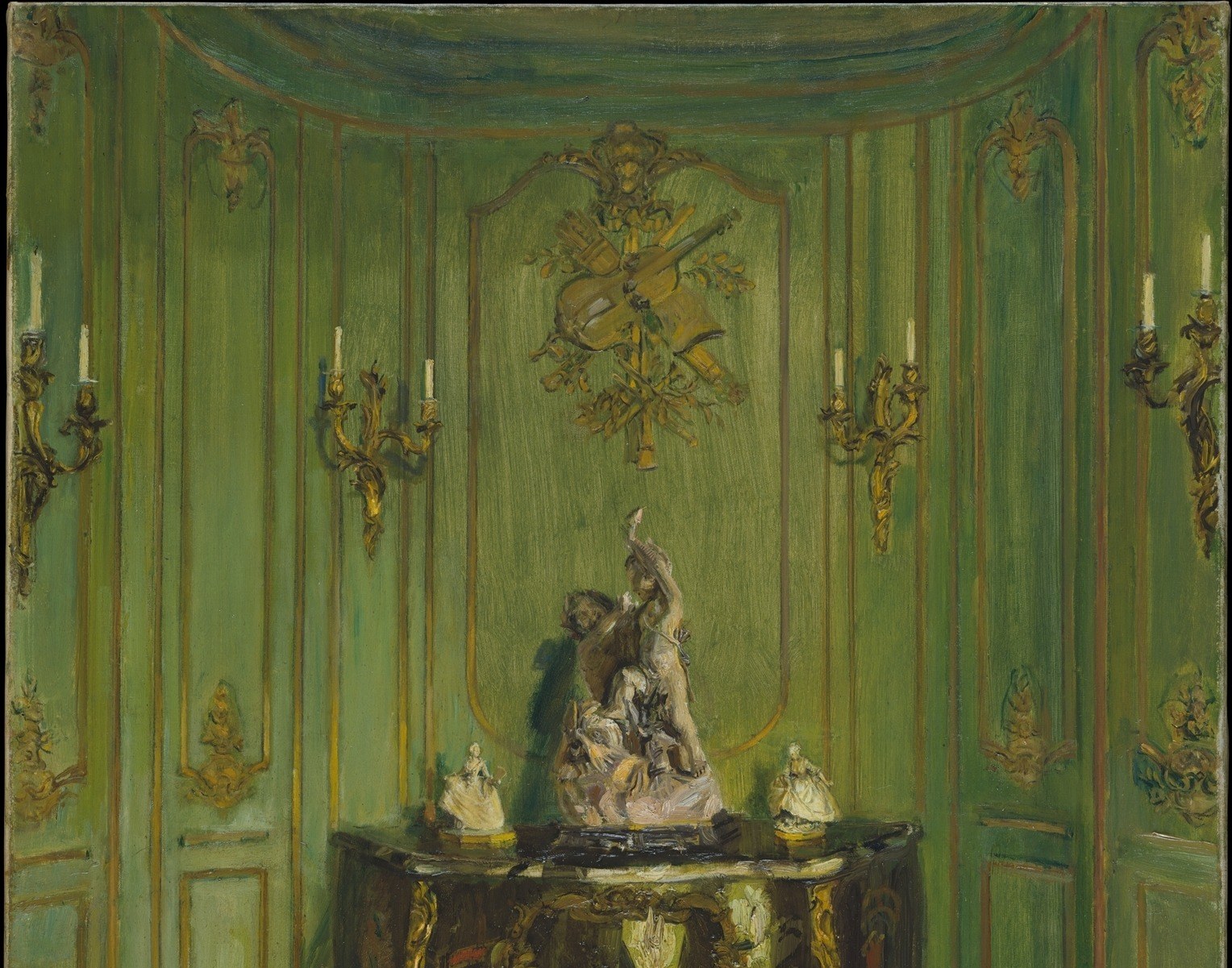
Walter Gay's *The Green Salon*, painted in 1912, is an exquisite example of the American artist's skill in depicting opulent interiors. Currently housed at The Metropolitan Museum of Art, this painting invites viewers into a serene, richly decorated room.
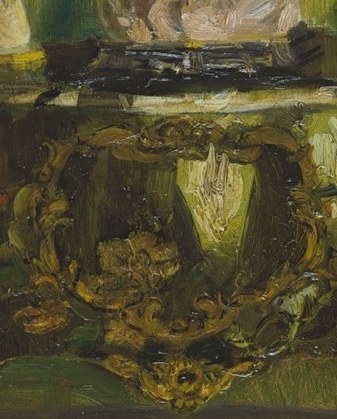
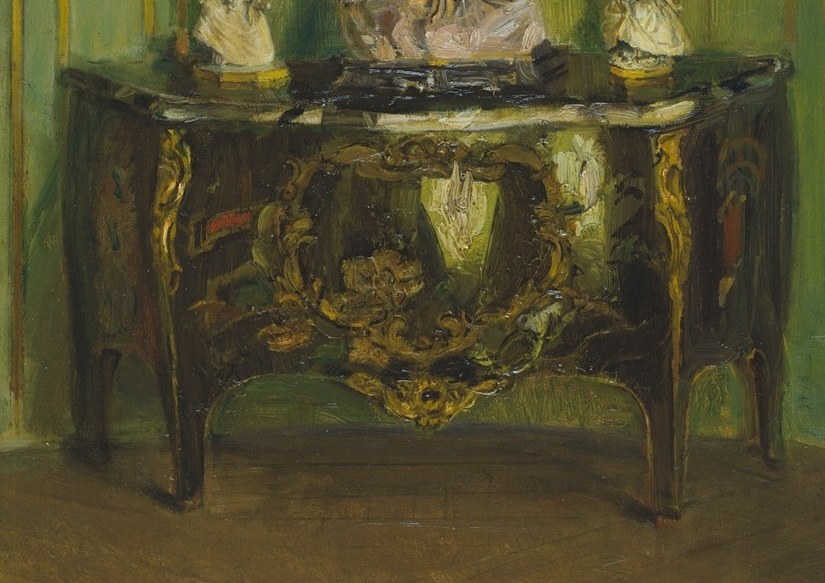
Notice the muted green walls, adorned with delicate gold trim, which create a sophisticated backdrop. The focal point, a dark-stained table, supports classical porcelain sculptures and intricate figurines, hinting at the refined tastes of the era. However, the most captivating detail lies within the ornate mirror frame, reflecting a grand chandelier that isn't directly visible in the room itself.
Gay, working within the Impressionist movement, mastered the interplay of light and surface. His loose brushwork and layered glazing bring atmospheric warmth to the scene, allowing for subtle tonal variations that suggest the room's elegant lighting and design. This work is a testament to his mature period, showcasing his enduring interest in quiet, domestic luxury.
What hidden details do you find most intriguing in such carefully constructed scenes?
Details
Transcript
This elegant room belongs to a Gilded Age painter. He was known for capturing quiet, opulent interiors. Look closely at the wall mirror here. It reflects a chandelier, not fully visible in the room. This subtle reflection adds depth and hidden light. The painter signed his name just below.