Beggars by a Door by Mariano Fortuny Marsal
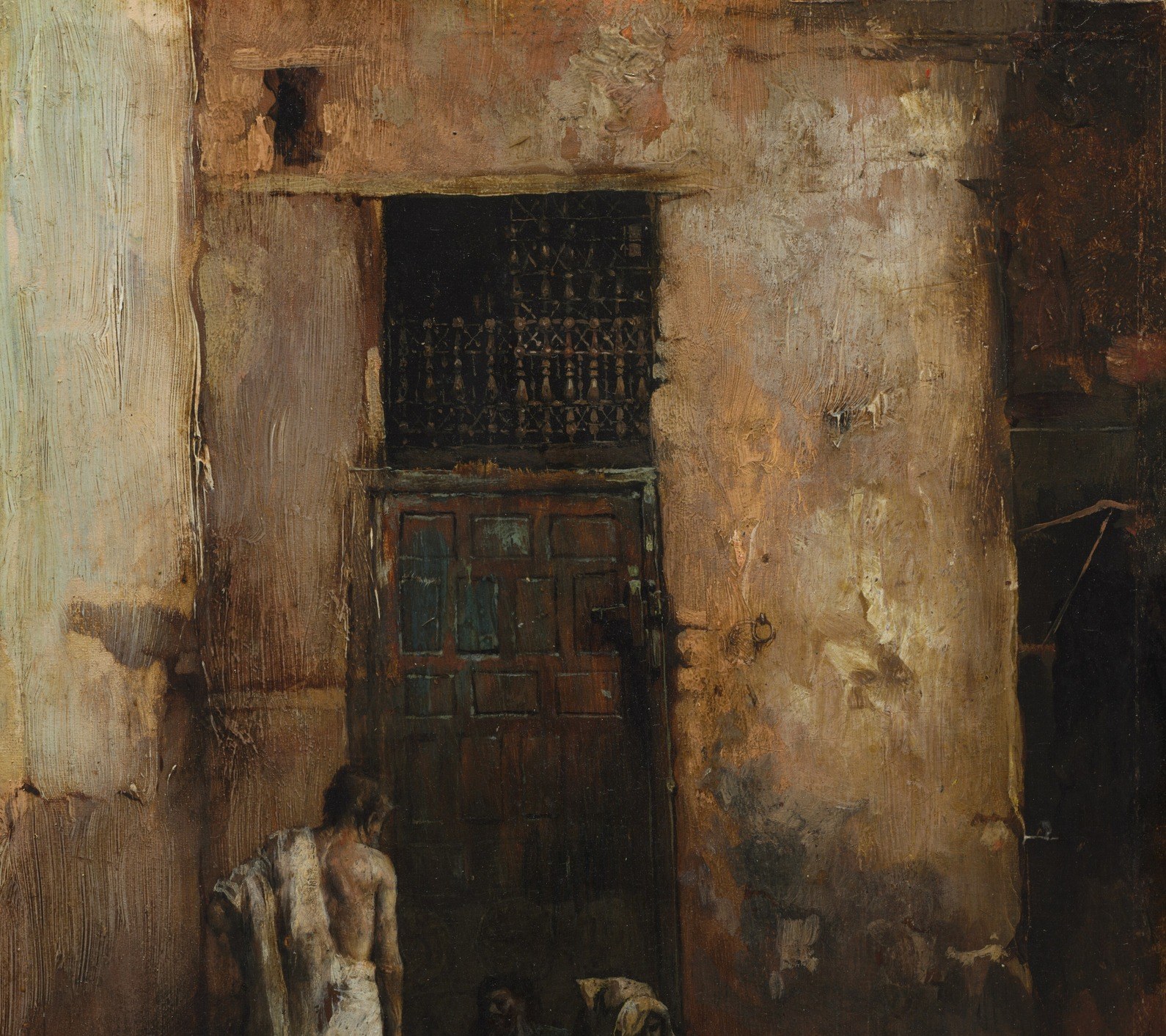
Mariano Fortuny's Beggars by a Door (1870) is a painting that reverses your first instinct. You assume the figures are outside, begging to get in. Look again: the door opens inward, the latch is on their side, and the threshold traps them inside. It is now in the collection of The Cleveland Museum of Art.
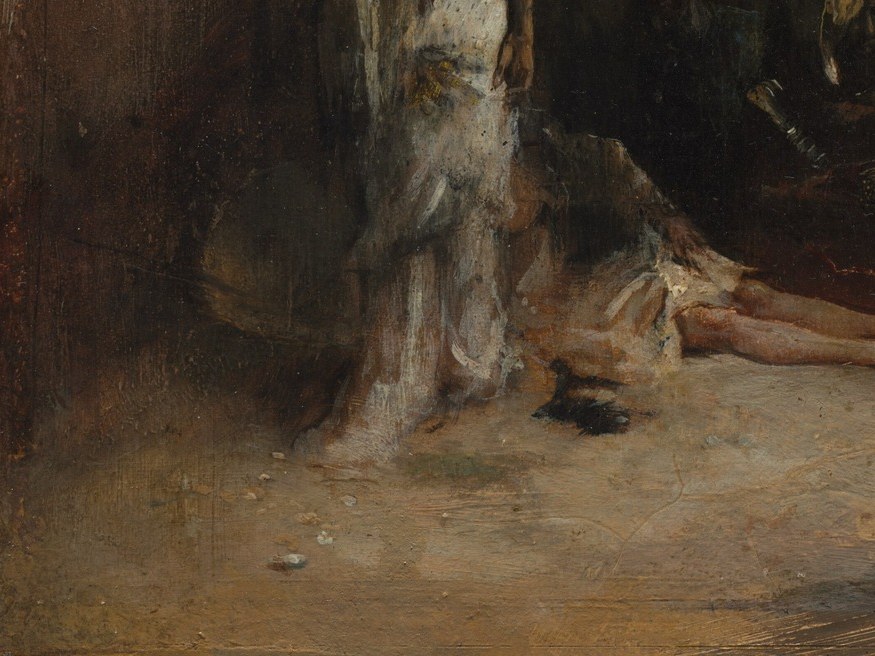
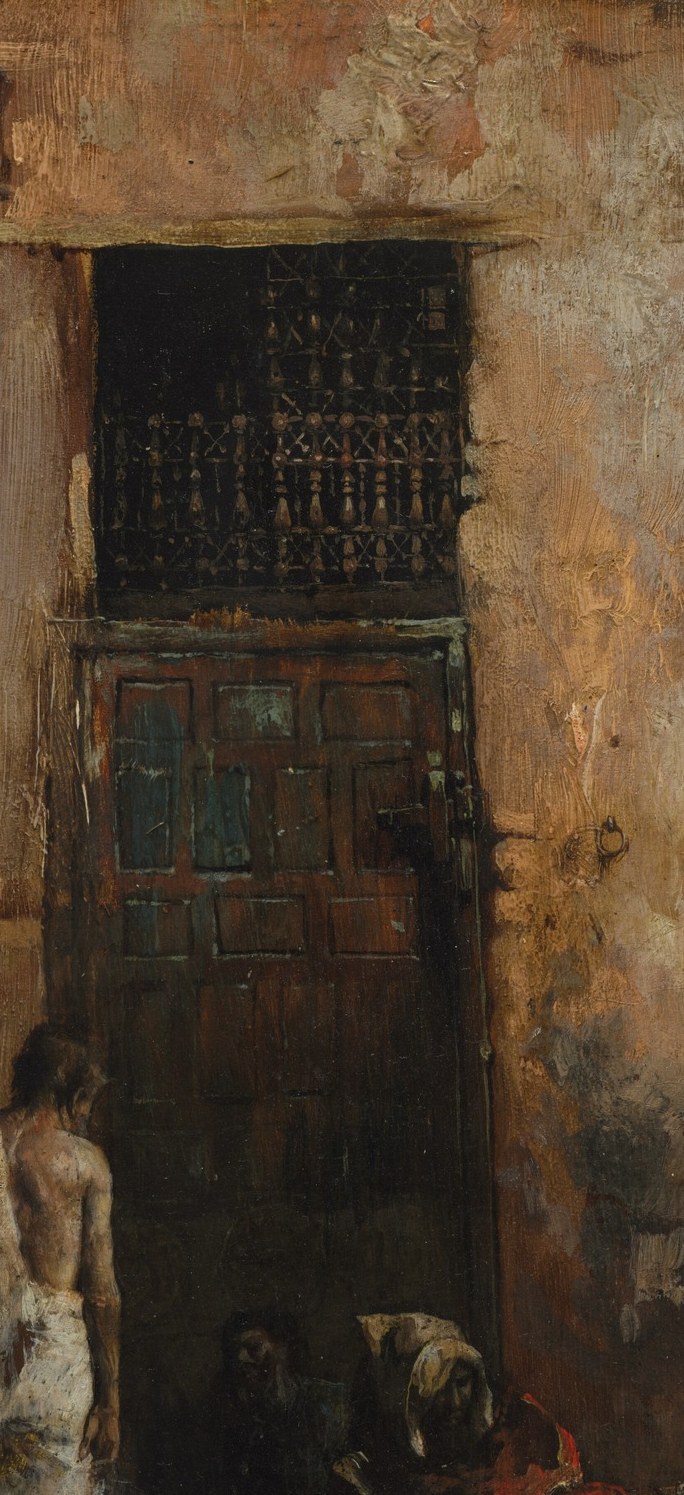
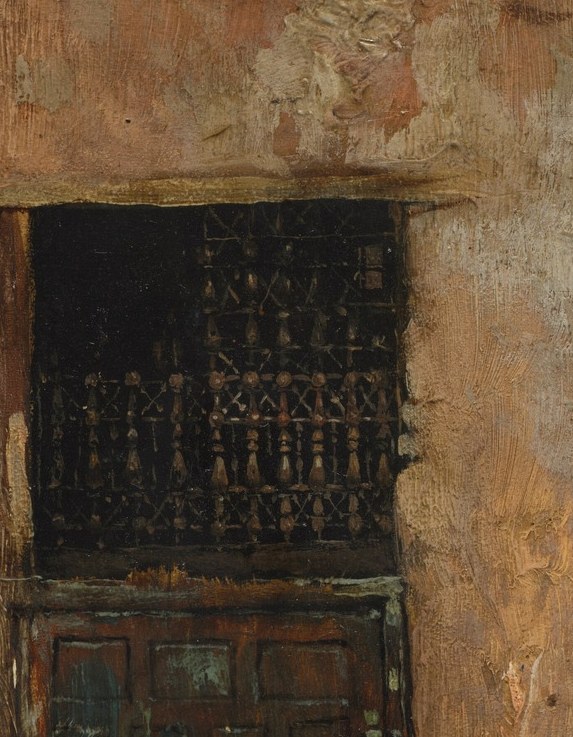
Let your eye follow the light first. The weathered plaster wall is a technical marvel of impasto and glaze, glowing softly on the upper right before plunging into a deep shadow pool at the base. The red cloak grabs you, but stay with the iron grille. That lattice of metal against shadow is the painting's moral axis. It rhymes with a prison gate.
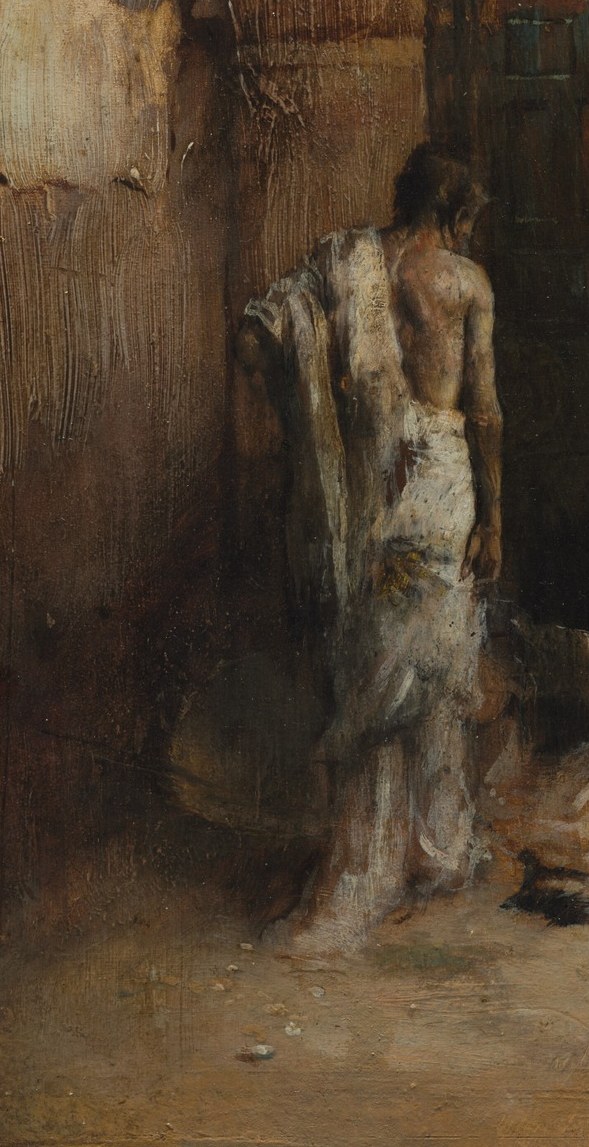
Fortuny was famous for glittering Orientalist scenes and military spectacle. Here he turned to a bleak, unvarnished Realist interior. The brushwork is raw and visibly thick, the palette stripped back to ochre, brown, and that single note of red. He made the wall as much a character as the slumped figures, and he used a barred door to render exclusion as a physical, claustrophobic fact.
What do you think the figure in white is looking at? The door, the floor, or something we cannot see?
Details
Transcript
He painted the light with obsessive care. But the real subject is the dark. These figures are not outside waiting to enter. They are shut in. The latch and the grille face them. Poverty becomes a prison, with the door locked from the inside.