The Maas at Dordrecht by Cuyp, Aelbert
View the artwork: The Maas at Dordrecht →
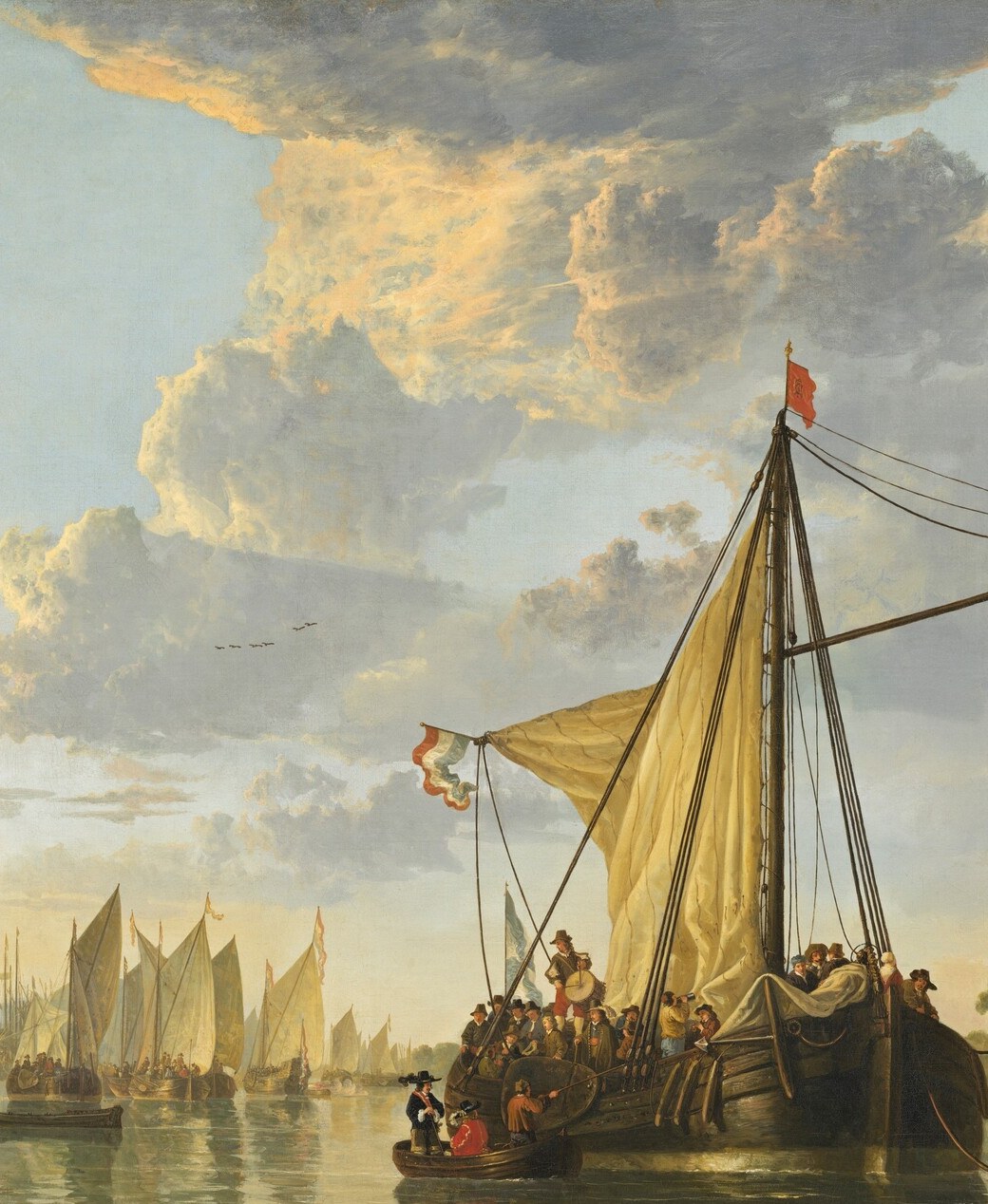
This is Aelbert Cuyp’s The Maas at Dordrecht, painted around 1650 and held by the National Gallery of Art in Washington. Cuyp’s golden atmosphere became one of the most imitated light effects in Western painting, directly influencing J.M.W. Turner, who traveled to the Netherlands specifically to study how the Dutch master made canvas hold the sun.
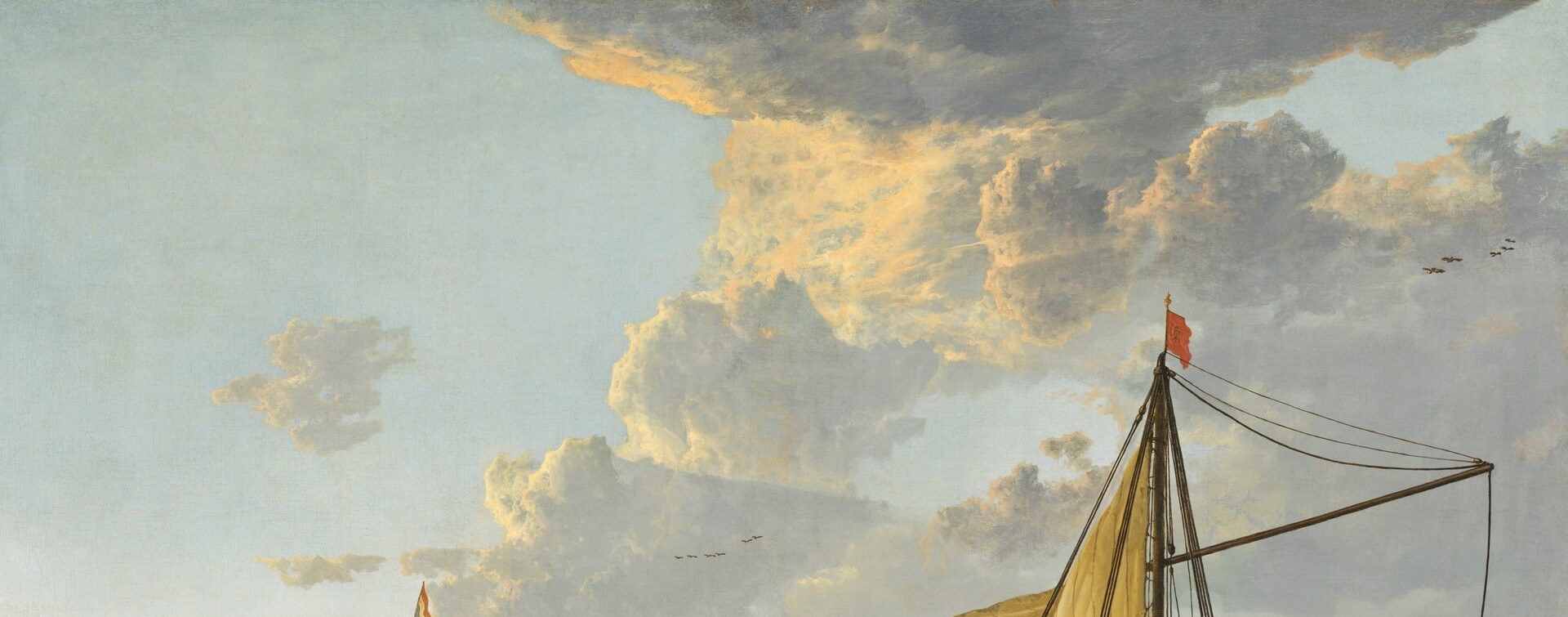
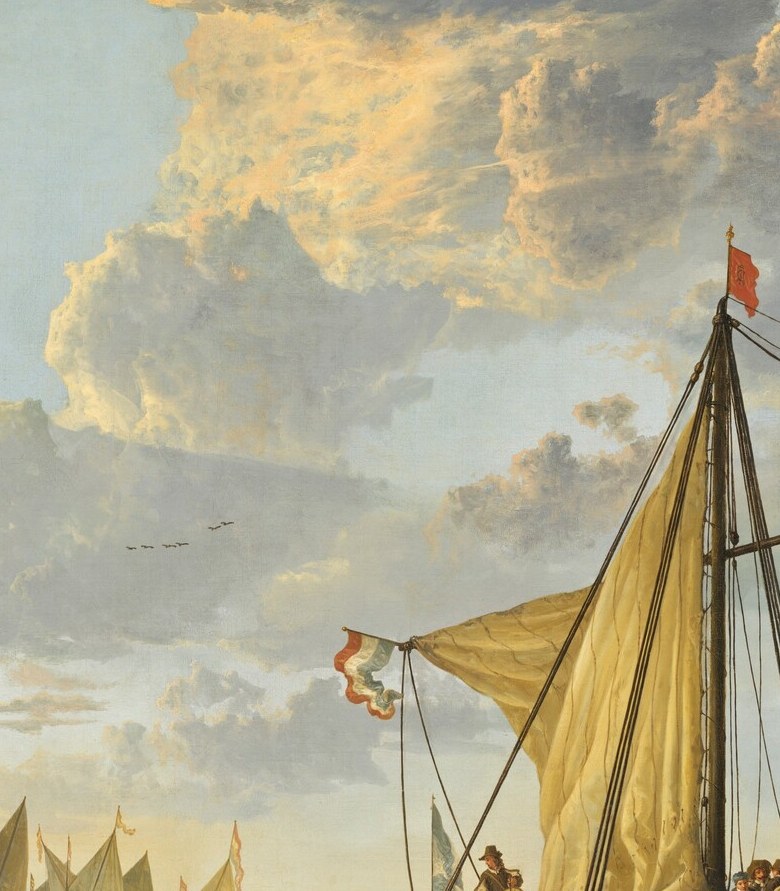
Look at the central sail. That amber glow is not a transparent glaze laid over a finished painting. Cuyp worked a warm yellow-brown earth pigment into a thin, semi-transparent layer over a cooler dark underpainting. The underlayer absorbs light, while the ochre scatters it back, producing a luminous vibration that reads as sunlight even in a dim gallery. He repeated the trick across the entire horizon, but the sail is where it is most naked.
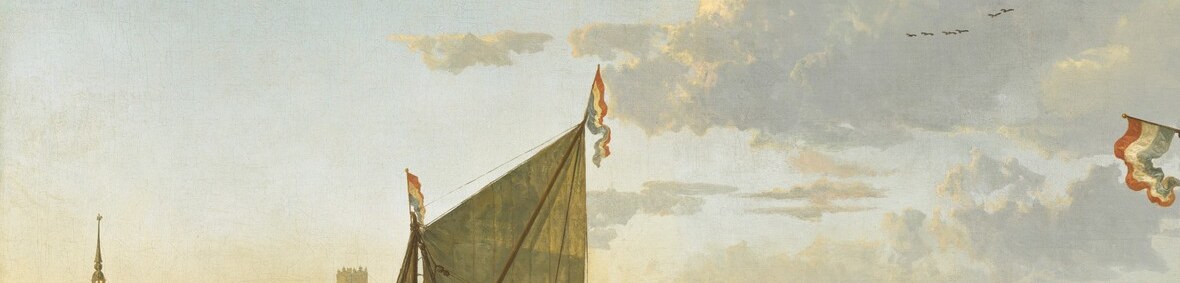
The scene is not imaginary. In July 1646, a fleet of warships and yachts assembled on the Merwede near Dordrecht for a two-week festival before a military campaign. Cuyp recorded the gathering from a viewpoint northeast of the city, with the incomplete tower of the Grote Kerk visible on the skyline. A possible patron, Matthijs Pompe van Slingeland, appears as an officer in a small rowboat in the foreground.
The painting is a paradox: a document of massed naval power that chooses to record not the noise, but the stillness of a summer afternoon when the river was as flat as glass.
#arthistory #dutchgoldenage #aelbertcuyp
Details

Transcript
Look at that sail. It glows like a lantern against the sky. There is no paint called ‘sunlight’. He built this with earth. A warm ochre ground, pulled thin over a dark underlayer. The light does not sit on the canvas. It seems to breathe inside it. Turner crossed the sea to study how this was done. A fleet of thirty thousand men gathered below this very light. And the artist kept only the quiet. A mirror river. An airless afternoon.