Artwork
The Maas at Dordrecht
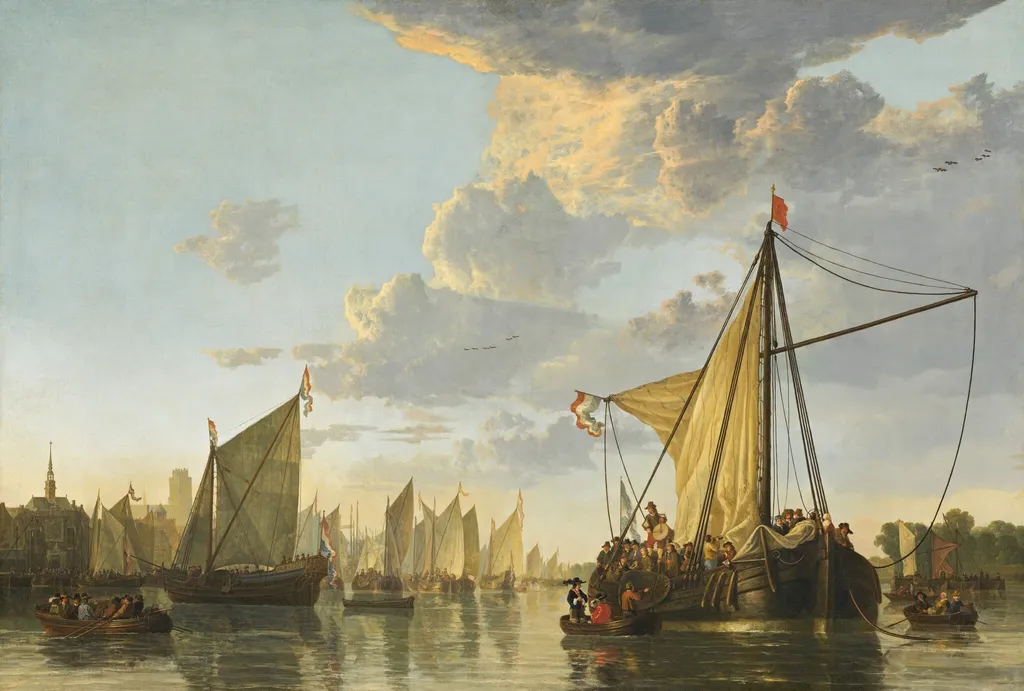
The Maas at Dordrecht is an oil painting by the Baroque artist Aelbert Cuyp. It dates from 1650 and is held in the collection of the National Gallery of Art.
- Inscription
- Inscribed:on sideboard of ship in right foreground: A.cuyp
About this work
In July 1646, more ships than ever before gathered on the Merwede at Dordrecht, carrying thirty thousand foot soldiers for a two-week festival before sailing to war. Aelbert Cuyp painted the scene from the northeast, with the Grote Kerk's unfinished tower catching the morning light as a crowded fleet of warships and yachts fired salutes.
Subject & Meaning
The painting shows a broad view of the Meuse river at Dordrecht, crowded with a variety of sailing ships under a dramatic sky.
The painting shows a broad view of the Meuse river at Dordrecht, crowded with a variety of sailing ships under a dramatic sky. An eighteenth-century inventory described it as depicting a rendezvous featuring Prince Maurice of Orange in a chaloup with other princes, while the statesman Johan van Oldenbarnevelt stands in an opposing chaloup, looking toward him. This would represent a scene from the Dutch Revolt, though the figures’ deaths before the painting’s date suggest the description may be retrospective or symbolic.
Later scholarship has also linked the work to historical events in Dordrecht in 1646, including a large Dutch transport fleet gathering and a temporary ceasefire with Spain that celebrated progress toward independence.
Technique & Style
The painting is executed in oil on canvas, a typical support and medium for Dutch Golden Age marine painting. It measures 114.9 by 170.2 centimeters (45.2 × 67.0 in). Stylistically, it belongs to the Dutch Golden Age movement.
The composition is characteristic of Aelbert Cuyp: a river view with ships in the foreground and an expansive sky filled with clouds, capturing the atmospheric effects of light and atmosphere that define his marine works. The handling reveals a careful attention to the reflection of light on water and the detailed rendering of vessels. No specific condition notes are recorded in the available sources.
History & Provenance
The Maas at Dordrecht was painted by Aelbert Cuyp around 1650. Its earliest recorded owner was Johan van der Linden van Slingeland of Dordrecht, who possessed it by 1752. After his death, the painting was sold in 1785 from his estate.
It later passed through the hands of Alexis Delahante around 1804–1814, then was purchased by Sir Abraham Hume by 1815. The painting descended through the Hume family to the Earls Brownlow, and was sold at auction in 1923. It was acquired by Duveen Brothers and then, by exchange, entered the Andrew W. Mellon Educational and Charitable Trust in 1940, which gifted it to the National Gallery of Art that same year.
The painting is held at the National Gallery of Art in Washington, D.C., as part of the Andrew W. Mellon collection. It entered the museum in 1940 as a gift from The A.W. Mellon Educational and Charitable Trust, following acquisition by exchange from Duveen Brothers. No specific exhibition history is documented in the provided sources.
Overview
Aelbert Cuyp's oil on canvas, The Maas at Dordrecht, created around 1650, captures a bustling river scene in the Dutch city of Dordrecht. This painting exemplifies the artistic trends of the Dutch Golden Age and is currently housed at the National Gallery of Art in Washington, D.C. It presents a detailed view of maritime activity on the Maas River, characteristic of Cuyp's oeuvre.
Own this work as a print
Artist & collection

Artist
Aelbert Jacobszoon Cuyp or Cuijp (Dutch pronunciation: ; 20 October 1620 – 15 November 1691) was one of the leading Dutch Golden Age painters, producing mainly landscapes.

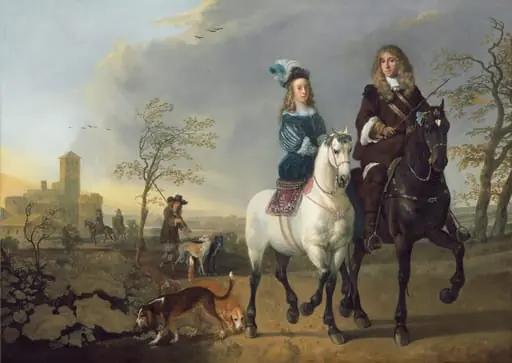 Lady and Gentleman on Horseback
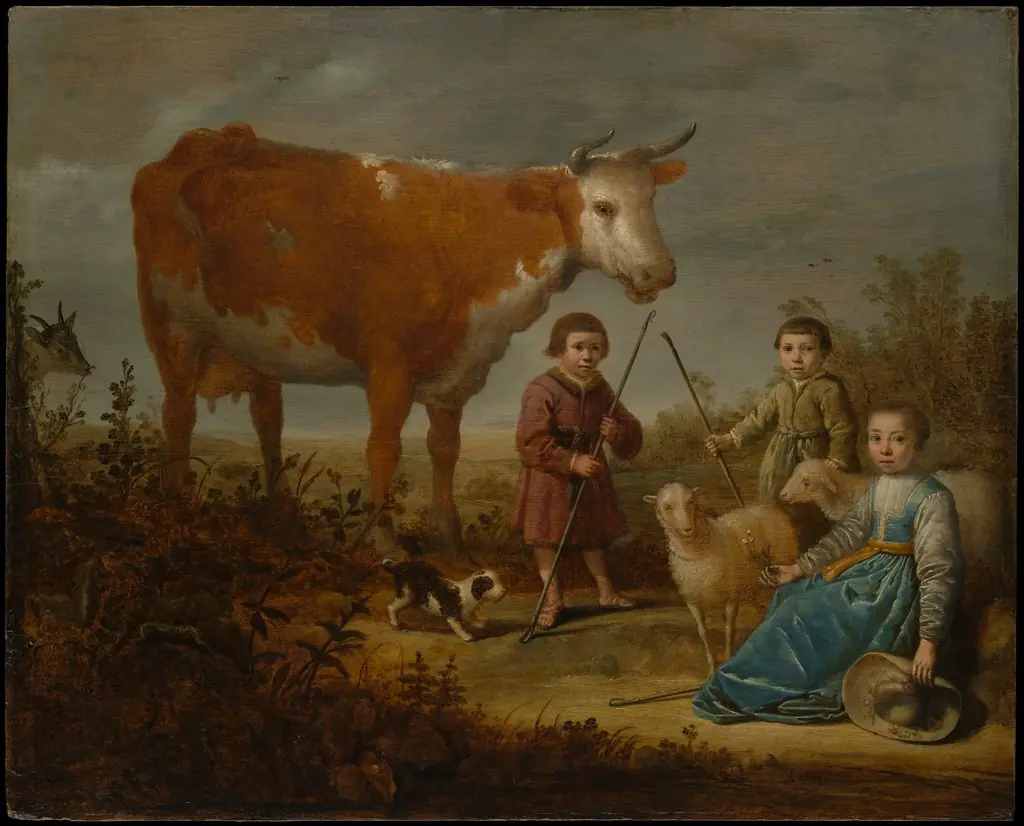 Children and a Cow
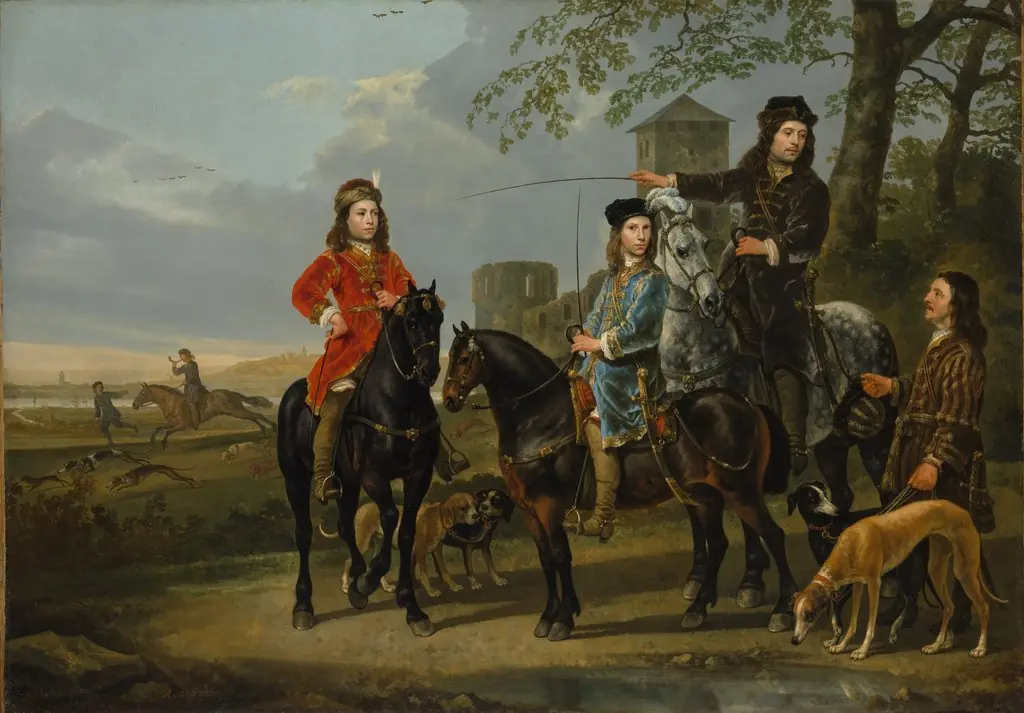 Equestrian Portrait of Cornelis (1639–1680) and Michiel Pompe van Meerdervoort (1638–1653) with Their Tutor and Coachman ("Starting for the Hunt")
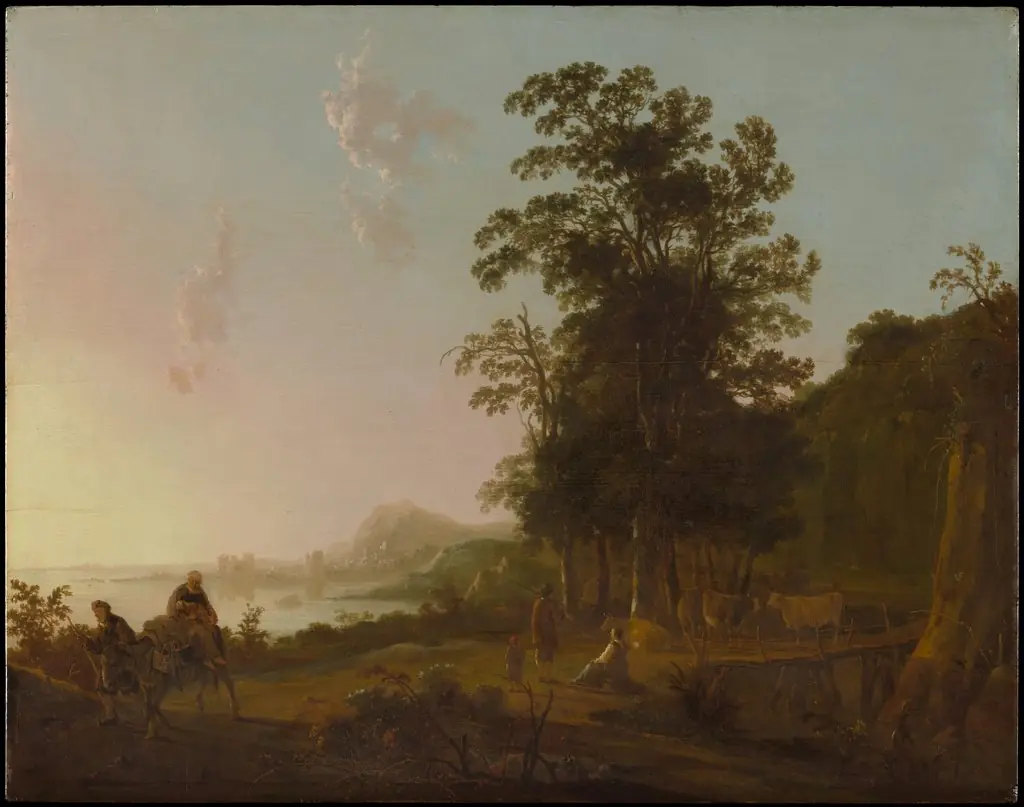 Landscape with the Flight into Egypt
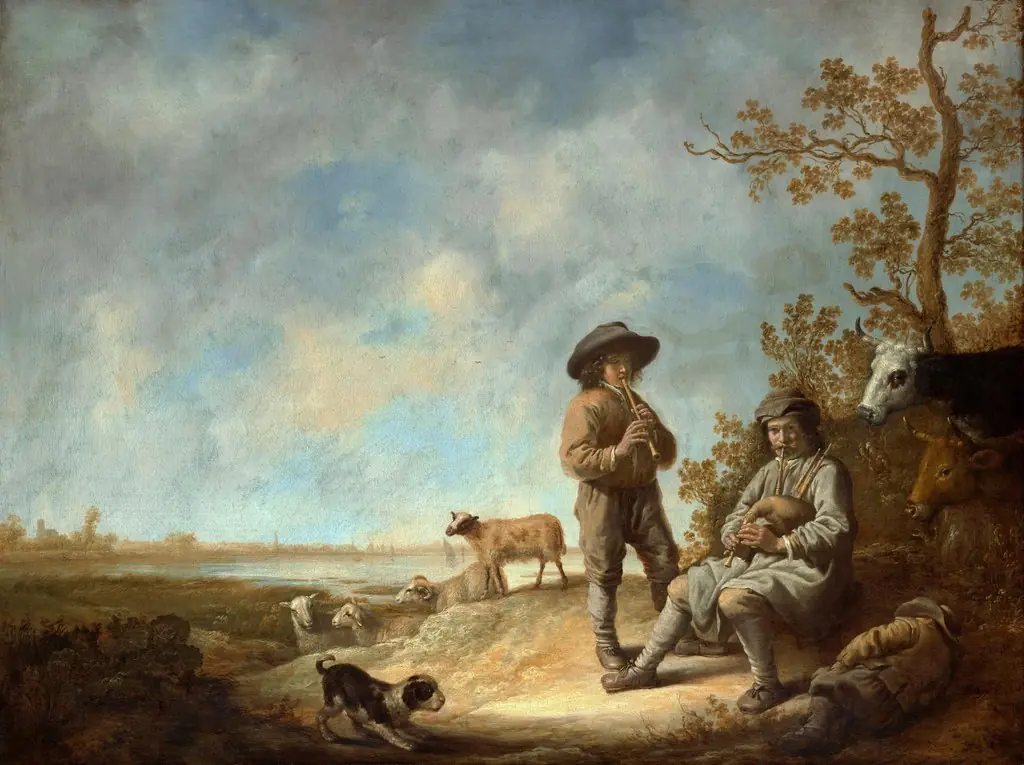 Piping Shepherds
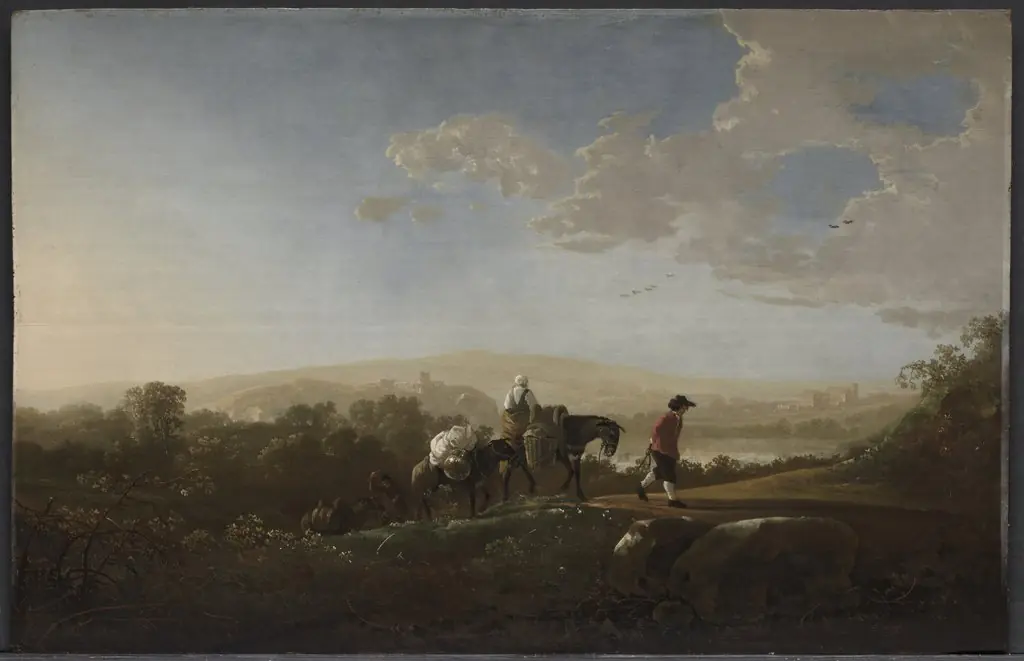 Travellers in Hilly Countryside
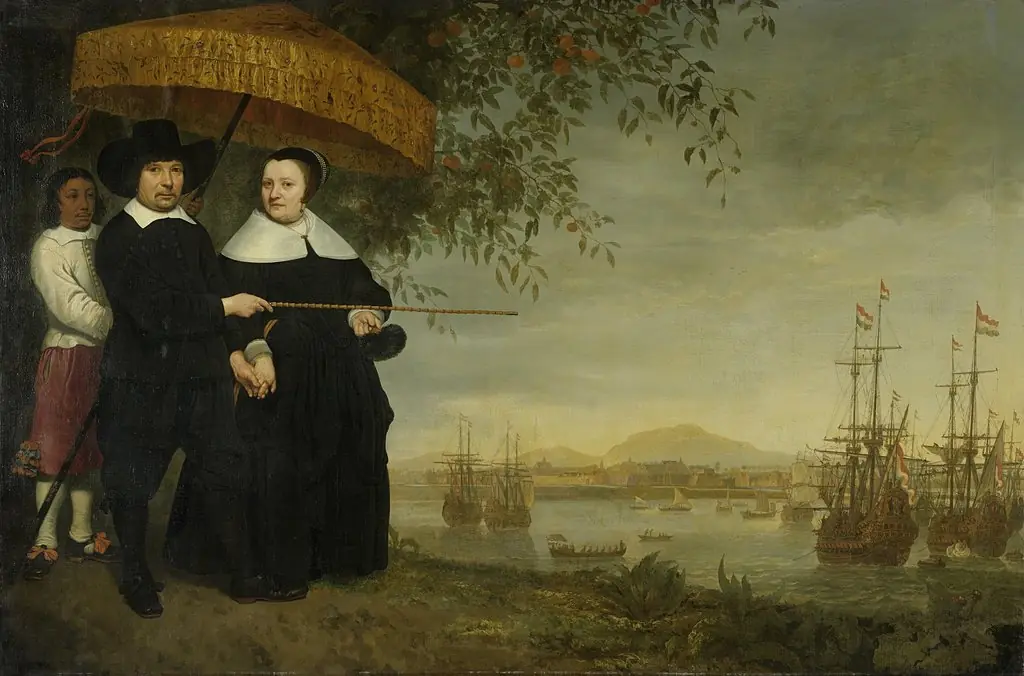 A Chief Merchant of the VOC with his Wife and an Enslaved Servant
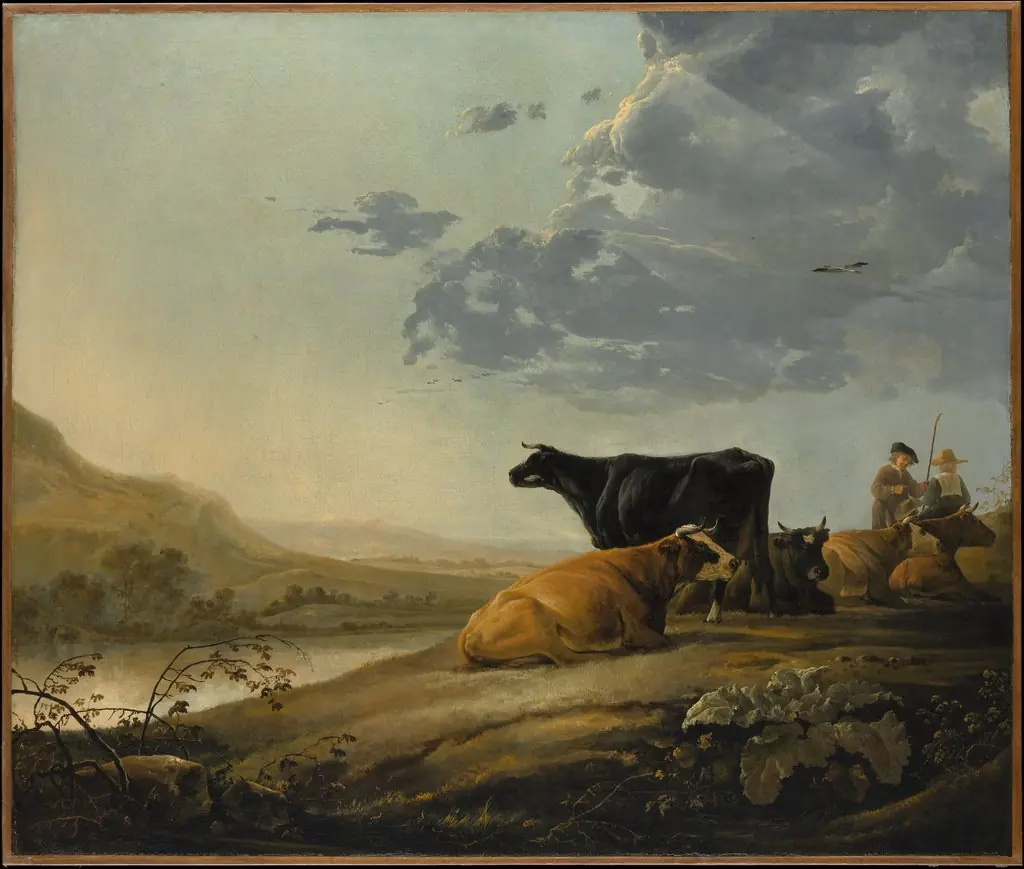 Young Herdsmen with Cows
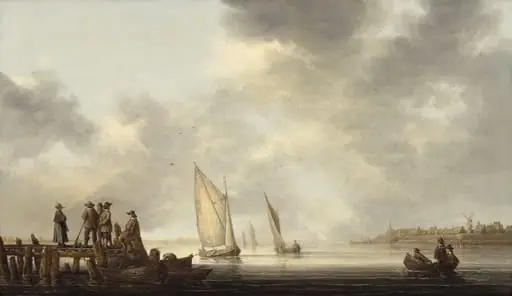 A Pier Overlooking Dordrecht
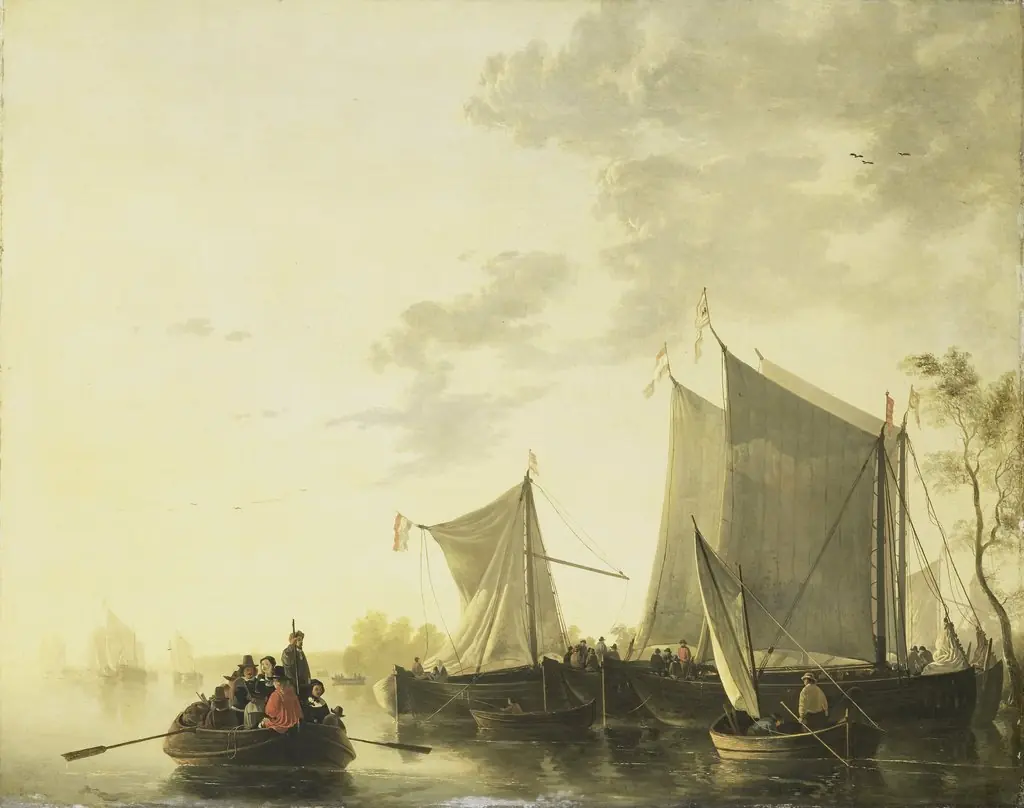 River view
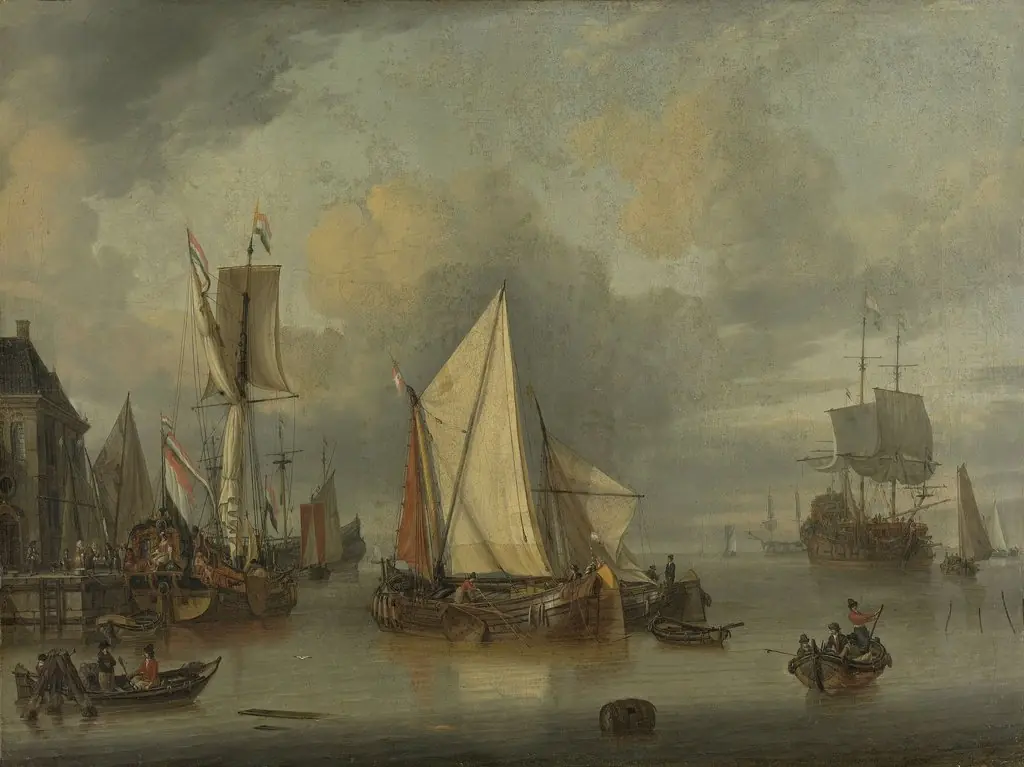 A Calm (Ships in the Harbor by Calm Weather)
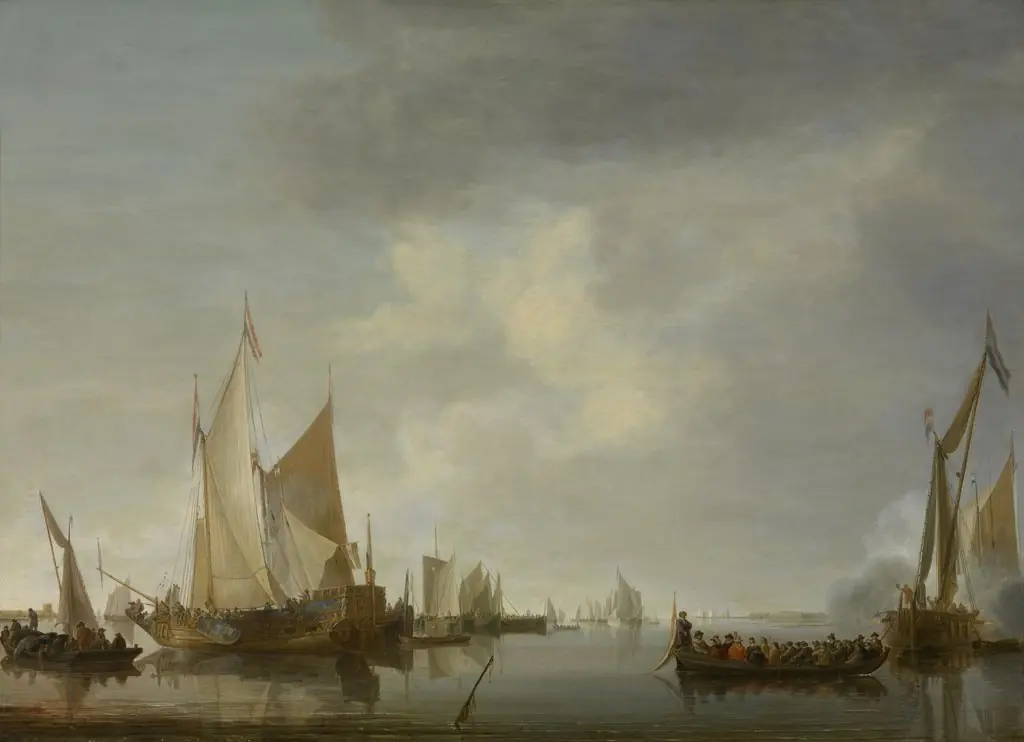 Water Festival called 'Admiraalszeilen'
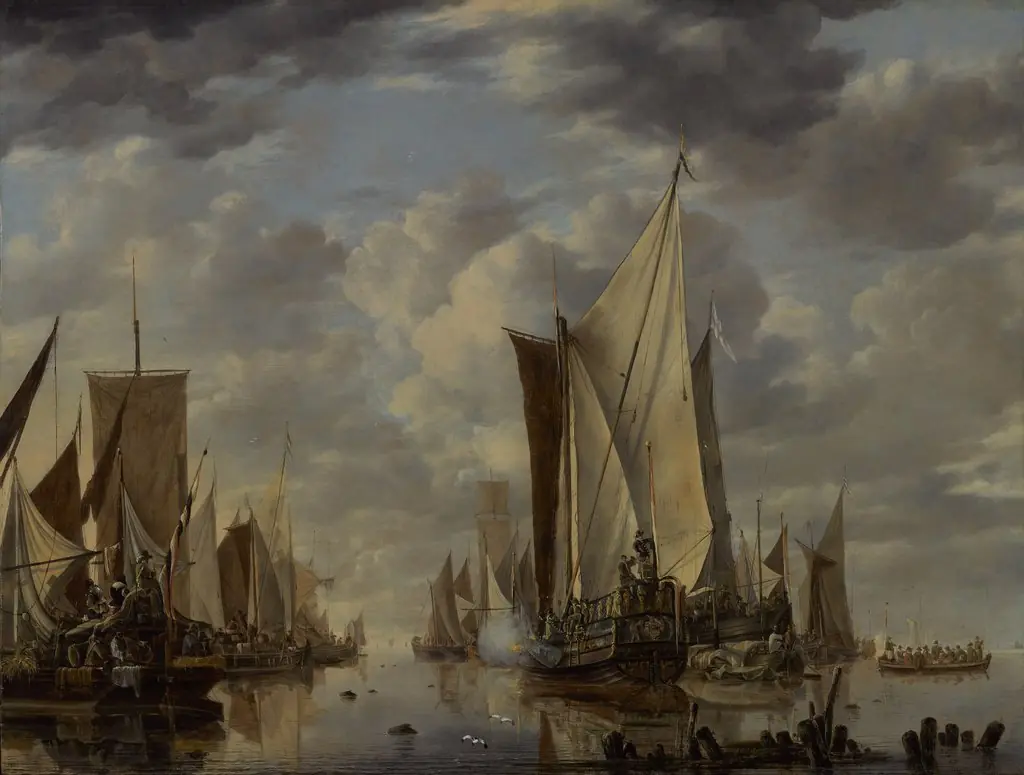 Shipping in a Calm at Flushing with a States General Yacht Firing a Salute
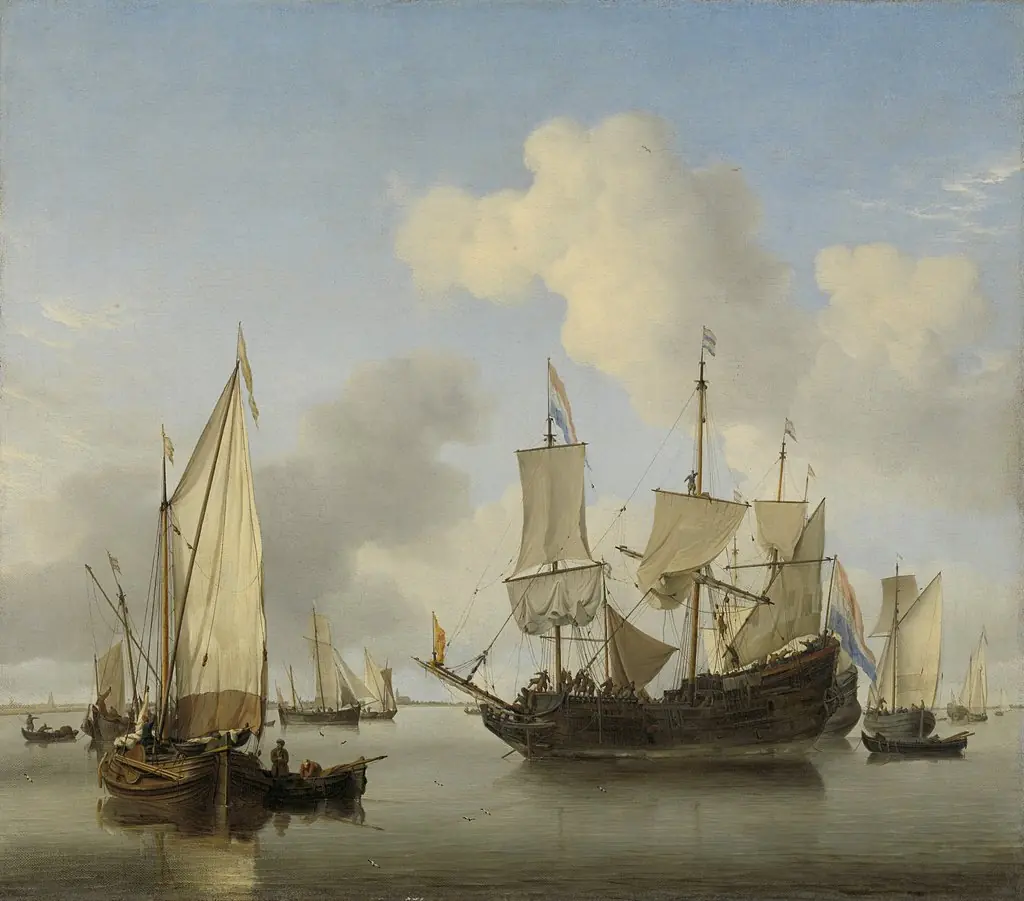 Ships anchored offshore
 Ships in the Roads
 The Home Fleet Saluting the State Barge
 Ruhige See. Eine Staatsjacht, Segelschiffe und Fischerboote vor der Küste