Portrait of Johannes Wtenbogaert by Rembrandt
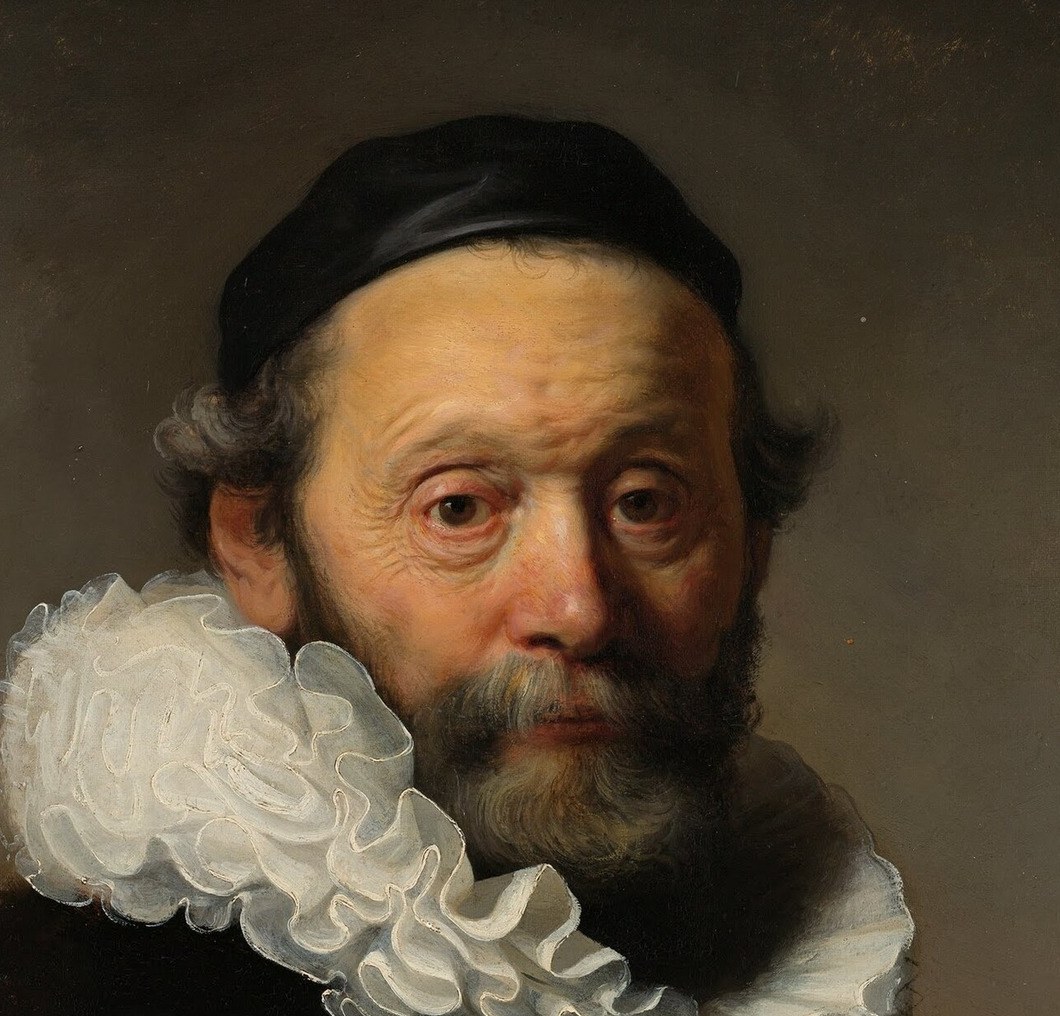
Rembrandt's 1633 'Portrait of Johannes Wtenbogaert' in the Rijksmuseum captures a prominent Dutch preacher and writer. Painted during the height of the Dutch Golden Age, it's a testament to Rembrandt's mastery of psychological insight and dramatic chiaroscuro.
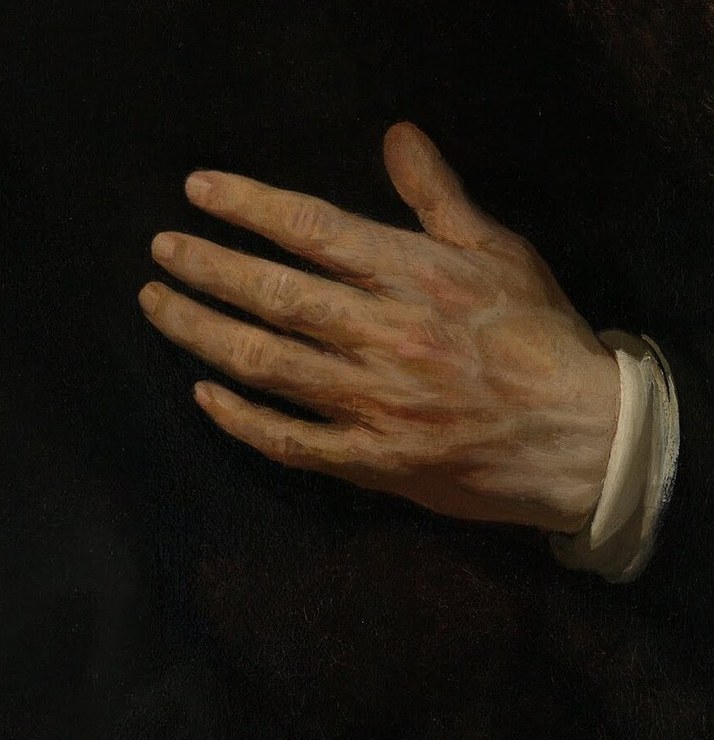
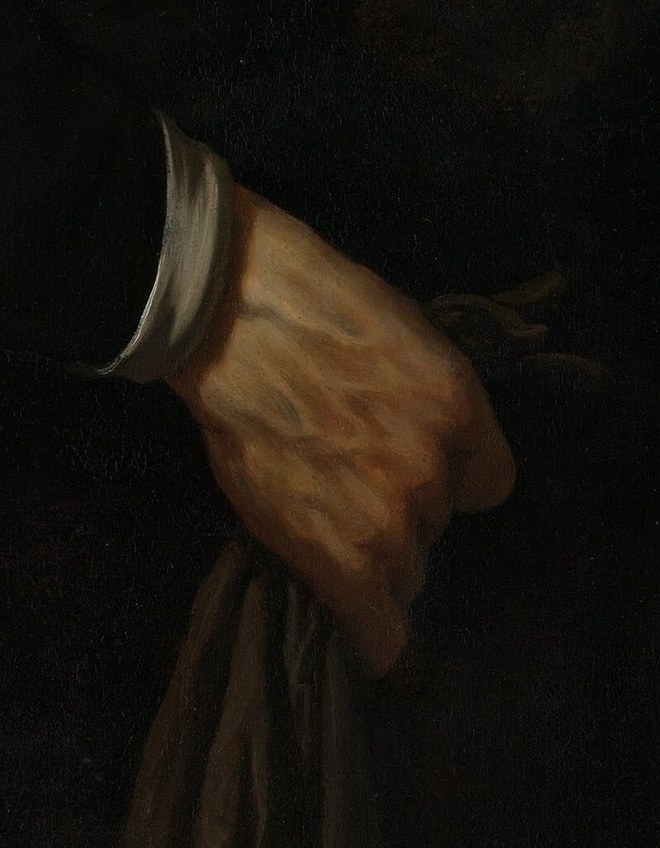
Notice the detailed textures, from the intricate ruff to the fur-lined robe, all highlighting the sitter's status and intellect. His hands are particularly expressive; one rests on his chest in a gesture of sincerity, while the other holds a folded cloth, thought to symbolize his eloquent sermons.
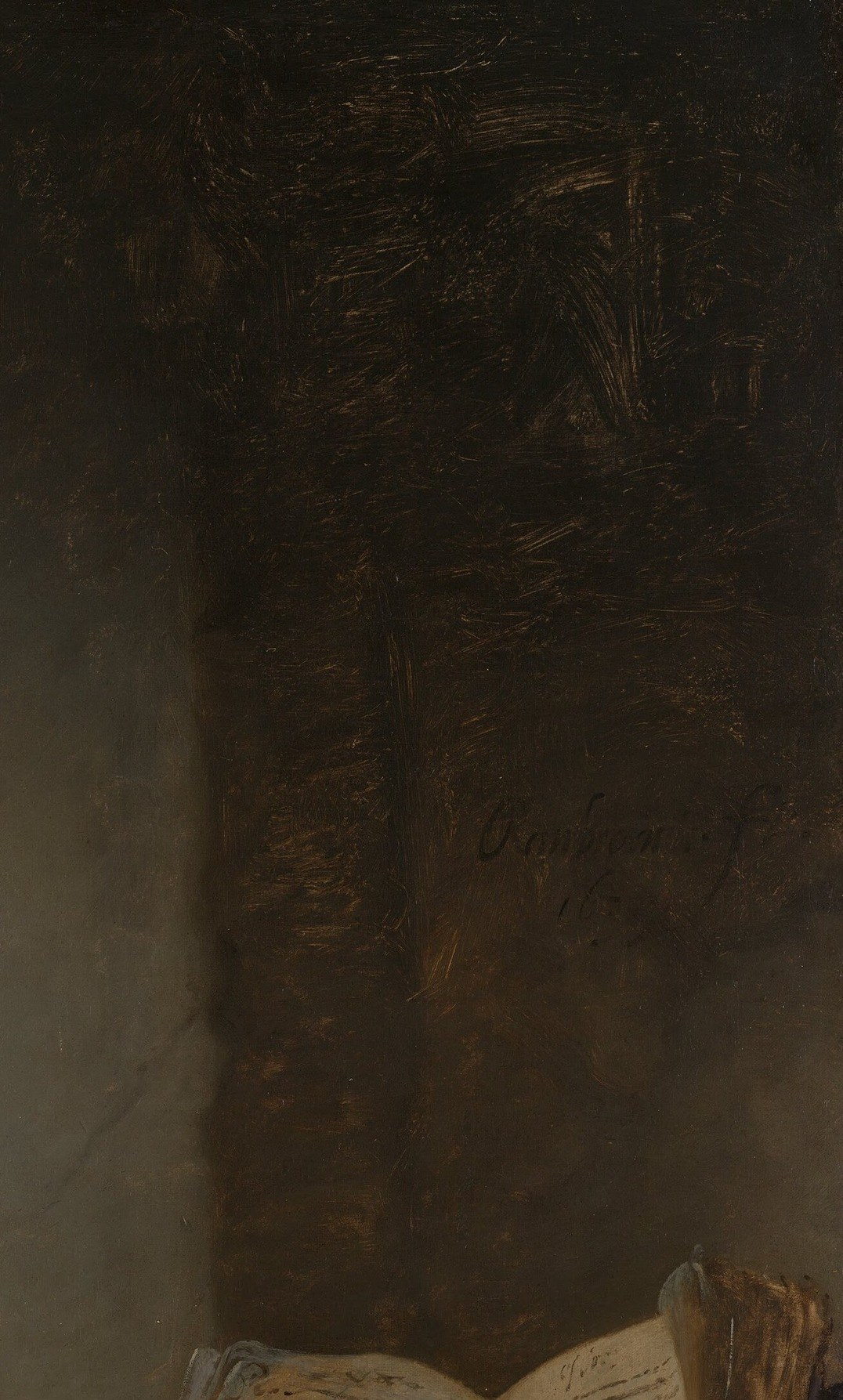
This painting's provenance traces back through various private collections before finding its home in the Rijksmuseum. Rembrandt's ability to imbue his portraits with such life and narrative has made him one of art history's most celebrated figures. The faint 'A.V. 76' inscription in the background adds a layer of mystery, a subtle detail that has intrigued art historians for centuries.
What do you think the mysterious inscription might mean?
Details
Transcript
This man was a famous preacher and writer. He paid Rembrandt a large sum for this portrait. His right hand rests over his heart, a common gesture. But his left hand holds a peculiar folded cloth. Many believed it symbolized his sermons and writings. Look closely at the dark background, behind his shoulder. Faintly visible: 'A.V. 76', a mysterious inscription. Its meaning has puzzled scholars for centuries.