Maud Murray Dale (Mrs. Chester Dale) by Bellows, George
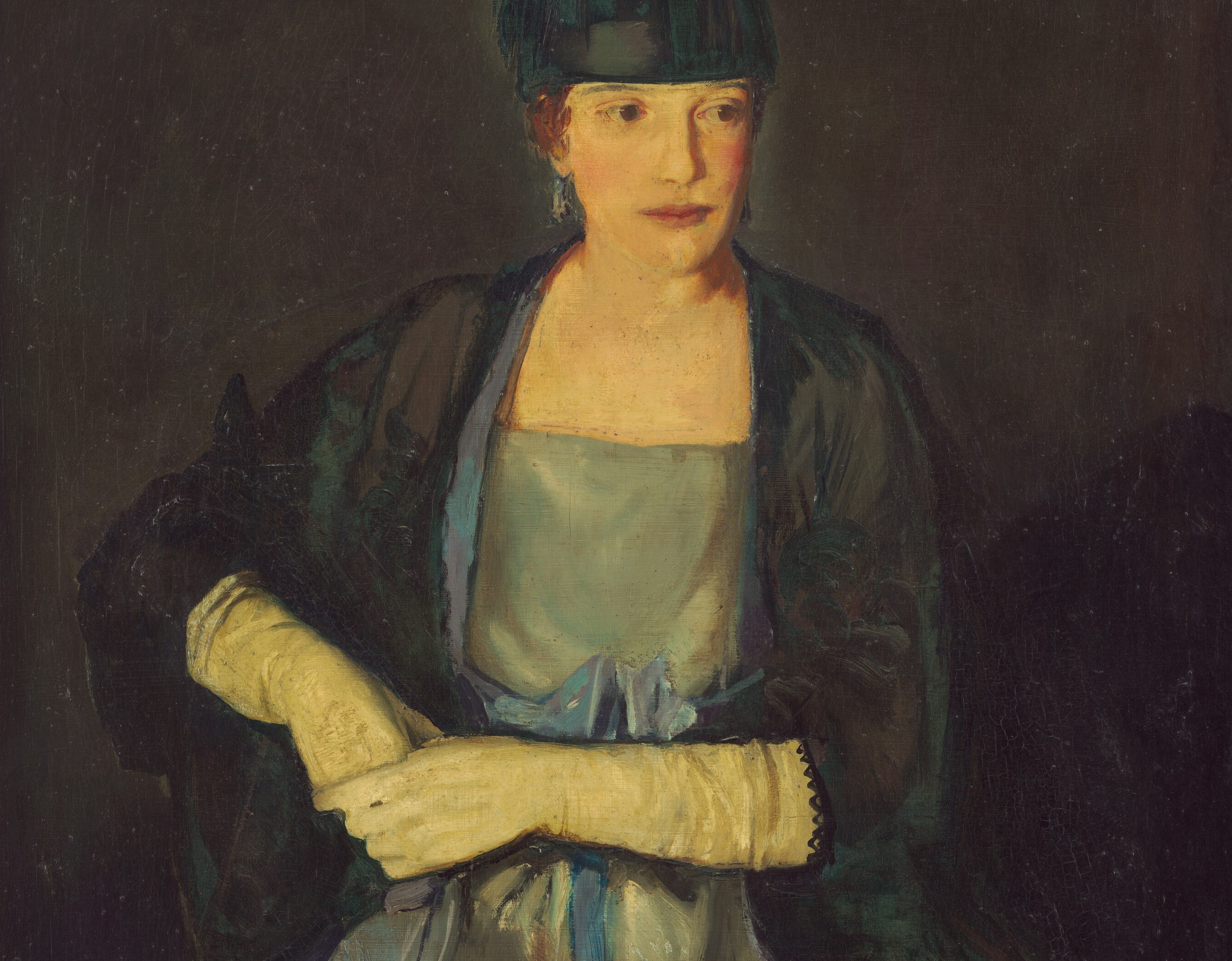
This is George Bellows's portrait of Maud Murray Dale, painted in 1919 and now in the collection of the Metropolitan Museum of Art. Bellows is remembered for his boxing rings and city streets, but here he turned to the Old Master formula: a single seated figure emerging from an unlit void, rendered in oil on a wood panel.
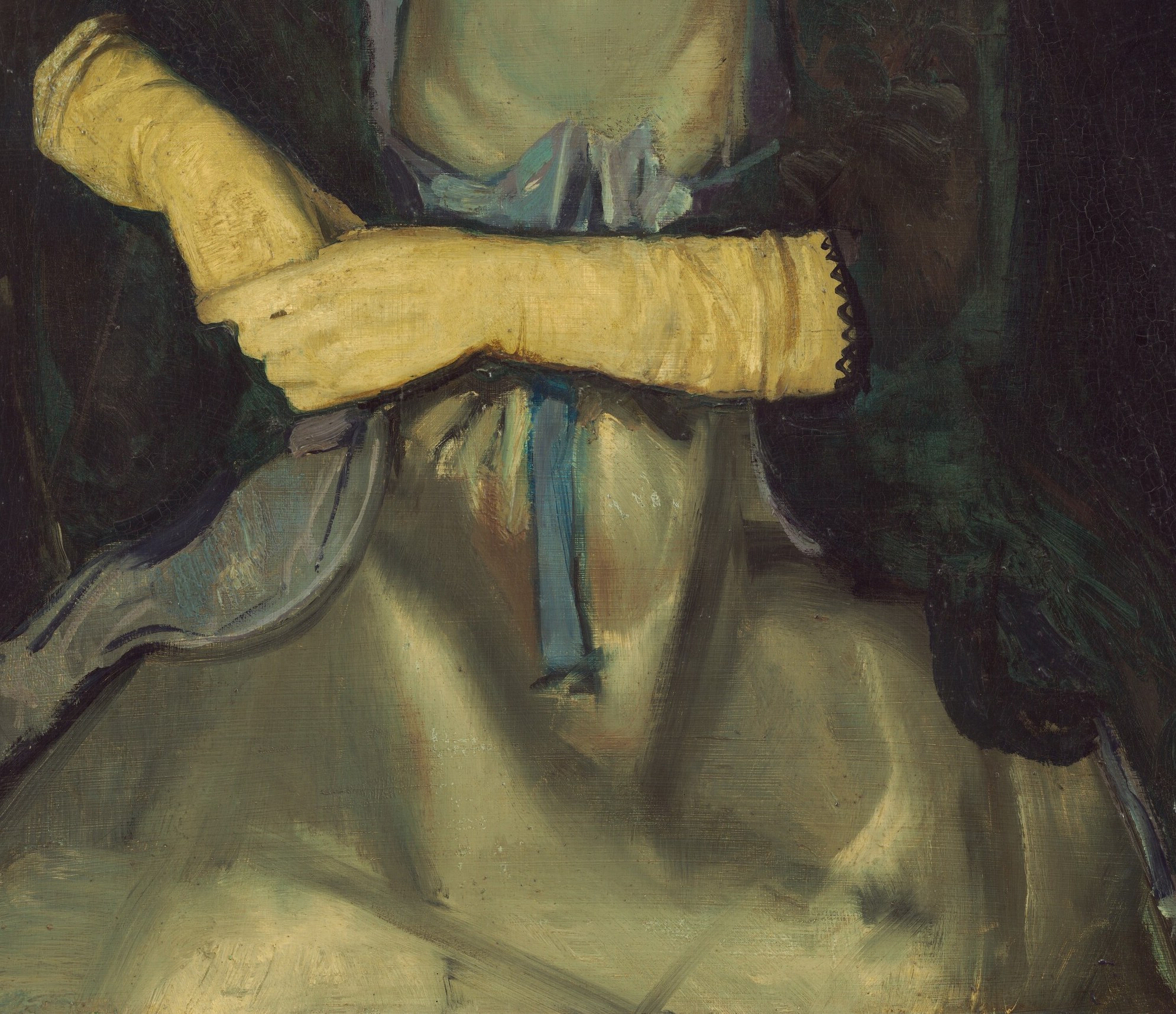
Look at the silver-gray silk of her dress. The fabric has no bright highlight of its own. Instead, Bellows let the surrounding dark bleed into the sleeve, so the silk seems to glow by borrowing shadow itself. Just below, the fur trim on her coat swallows every bit of incident light. The two textures, one luminous, one absorptive, sit side by side in a single tonal passage, and the jump between them is what makes the silver read as silver.
Maud Dale was a tastemaker in the New York art world, a collector and champion of modern painting with her husband Chester. She sat for Bellows in the last years of his life. He died in 1925 at age 42, leaving this portrait as one of his final, quiet statements on what paint could do with fabric and darkness.
What other American realists learned from Velázquez is a small story, and this painting is one of its best chapters.
Details

Transcript
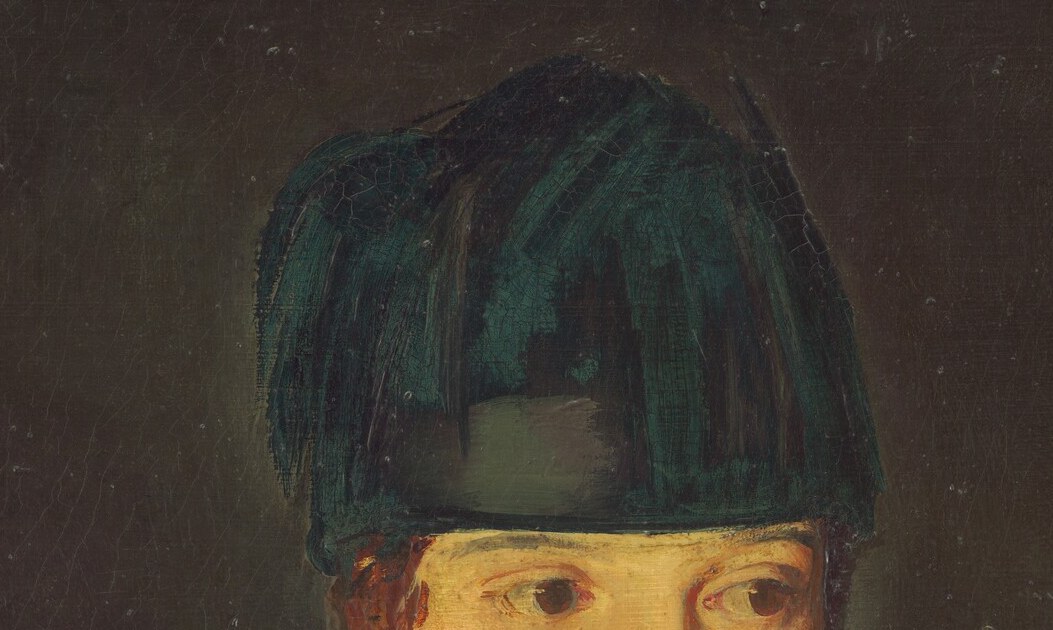
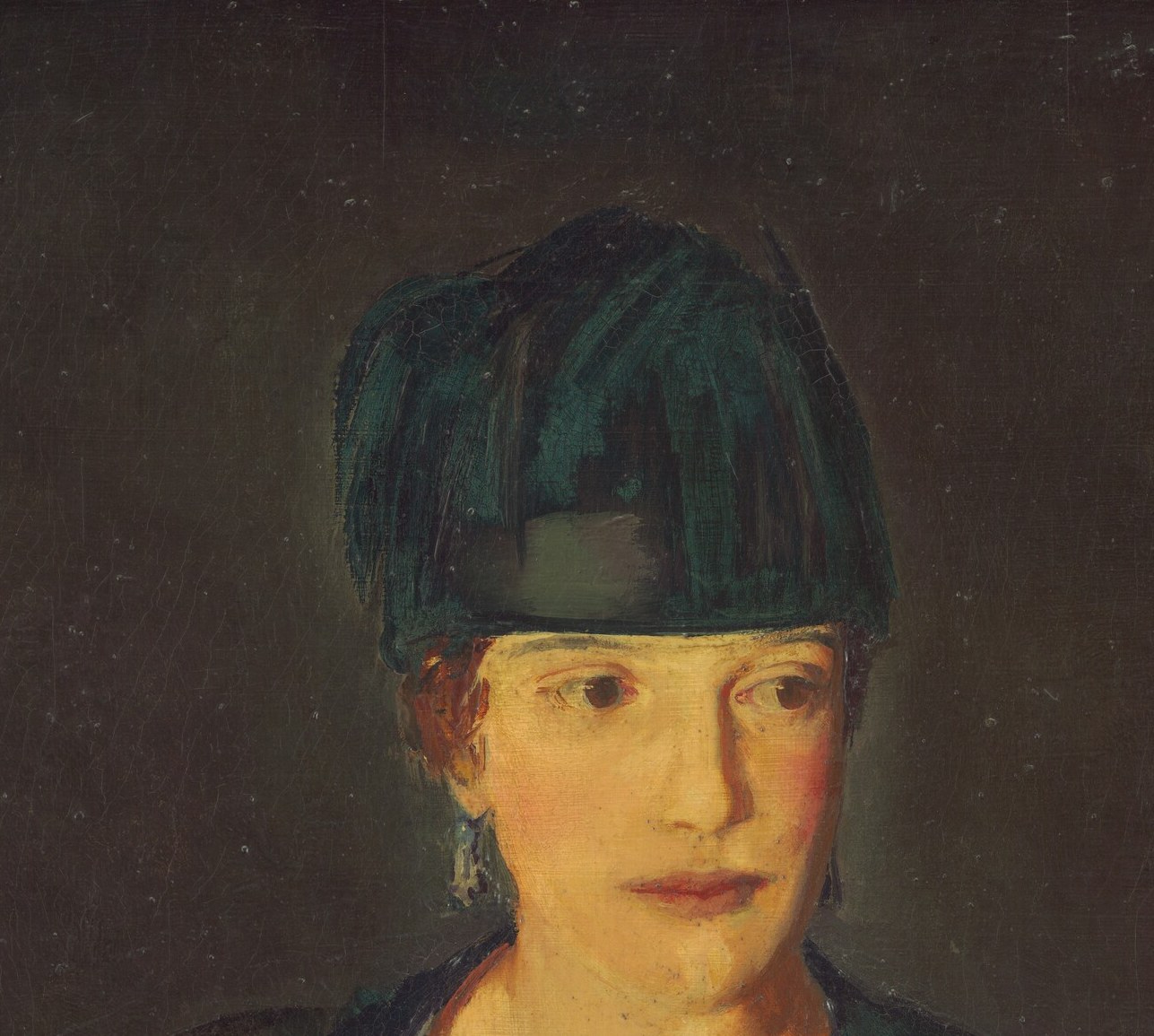
She steps out of a near-total darkness. Bellows gave her no room, no chair back, no floor. Watch what the light does on this sleeve. The silk has no color of its own. It borrows the dark. In the same passage, heavy fur absorbs every bit of light. Oil on wood. Velázquez worked the same way, three centuries earlier. Now look into her eyes. Bellows died young. This was one of his last major portraits.