Still life in a stable by Hendrik Potuyl
View the artwork: Still life in a stable →
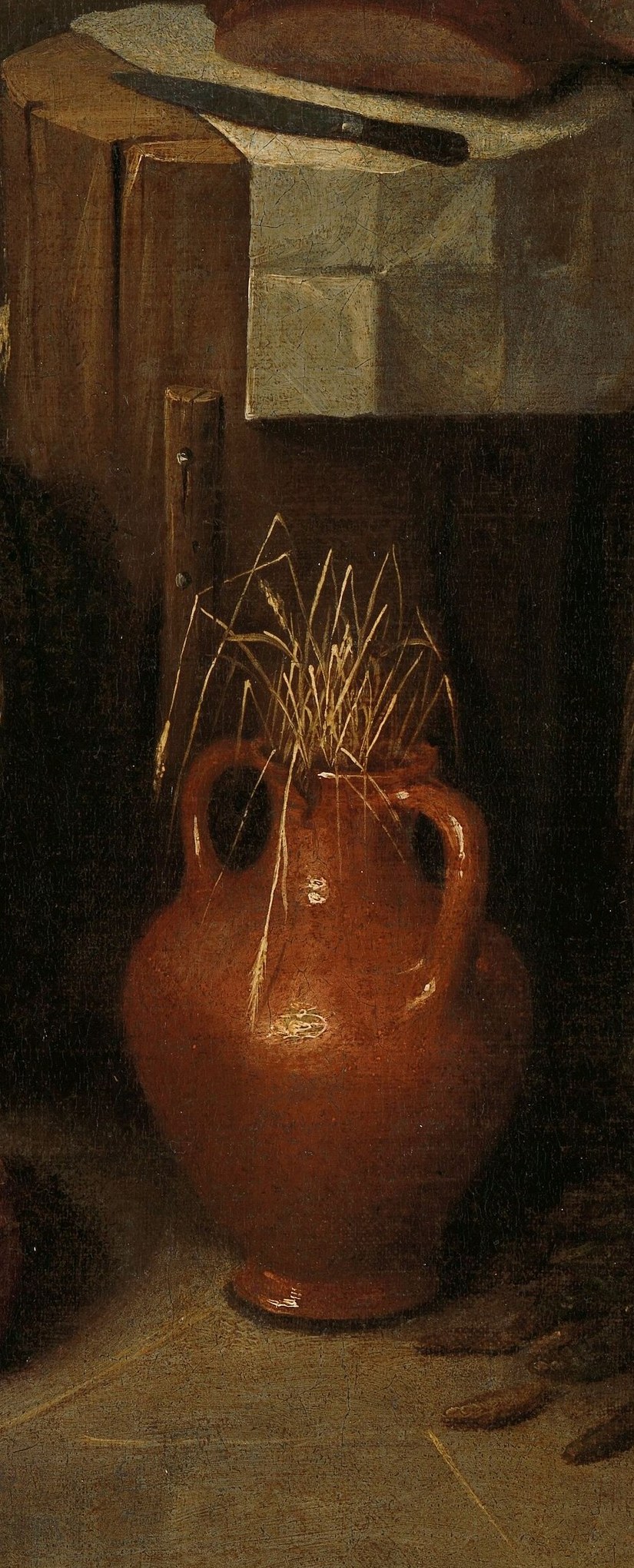
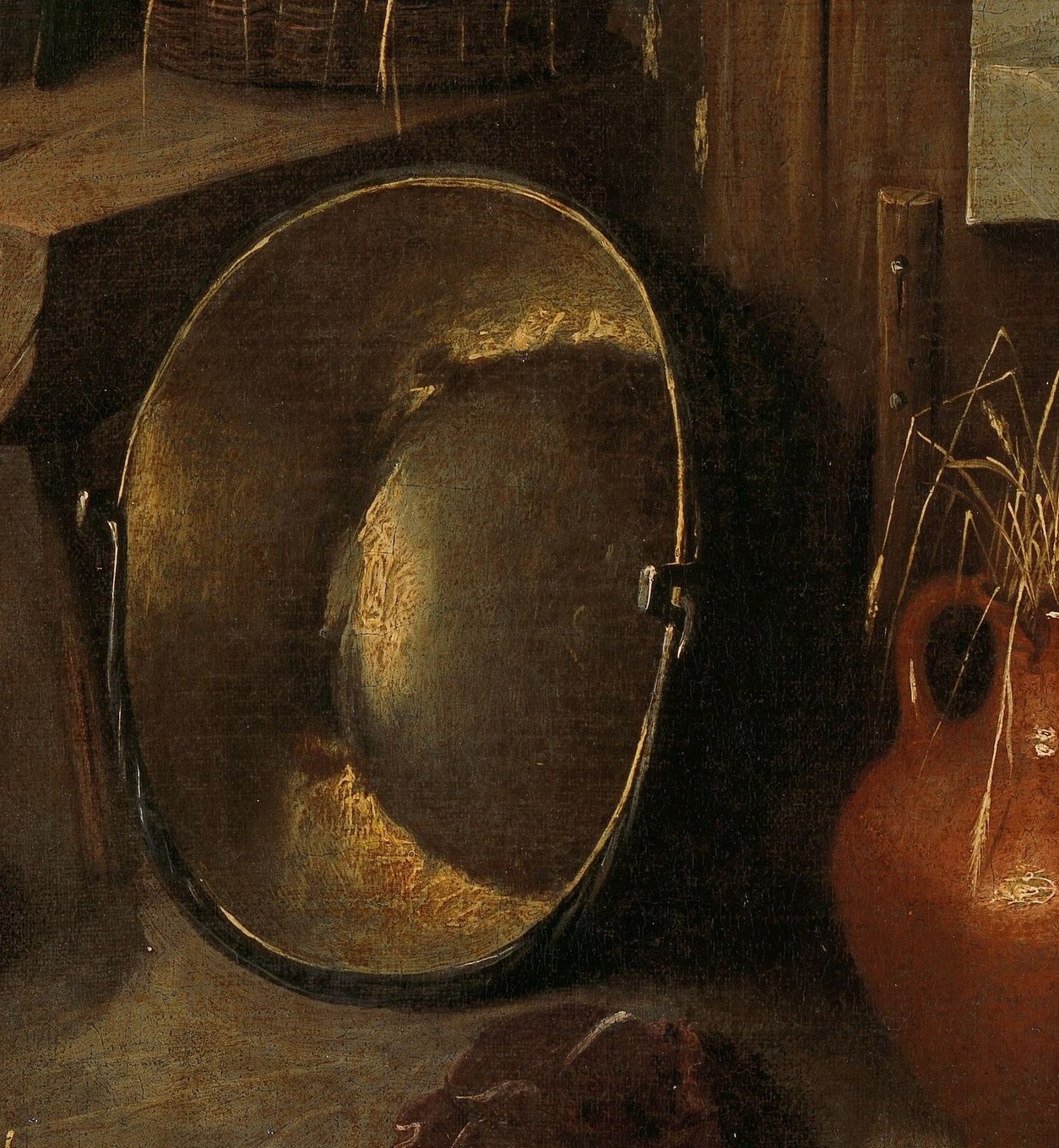
A brass cauldron, a clay jug, a white cloth, and scattered straw. Hendrik Potuyl's "Still Life in a Stable" (circa 1640) looks at first like a simple record of humble objects in a dark room. But the painting is really a demonstration of one specific skill: making four different materials feel entirely distinct using almost nothing but light.
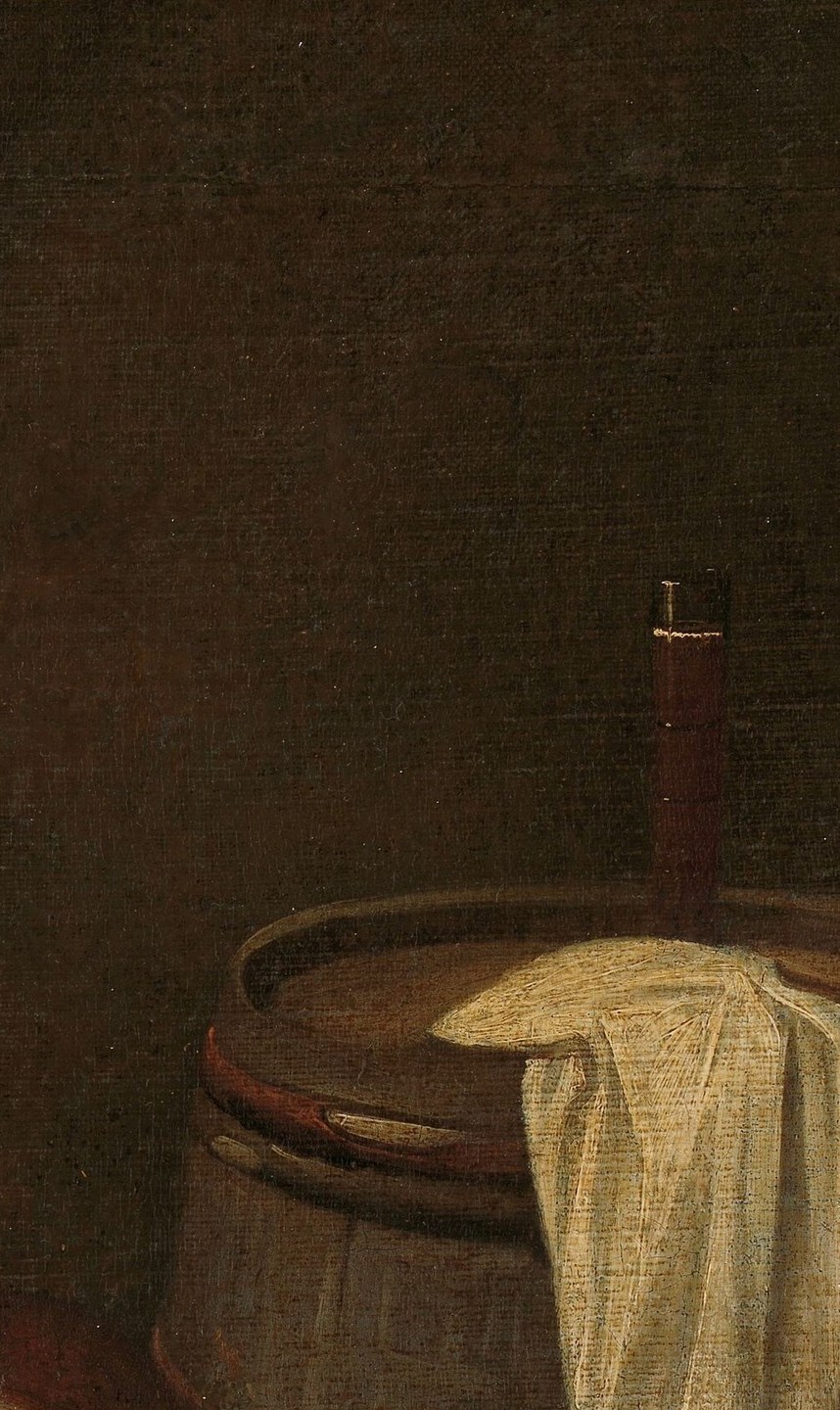
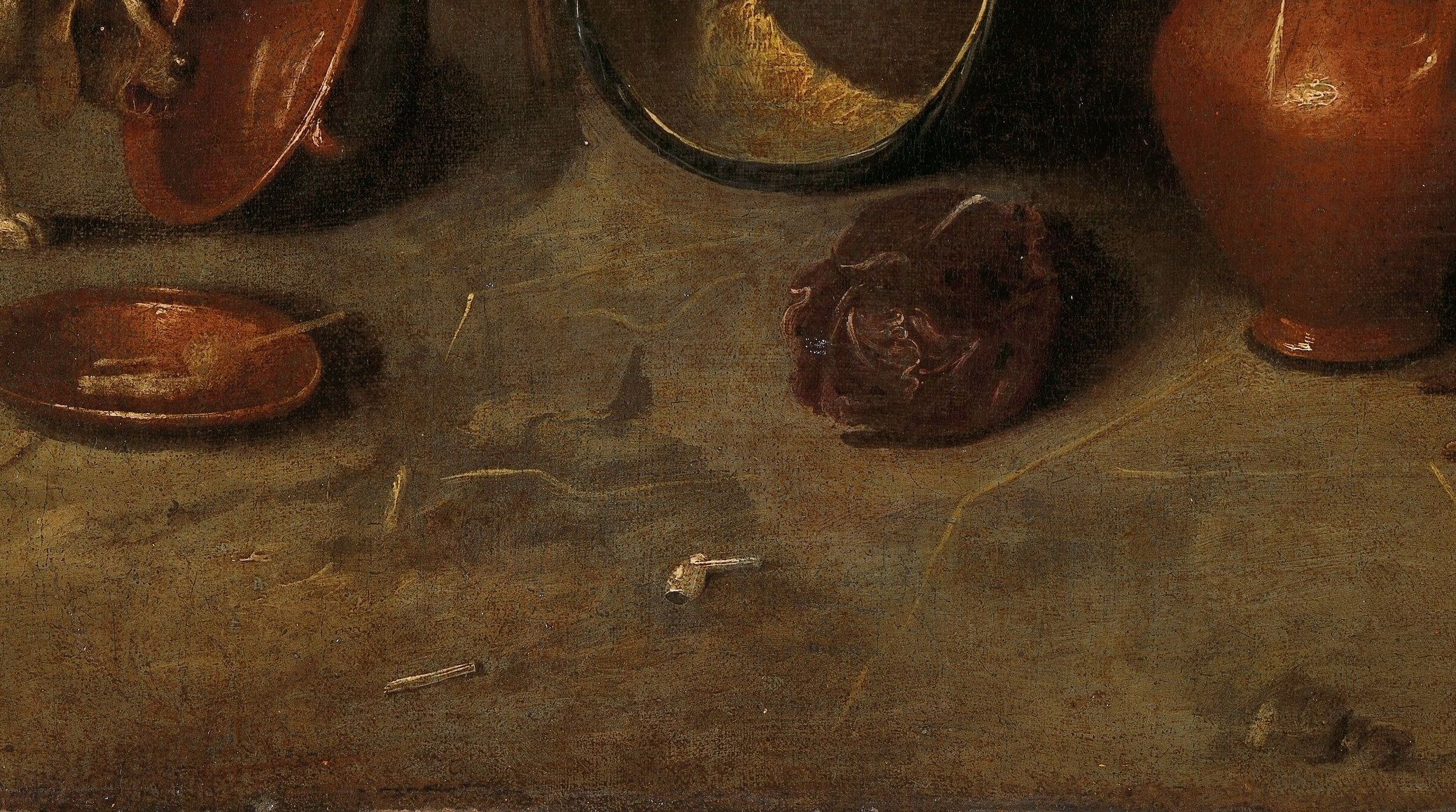
The trick is in how each surface receives the glow from the right. The brass cauldron in the foreground catches a sharp, bright highlight that reads instantly as polished metal. The earthenware jug beside it absorbs the light softly, with a warm, matte bloom. The hanging white cloth is the boldest move: Potuyl left the bare ground of the canvas exposed in tiny streaks to make the linen seem to glow from within. And every piece of straw on the stable floor is a separate, wiry stroke catching the raking light.
Hendrik Potuyl was born in Dortmund in 1613 and died young, around 1652. His surviving work is rare, and he is not a household name. But this painting connects him directly to the Dutch still-life tradition that obsessed over surface and substance. In a dim stable with one implied light source, he built a quiet catalogue of the physical world.
Next time you see a still life, ask where the light is coming from and how many different surfaces the painter had to solve. Potuyl solved four in a single corner of a stable.
#arthistory #dutchgoldenage #stilllife
Details
Transcript
Look at this cauldron. It is paint. But it feels like hammered brass catching a single candle. Now the jug beside it. Warm, matte clay. Totally different weight. A Dutch painter in 1640 had no tube paint and one weak light source. So he used the light itself as his main tool. The cloth glows because he left the canvas bare in tiny streaks. And every straw on the floor catches that same light differently. Brass, clay, linen, straw. Four surfaces from one quiet beam of paint.