Artwork
Still life in a stable
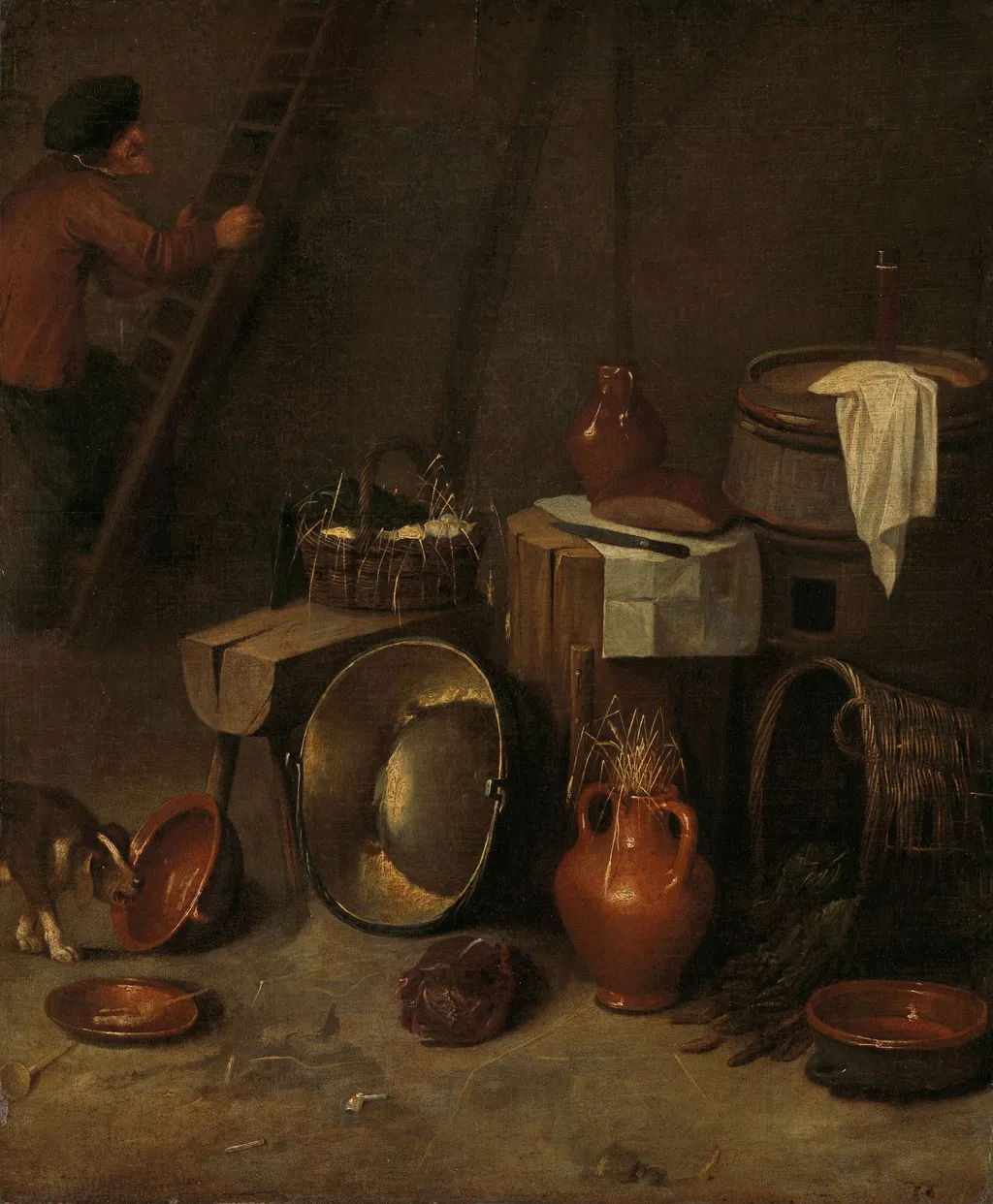
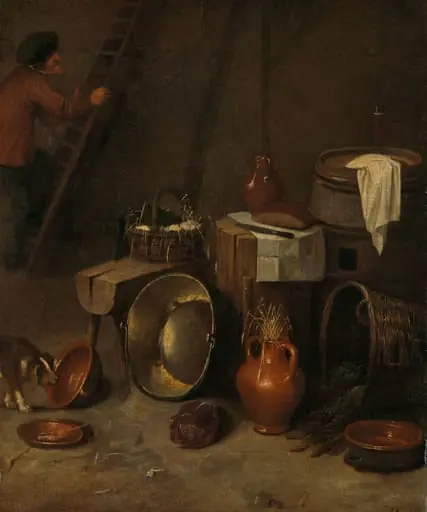
Still life in a stable is an oil painting by the Dutch Golden Age artist Hendrik Potuyl. It dates from 1640 and is held in the collection of the Rijksmuseum.
About this work
Subject & Meaning
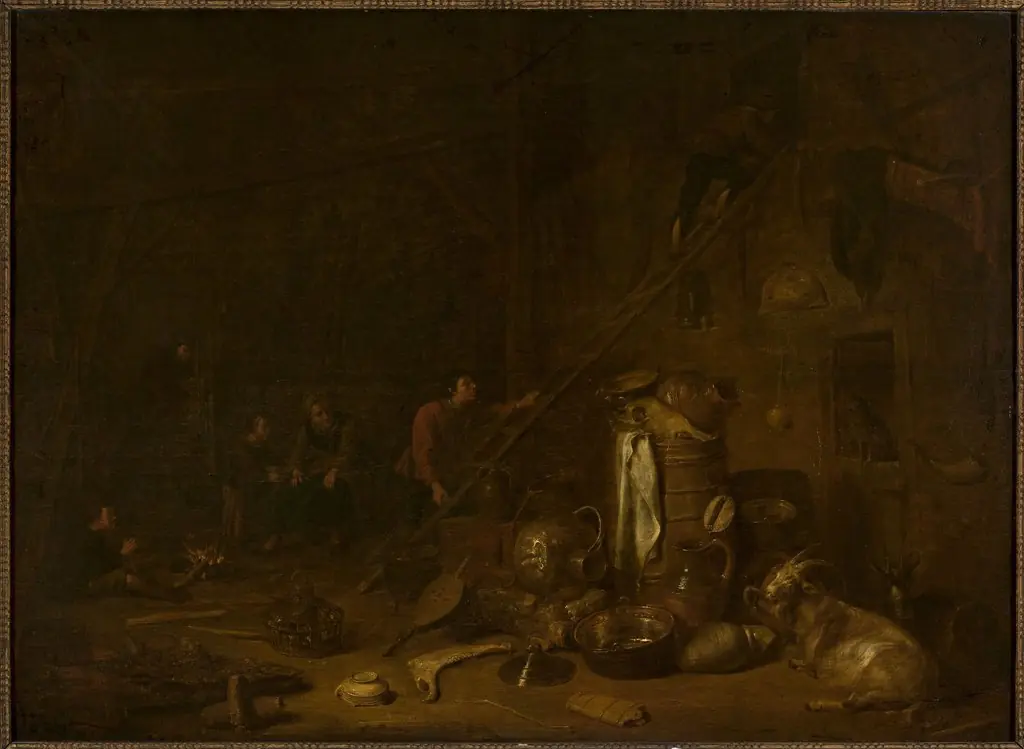
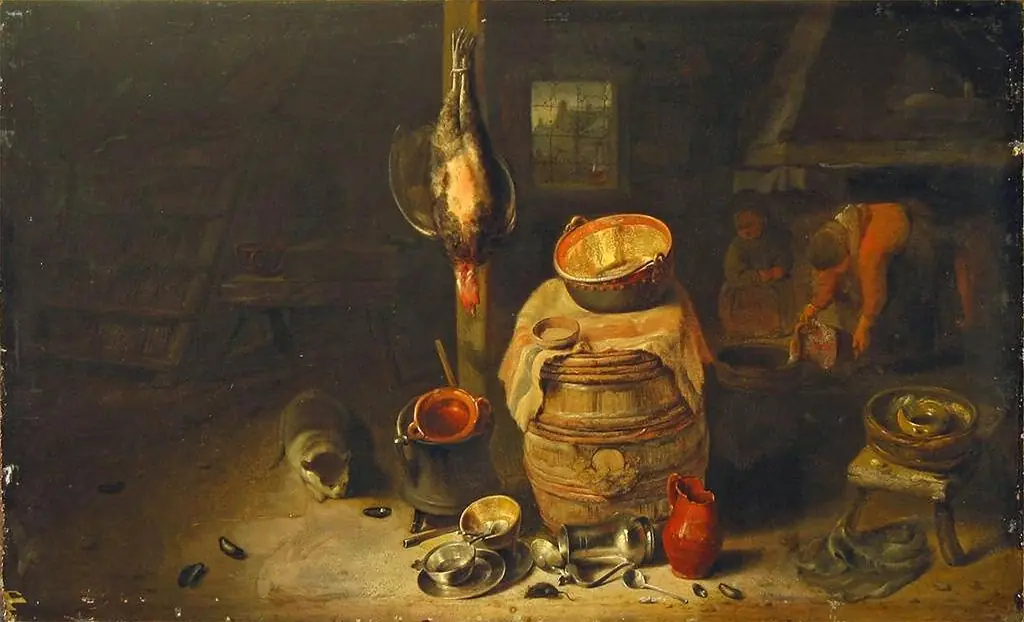
The composition is densely populated with rustic objects and agricultural elements, including a ladder, bench, barrel, basket, and cauldron.
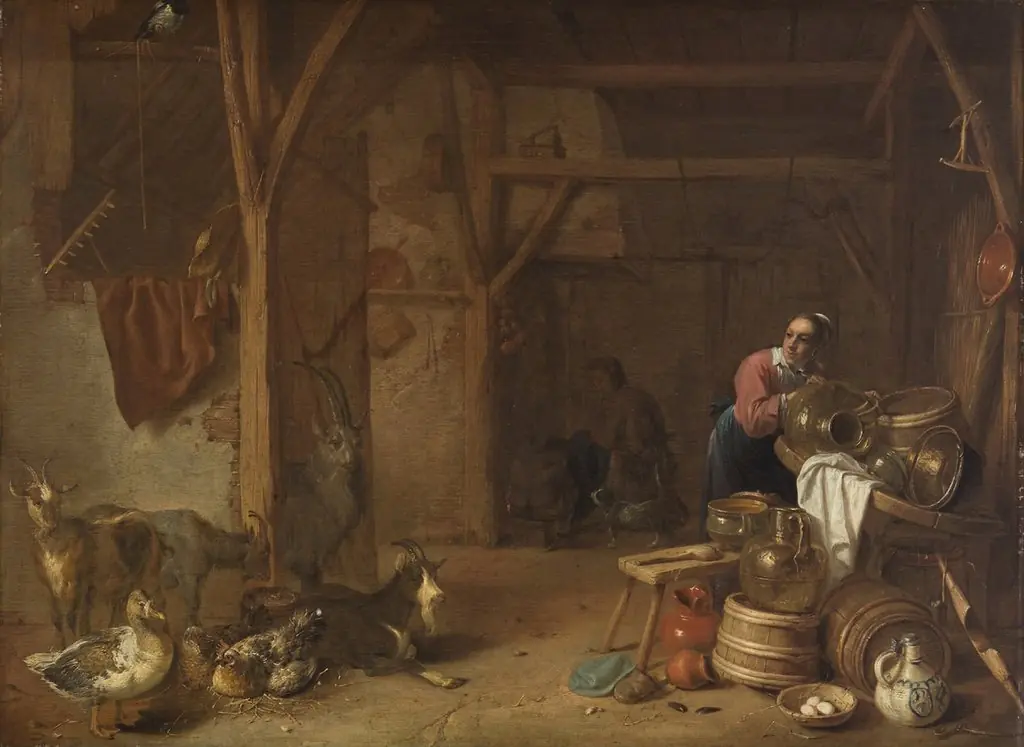
Hendrik Potuyl's 1640 oil painting presents a detailed interior view of a cowshed, functioning as a barn still life. The composition is densely populated with rustic objects and agricultural elements, including a ladder, bench, barrel, basket, and cauldron. Culinary items such as a platter, crock, red cabbage, bread, knife, pitcher, plate, spoon, and pipe are arranged alongside domestic textiles like a napkin and organic materials like straw.
A dog is also depicted within the scene, adding a living element to the otherwise static arrangement of tools and provisions. The work focuses on the accumulation of these specific vernacular objects to define the stable environment.
History & Provenance
The work titled Still life in a stable was created by Dutch painter Hendrik Potuyl in 1640, as documented in contemporary records and the artist’s catalogue raisonné. Executed in oil on canvas, the painting measures 77.5 × 65 cm and portrays a detailed interior of a cowshed with assorted household objects. It entered the collection of the Rijksmuseum shortly after its completion and has remained in the museum’s custody, displayed in the Dutch Golden Age galleries.
No evidence of a specific commission or private patron survives; the work appears to have been produced independently by the artist before its acquisition by the museum.
Context
Still life in a stable (1640) by Hendrik Potuyl is an oil painting that exemplifies Dutch Golden Age still‑life conventions, combining careful observation of domestic objects with a modest interior setting. The work is part of the Rijksmuseum collection, reflecting its status as a representative example of 17th‑century Dutch household decoration. Its composition features a variety of items such as cows, ladders, barrels and bread, illustrating the genre’s interest in everyday material culture.
As a dated example from the mid‑1600s, the painting helps trace the development of still‑life motifs within Dutch artistic practice.
Overview
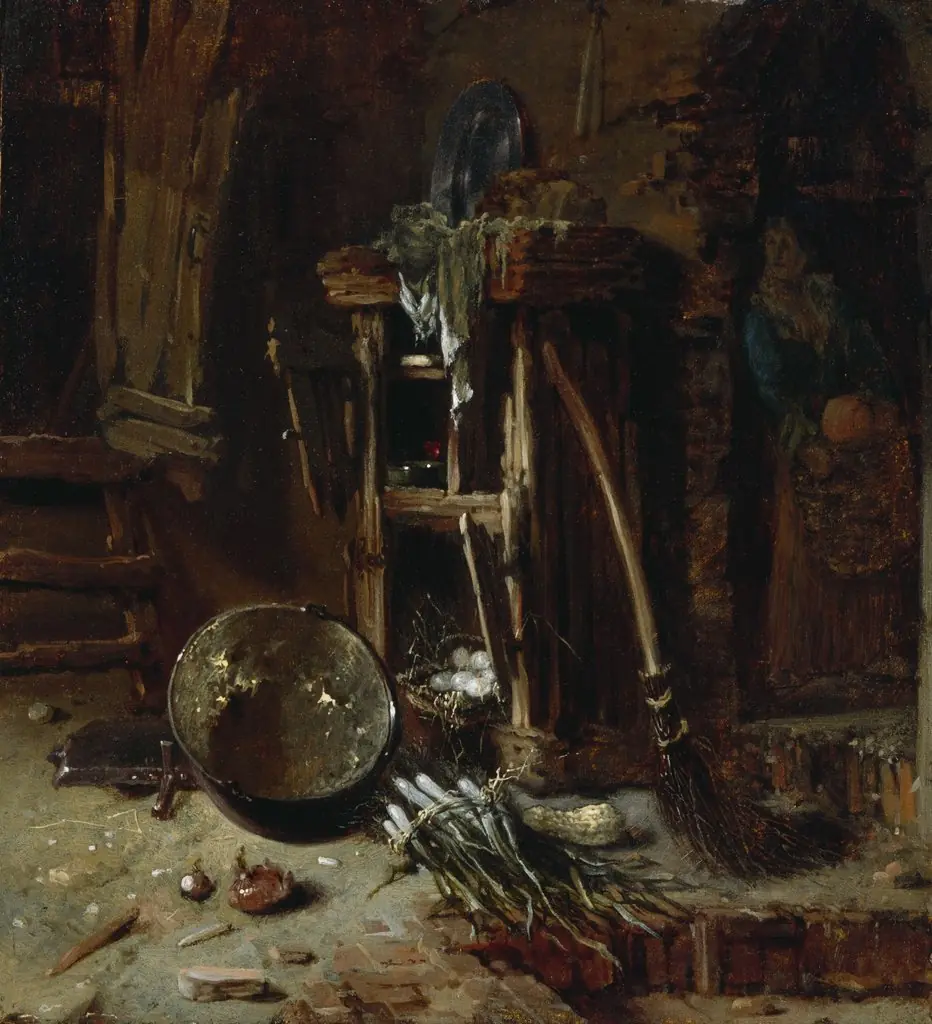
"Still life in a stable" is an oil painting that depicts an interior scene. The composition presents a dimly lit stable, where a variety of everyday objects occupy the foreground. The artist employs specific lighting techniques to establish a particular atmosphere, drawing the viewer's attention to the central arrangement. The work offers a glimpse into a humble setting, characterized by its subdued illumination and textural details.
Technique & Style
The artist utilizes chiaroscuro, a strong contrast between light and dark, to define the forms and establish the painting's mood. A light source originating from the right illuminates the scene, creating dramatic highlights and deep shadows. This interplay of light and shadow, combined with the composition, generates a feeling of warmth and intimacy, guiding the viewer's eye towards the central arrangement of objects.
Own this work as a print
Artist & collection