Hunting Dogs with Dead Hare by Gustave Courbet
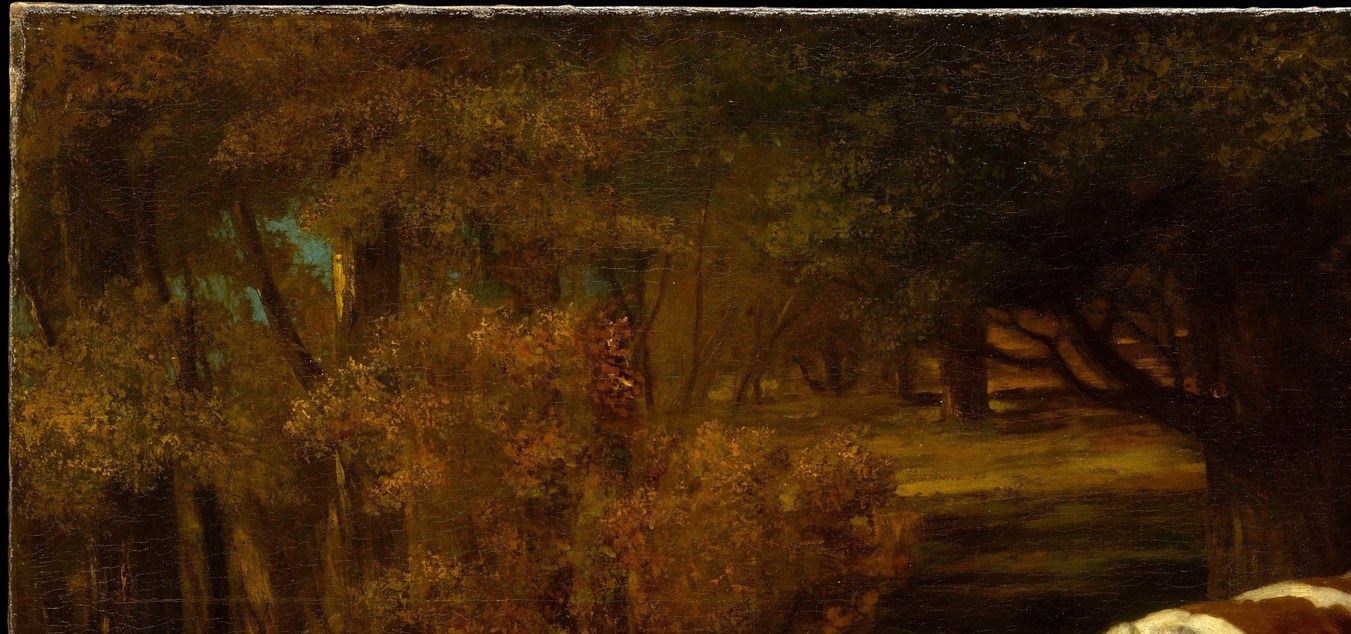
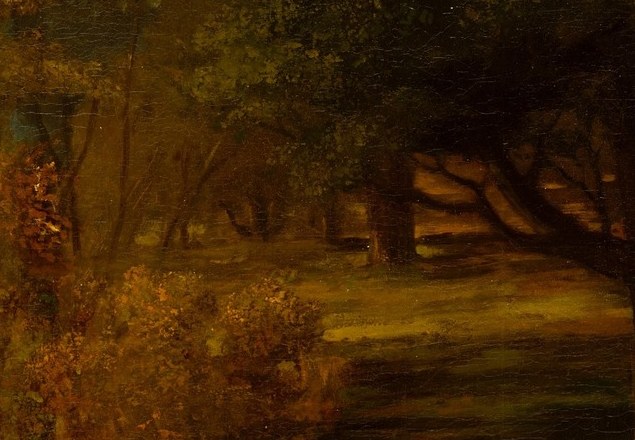
Gustave Courbet's 'Hunting Dogs with Dead Hare' (1857) is a hunt scene with no hunter, no horn, and no triumph. It is the aftermath: three dogs and a dead animal in a forest so dark it offers no escape into landscape prettiness.
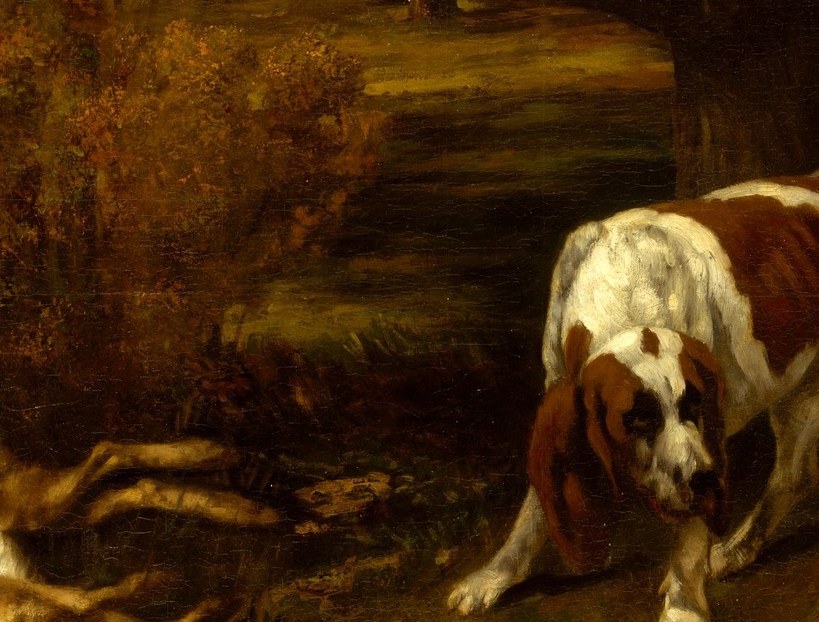
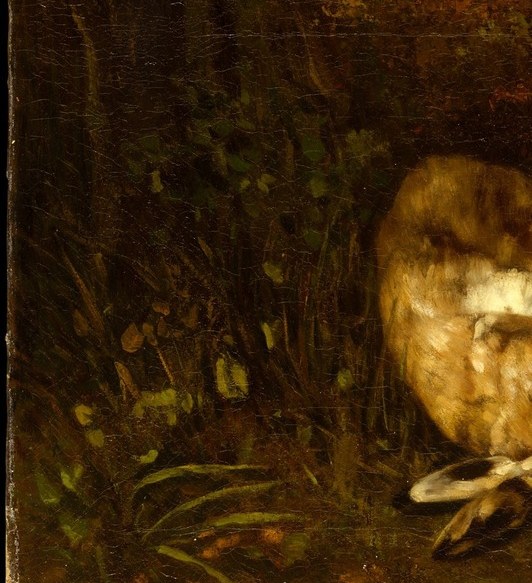
The painting lives in the dogs' alertness and the hare's absolute stillness. Two hounds stand scanning the shadows, their heads turned in different directions. The third lies low, muzzle pressed to the kill. Courbet renders the white fur with palette-knife impasto so thick it mimics actual hair, while the hare's long hind legs hang fully extended, anatomy in death, recorded without sentiment.
Courbet was the central figure of the Realist movement, committed to painting only what he could see. This canvas comes from the late 1850s, after the scandal of 'A Burial at Ornans' and before 'The Stone Breakers.' His hunting scenes are not celebrations of sport but documentary observations: the physical weight of animals, the unglamorous dirt of the forest floor, the fact of death.
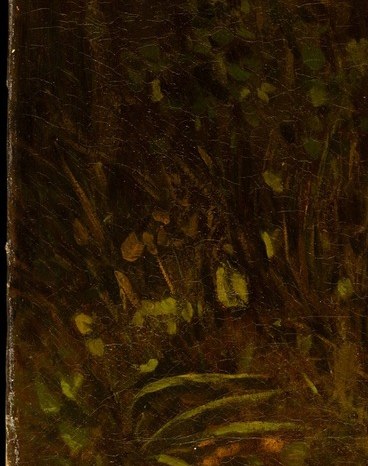
The darkness is the story. By erasing the background almost entirely, Courbet forces you to sit with the animals and nothing else. What does a hunt look like when no one is posing for it?
Details
Transcript
You feel the kill before you see it. Three hounds in a forest so dark it erases everything else. Courbet painted only what he could see. No allegory, no glory. The white fur here is thick paint, laid on with a palette knife. Now look down. A hare, limp and unromantic. This is what a hunt actually leaves.