The Servant Justified by Nicolas Lancret
Nicolas Lancret's *The Servant Justified*, painted in 1740, offers a coded glimpse into Rococo social dynamics. This painting, executed on copper, captures a lighthearted yet nuanced interaction between a man and woman in a garden, exemplifying the period's fascination with elegant manners and subtle emotional exchange.
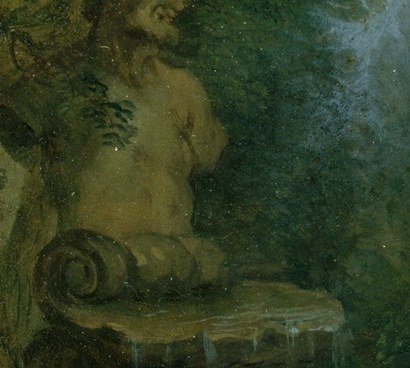
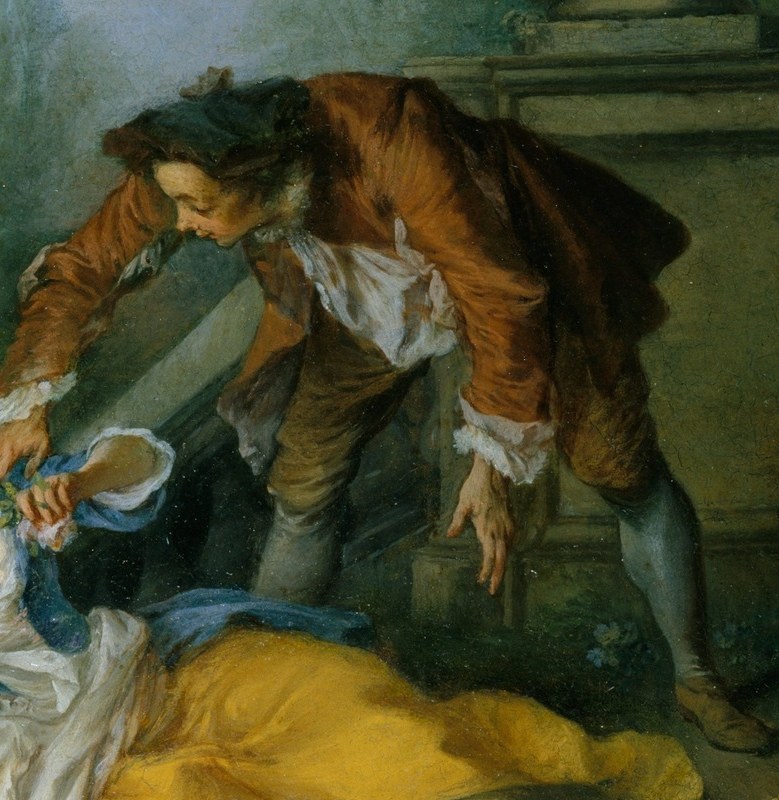
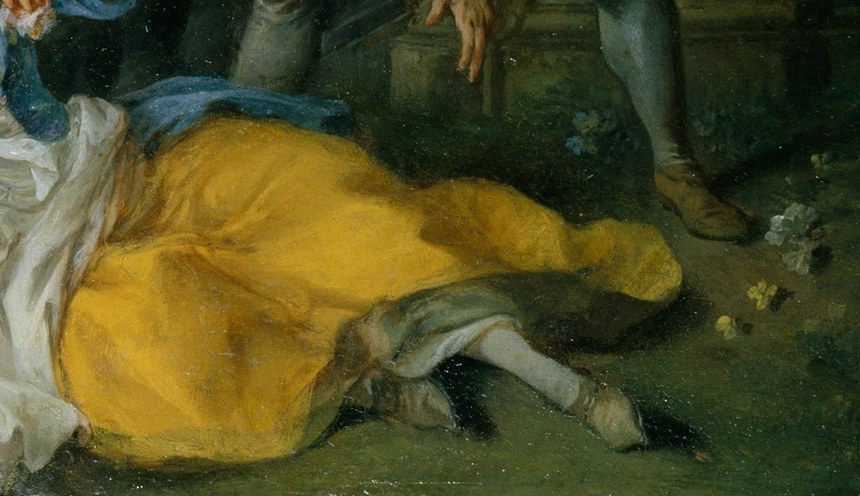
Observe the central figures: the man leans forward, pointing to a paper held by the seated woman. Pink roses, symbols of romance, bloom nearby, while a classical statue suggests idealized beauty. The man's opulent coat contrasts with the woman's bright, playful skirt, highlighting their distinct roles and social presentation.
Lancret, a master of capturing the "fêtes galantes," created this work during the reign of Louis XV, a time of refined social customs. The painting's detailed execution on copper allowed for luminous colors and precise rendering of textures, characteristic of Lancret's style and the Rococo aesthetic.
The coded gestures and symbols in *The Servant Justified* invite us to interpret the narrative: is it a proposal, a gentle negotiation, or a playful justification of affection within the refined world of 18th-century French society?
Details
Transcript
He gestures at a paper in her hand. Is this a letter? An accusation? Look at the roses. They signal romance. The statue is a classical ideal of beauty. He wears a wealthy, fur-trimmed coat. Her yellow skirt is bright, playful. His hand on her arm shows intimacy. Lancret painted this in 1740.