Mother and daughter by Paul Gauguin
Paul Gauguin’s "Mother and Daughter," painted in Tahiti in 1901, is a vibrant example of his search for symbolic meaning beyond conventional representation. This oil painting, held at The Metropolitan Museum of Art, reflects his Post-Impressionist style and his deep engagement with the cultures he encountered away from Europe.
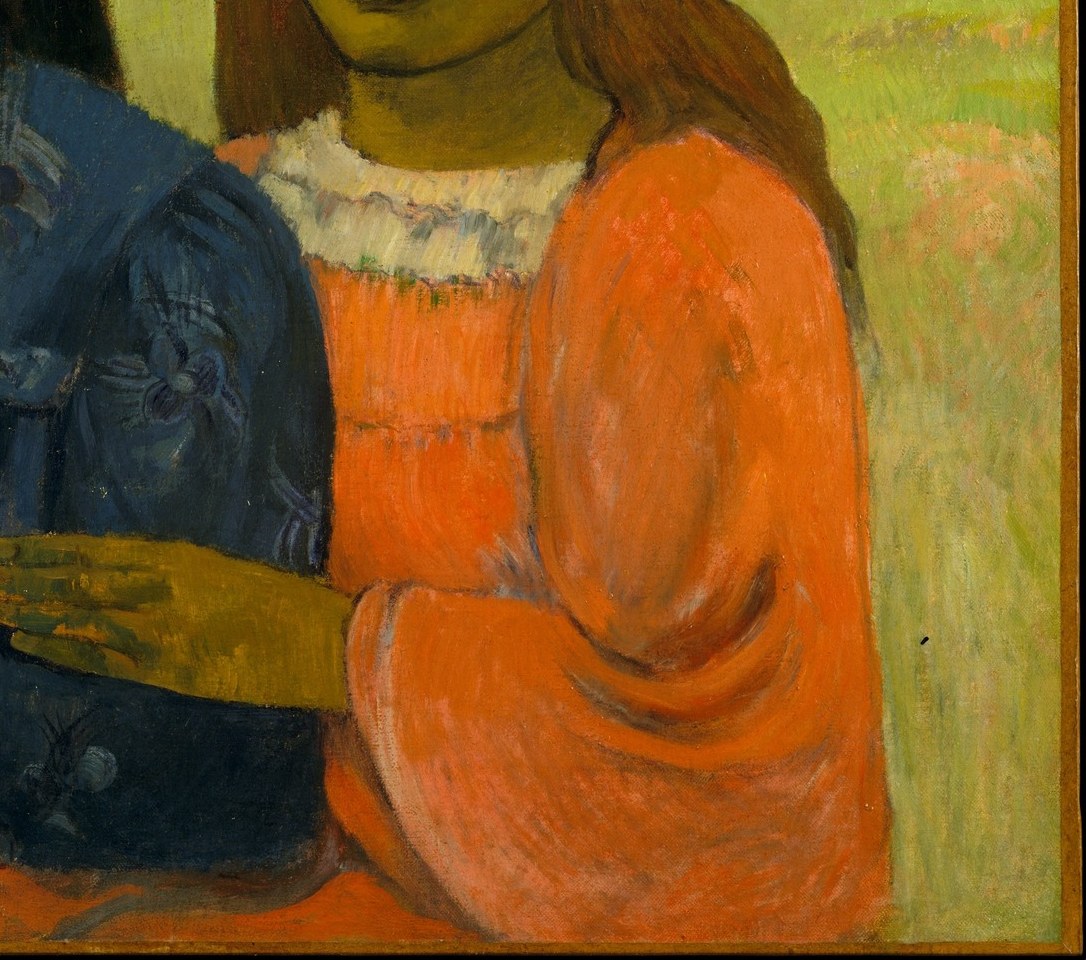
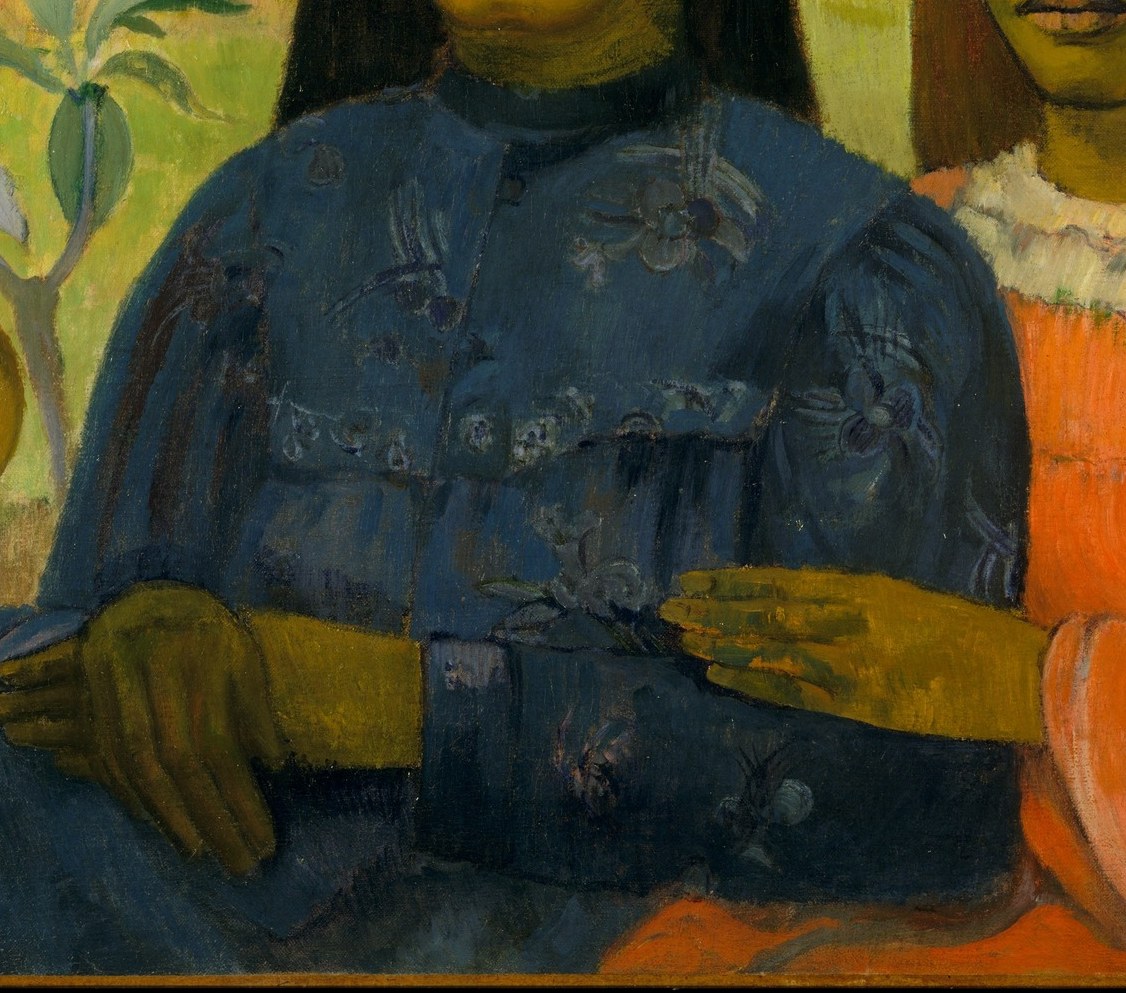
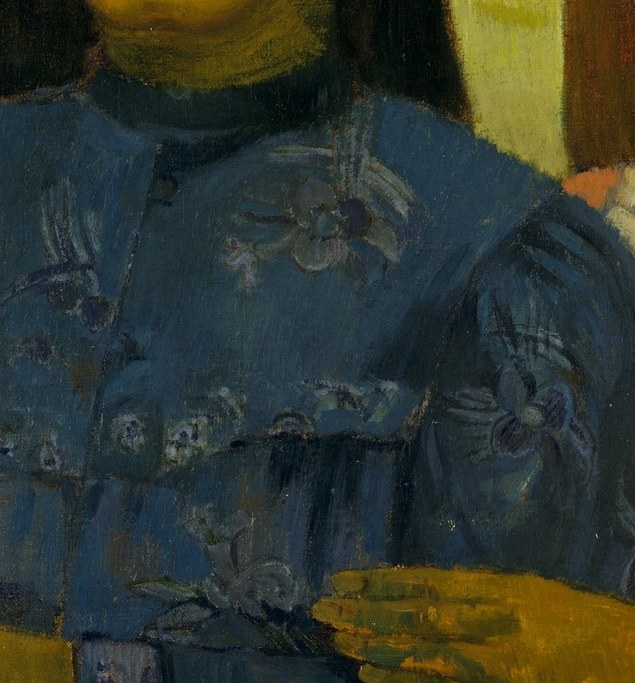
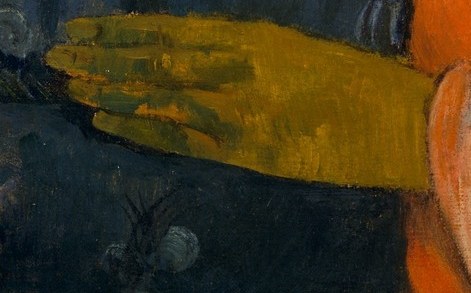
Observe the contrasting yet harmonious colors: the daughter’s dress, a vivid orange, often symbolizes passion and energy, while her mother's blue dress traditionally signifies truth and serenity. Between them, a stylized tropical plant stands as a powerful symbol of life and renewal. The subtle touch of their hands suggests a delicate yet profound familial bond.
Gauguin deliberately moved away from realistic depictions to create art that conveyed emotional and symbolic resonance. This painting from his later period in Tahiti is a testament to his unique vision, blending his distinctive brushwork and flattened forms with a profound sense of introspection.
It invites us to look beyond the surface, to the hidden layers of meaning Gauguin wove into his work. What feelings do these colors and symbols evoke for you?
Details
Transcript
Gauguin painted this mother and daughter in Tahiti, 1901. He moved there for a life away from 'civilization.' The daughter wears a vibrant orange, a color of passion. Her mother's blue dress is a traditional symbol of truth. Between them, an exotic plant symbolizes renewal and life. Their intertwined hands suggest a fragile, deep connection. Gauguin sought deeper, symbolic meaning in his art.