Pietà by Carlo Crivelli
This is Carlo Crivelli's Pietà, painted around 1476 in tempera on panel. It now hangs in the Metropolitan Museum of Art. What makes it unusual is not the subject, a standard devotional scene, but the deliberate emotional architecture Crivelli built into the faces. He did not paint one mood of grief. He painted three, and he made them utterly distinct.
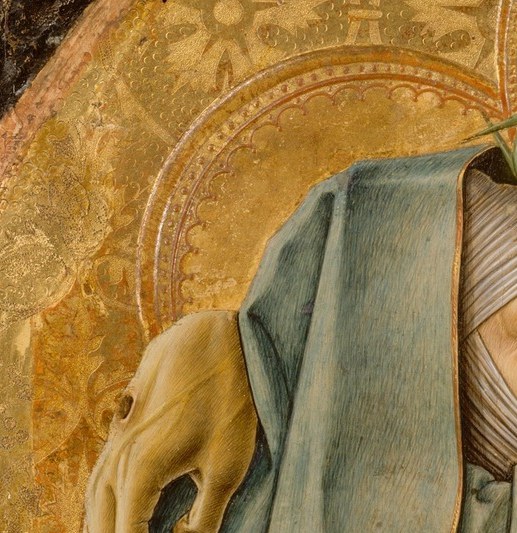
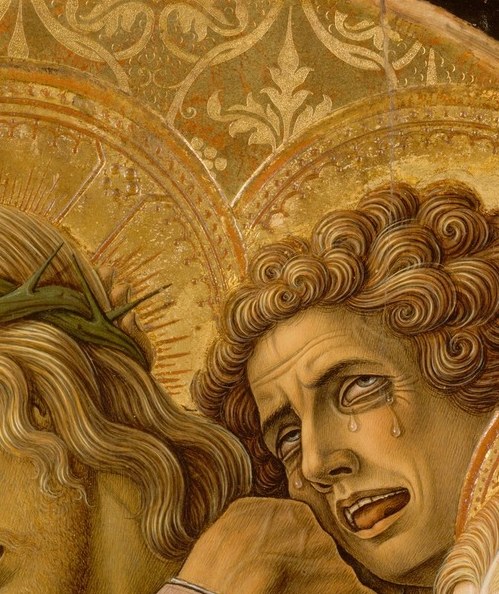
Look at St. John on the left. His mouth is agape, his brow contorted. This is not dignified weeping. It is raw, open-throated wailing, the most emotionally extreme face in the entire group. Then move to Mary Magdalene on the right. Her expression is serene, almost downcast. Her grief has turned inward. Her hand rests on Christ's arm with a tentativeness that suggests she is only beginning to accept the reality of what she is touching.
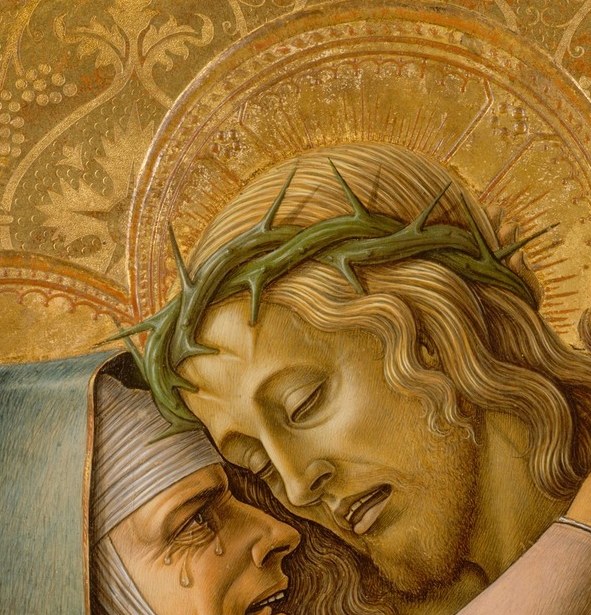
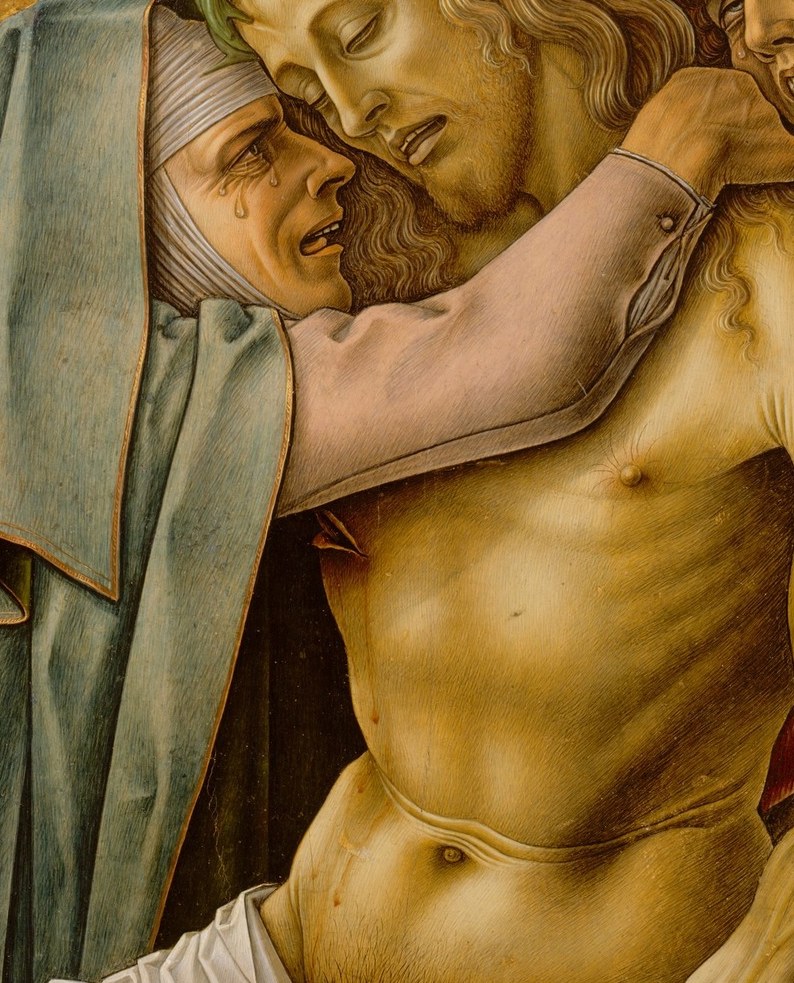
Between them, the Virgin presses her cheek directly against Christ's. It is a startling detail of maternal physical intimacy rarely depicted this directly. She does not wail, and she does not withdraw. Her eyes are closed, her pain contained, which makes it far more devastating than any open-mouthed cry could be. Crivelli understood that restraint often reads as deeper sorrow.
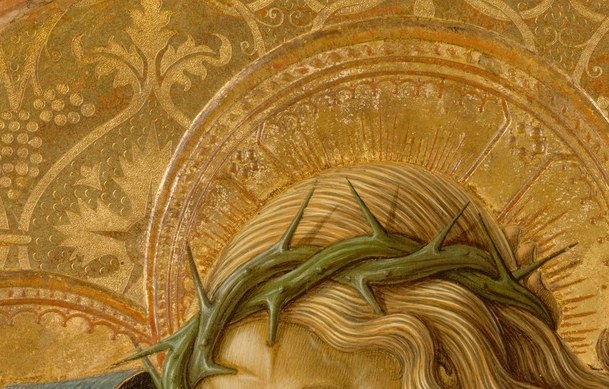
Crivelli was a late Gothic master working in the Marche region of Italy, far from the soft naturalism of his Venetian contemporary Giovanni Bellini. His sharp tempera edges, his gold-embossed backgrounds, and his almost sculptural drapery folds all belong to an older world. But his grasp of human psychology in a sacred scene feels startlingly modern. Which of the three mourners do you find yourself returning to?
#arthistory #carlocrivelli #renaissance
Details
Transcript
Three people mourning. Three completely different kinds of pain. St. John does not hold back. His mouth is wide open. Crivelli paints ugly, unselfconscious grief, not idealized sorrow. Magdalene is the opposite. Her face is serene, her grief interior. She touches his arm, but barely. As if not yet accepting what she holds. And the Virgin presses her cheek directly against her dead son's face. Her eyes are closed. Her grief is silent, physical, absolute.