Family Group by Johnson, Joshua
View the artwork: Family Group →
The sitters in this portrait are unknown. We do not have their names, their trades, or their stories. What we have is this canvas, painted around 1800 by Joshua Johnson. 'Family Group' hangs in the National Gallery of Art, and it is one of the earliest multi-figure compositions by an artist whose life is as remarkable as the work itself.
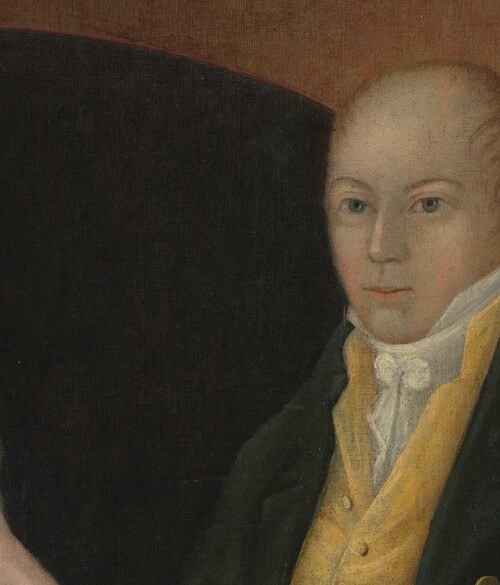
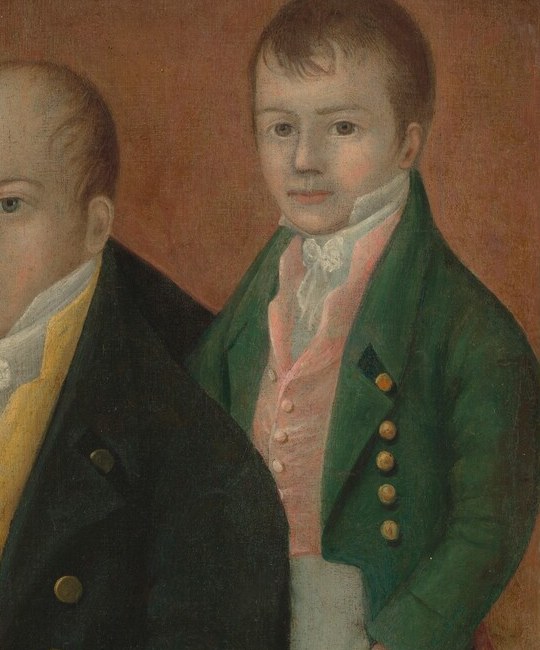
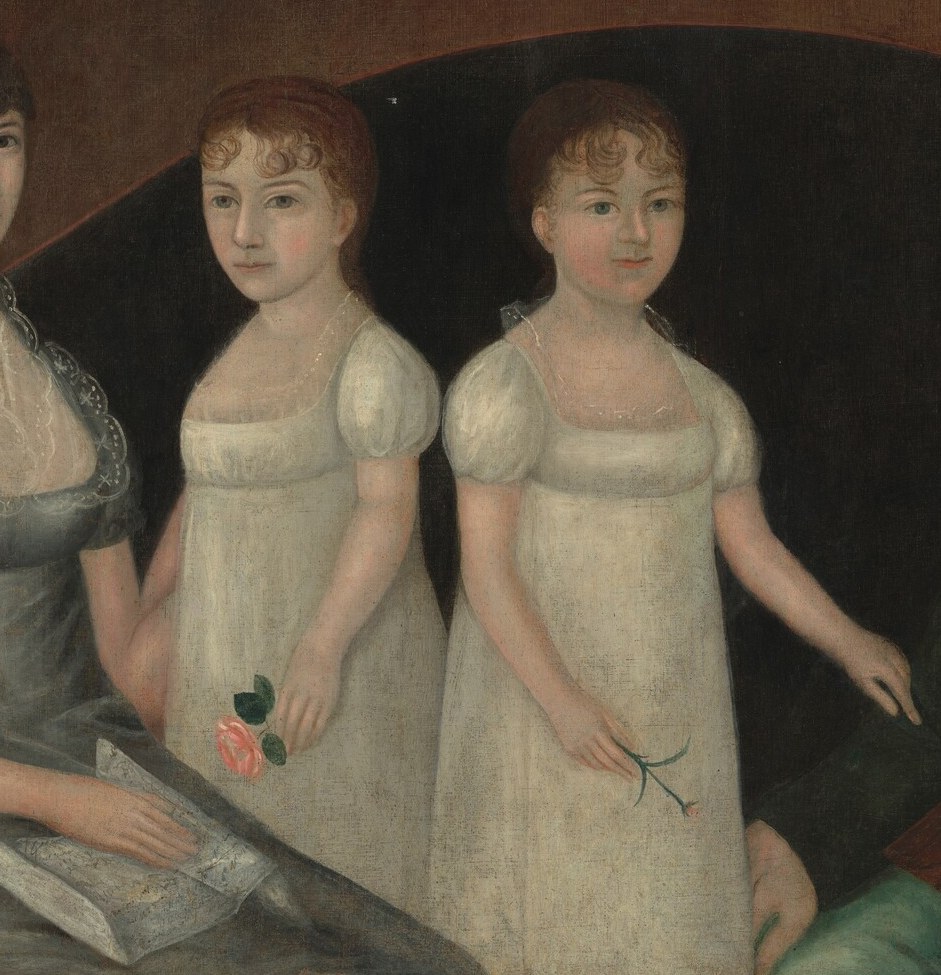
Look at how Johnson handles the five faces. Two adults bracket three younger figures. He paints the children with the same direct, frontal gaze he gives the adults, no condescension, no softening. The two girls in white muslin form a luminous center. The patriarch's brilliant yellow waistcoat is the single loudest declaration of prosperity in the frame. Johnson strips the background of any setting and pushes everything forward onto the people.
Johnson described himself in a Baltimore newspaper as a 'self-taught genius, deriving from nature and industry his knowledge of the Art.' He had emerged from enslavement, and by the late 1790s he was painting Maryland's merchant class, bankers, sea captains, tavern keepers, often neighbors who lived within blocks of his studio. Family groups were rare in early American portraiture, which makes this format one of his most significant contributions. The painting descended through a Connecticut family before being acquired by collectors Edgar William and Bernice Chrysler Garbisch, who bequeathed it to the National Gallery in 1980.
An unsigned painting of an unidentified family, by a man who overcame what he called 'many insuperable obstacles.' The dignity he gave them, he had earned.
#arthistory #joshua johnson #americanart
Details
Transcript
Five people. No one knows who they are. But look at their faces. He painted each one the same way. Direct. Unsoftened. He took children as seriously as adults. The painter had been enslaved. Freedom came when he was around nineteen. He taught himself to paint. In 1798 he called himself a self-taught genius. This yellow silk waistcoat is the loudest thing in the room. He let it speak. Joshua Johnson. The first professional Black painter in America.