Artwork
Family Group
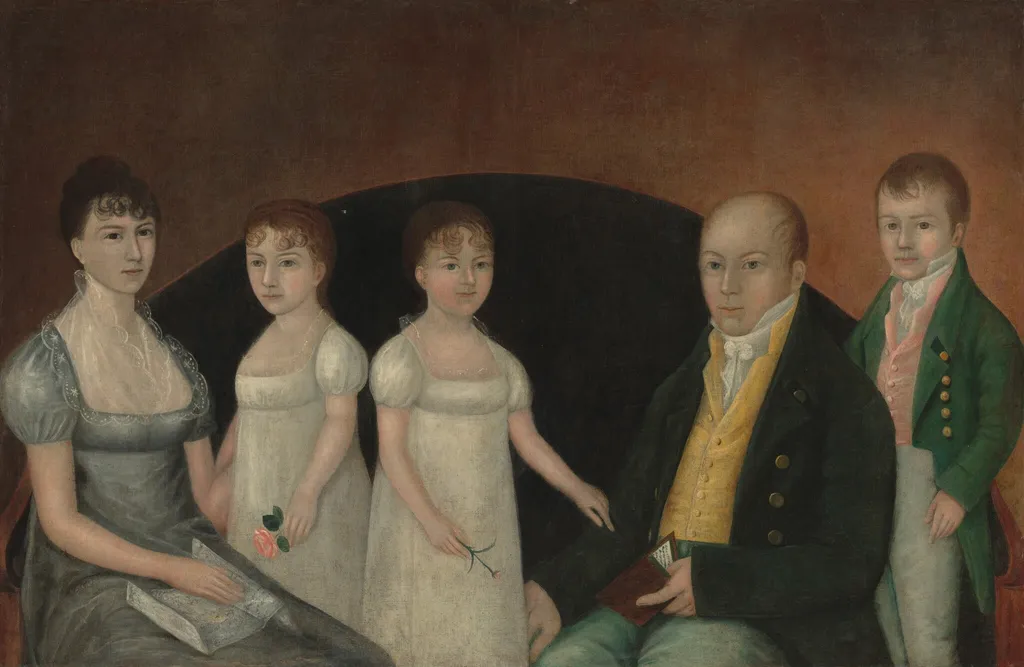
Family Group is an oil painting by the Naïve art artist Joshua Johnson. It dates from 1800 and is held in the collection of the National Gallery of Art.
About this work
Two seated adults and three children pose in their Sunday best against a muted ground, painted by Joshua Johnson around 1800.
Two seated adults and three children pose in their Sunday best against a muted ground, painted by Joshua Johnson around 1800. Their names are lost, but Johnson, the earliest documented professional Black artist in America, grouped them closely, unlike the solitary portraits common in Federal-era Maryland. They wear the high-waisted gowns and buttoned waistcoats of the early republic, now at the National Gallery of Art.
Technique & Style
The painting is executed in oil on canvas, a standard support for early American portraiture, and measures 88.5 centimeters in height by 136 centimeters in width, indicating a sizable group composition. Johnson’s handling aligns with naïve art, characterized by a flat, unmodulated application of paint, simplified forms, and a focus on clear outlines rather than academic shading. The work’s formal qualities include a stiff, frontal arrangement of figures, man, woman, girl, boy, each rendered with minimal modeling, and an emphasis on pattern and detail in clothing and accessories such as the book and the rose (Rosa).
The condition is not specified in the sources, but the medium and support suggest standard preservation concerns for early 19th-century canvas paintings.
History & Provenance
The painting was created in 1800, as recorded by the National Gallery of Art. Its earliest recorded provenance begins with Helena Penrose of Southbury, Connecticut, who owned the work until her 1964 estate sale. At that sale, John Bihler and Henry Coger purchased it as agents for the collectors Edgar William and Bernice Chrysler Garbisch.
The Garbisches eventually bequeathed the painting to the National Gallery of Art in 1980. Notably, an earlier published provenance in a 1987 exhibition catalogue has been identified as incorrect.
Context
Joshua Johnson (active c. 1790–1825), a freedman and early American portrait painter, is often categorized within naïve art. His painting Family Group (1800), depicting a white family, is held by the National Gallery of Art. Scholarship on Johnson, notably the 1987 exhibition catalog by Caroline Weekley et al., has focused on his biography and stylistic conventions, though the provenance of Family Group in that catalog is known to be incorrect.
The work’s art-historical place lies in early American portraiture by a Black artist, contributing to the study of folk art and African American artistic heritage.
Overview
Painted around 1800, Joshua Johnson's Family Group is an oil on canvas depicting five unidentified sitters. This work is notable as one of the earliest multi-figure compositions by Johnson, recognized as the first professionally documented Black artist in the United States. The painting, now held by the National Gallery of Art, offers a glimpse into early Federal-era portraiture and represents a significant contribution to the genre by an artist who emerged from enslavement.
Subject & Meaning
The canvas features two seated adults and three younger figures, all dressed in the contemporary fashion of the early Federal period. The women wear high-waisted white gowns, while the men are depicted in fitted waistcoats. Although the identities of the sitters remain unknown, their presence is preserved through Johnson's brush.
Family groups were an uncommon subject in early American portraiture, making this composition a distinctive and important aspect of Johnson's artistic output.
Own this work as a print
Artist & collection


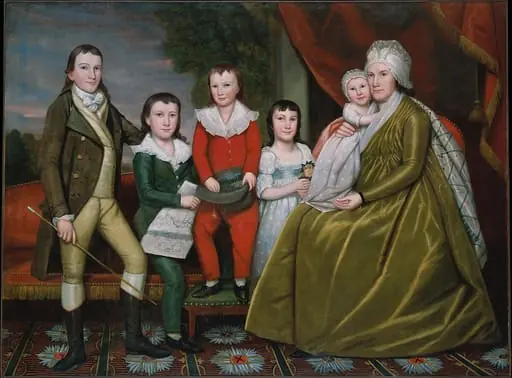 Mrs. Noah Smith and Her Children
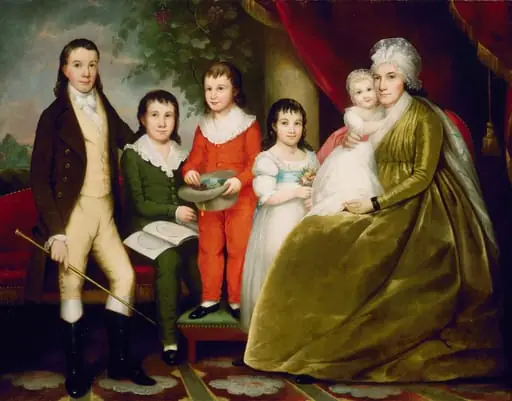 Mrs. Noah Smith and Family
 Mrs. Noah Smith and Family
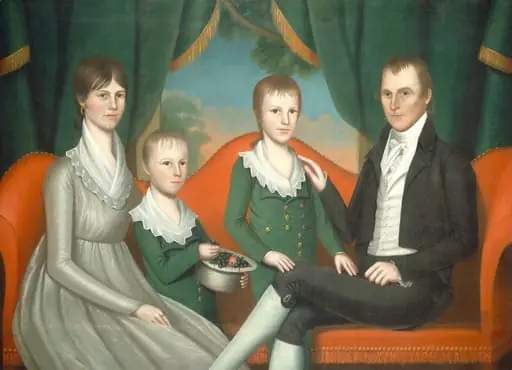 Family Portrait
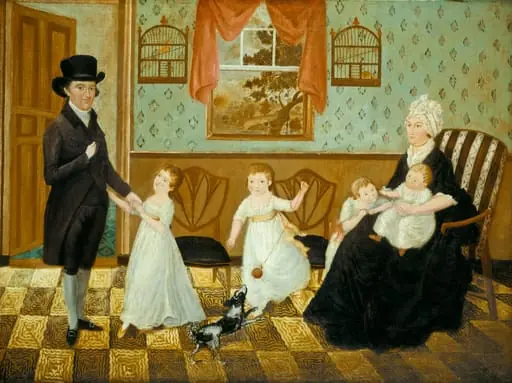 The Sargent Family
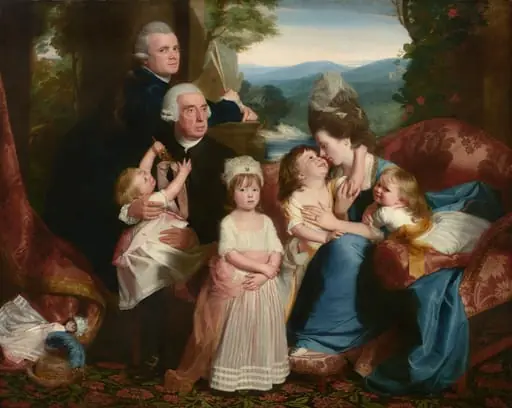 The Copley Family
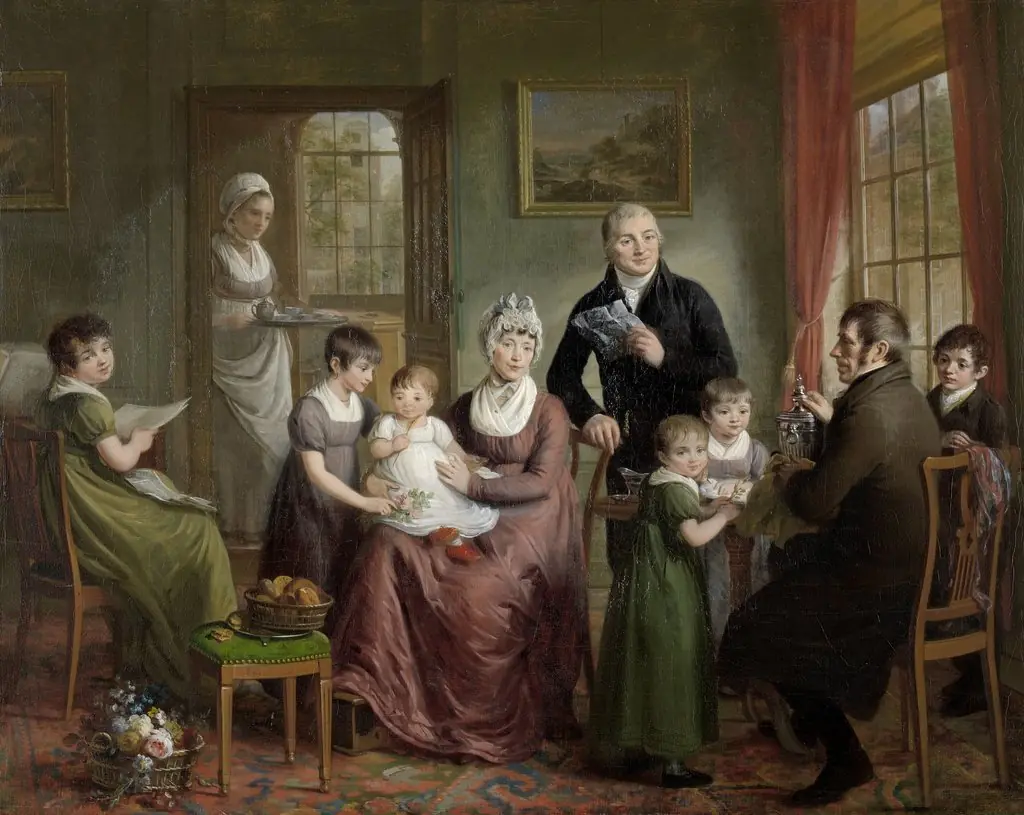 Portrait of the Family of Adrianus Bonebakker with Dirk L. Bennewitz
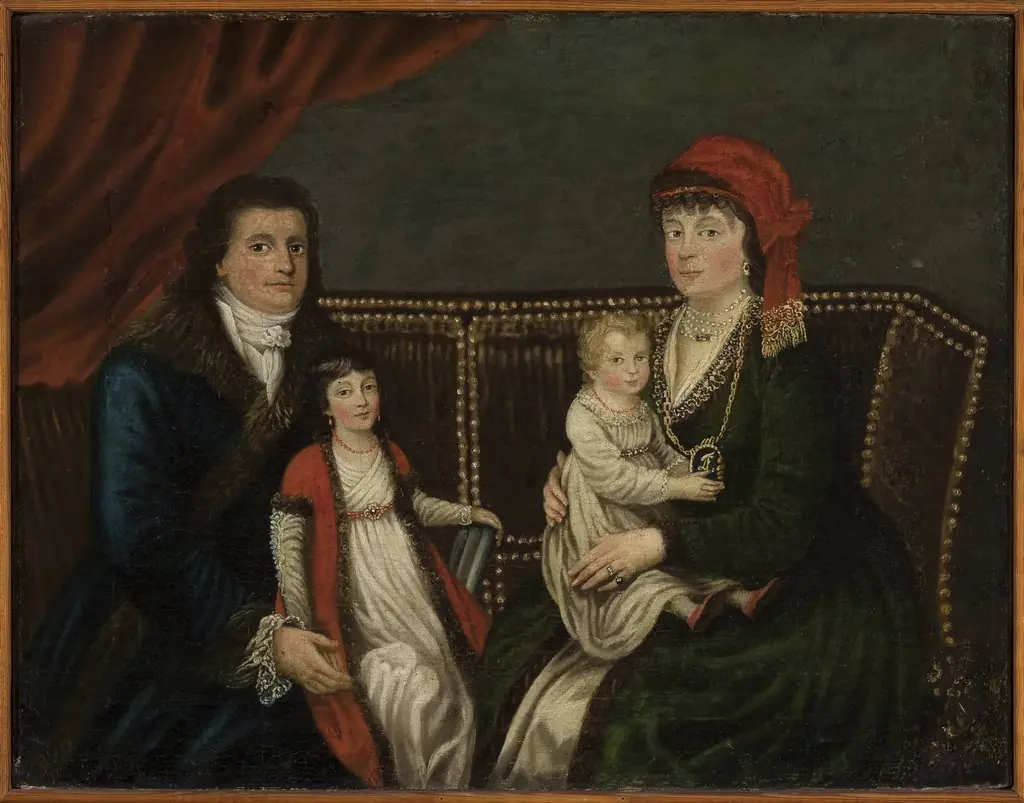 Portrait of the Lafontaine family, Leopold (1756–1812), surgeon, with his wife Teresa née Korneli (1768–1827) and daughters, Zofia (?–1831) and Wiktoria (1800–1849)
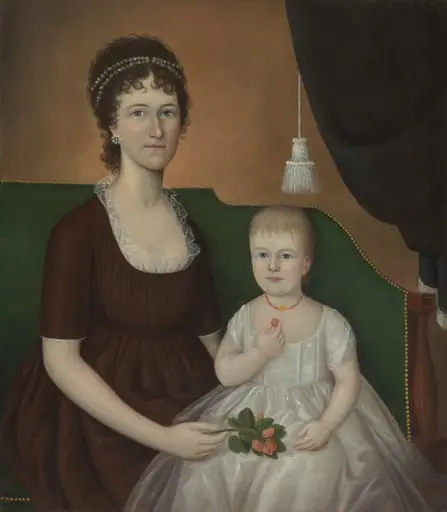 Elizabeth Grant Bankson Beatty (Mrs. James Beatty) and Her Daughter Susan