The Death of Saint Anthony by Master of the Osservanza
This is The Death of Saint Anthony, painted around 1432 by the anonymous Sienese artist known as the Master of the Osservanza. It is a tempera on poplar panel, and it depicts the passing of Anthony the Great, the founding father of Christian monasticism.
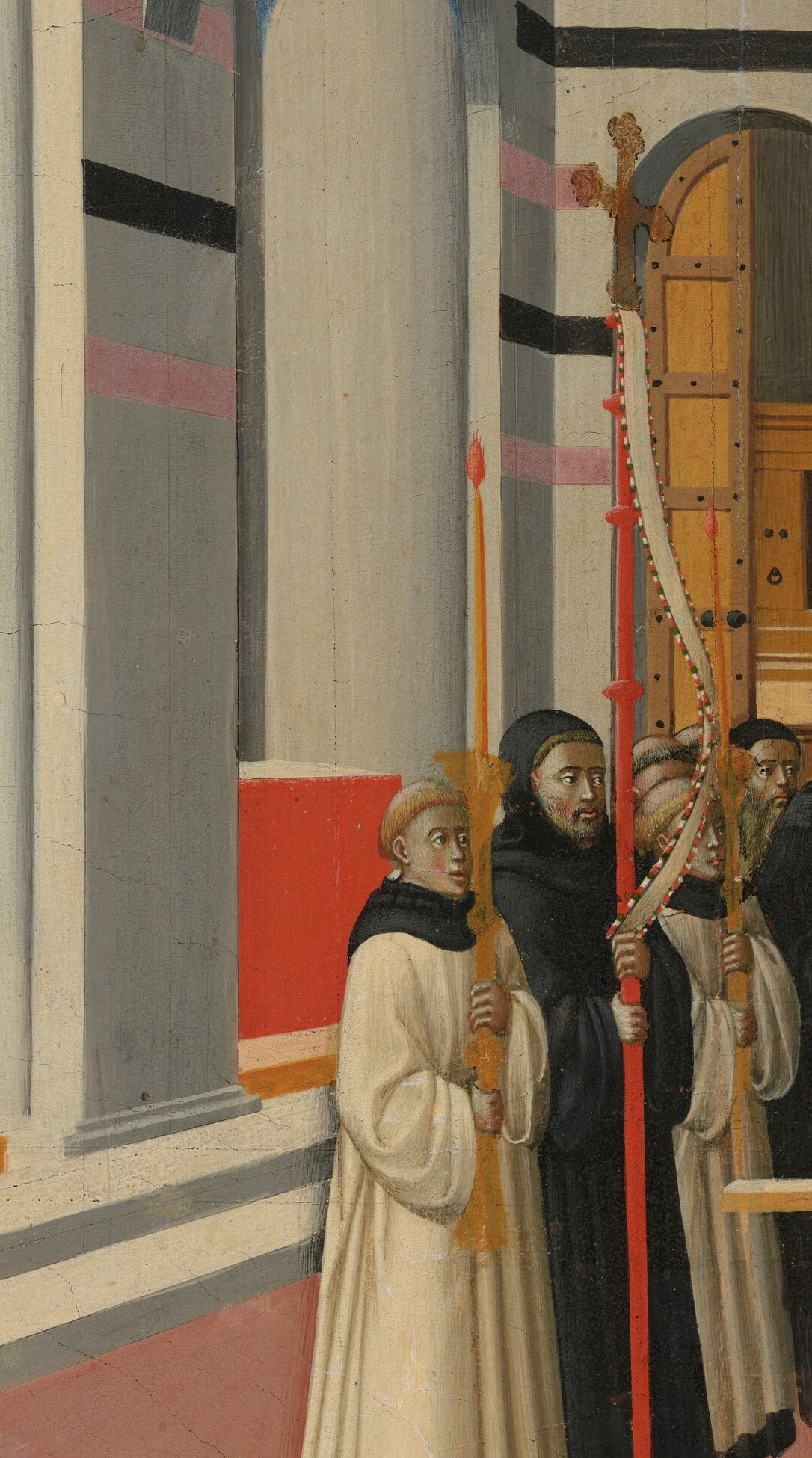
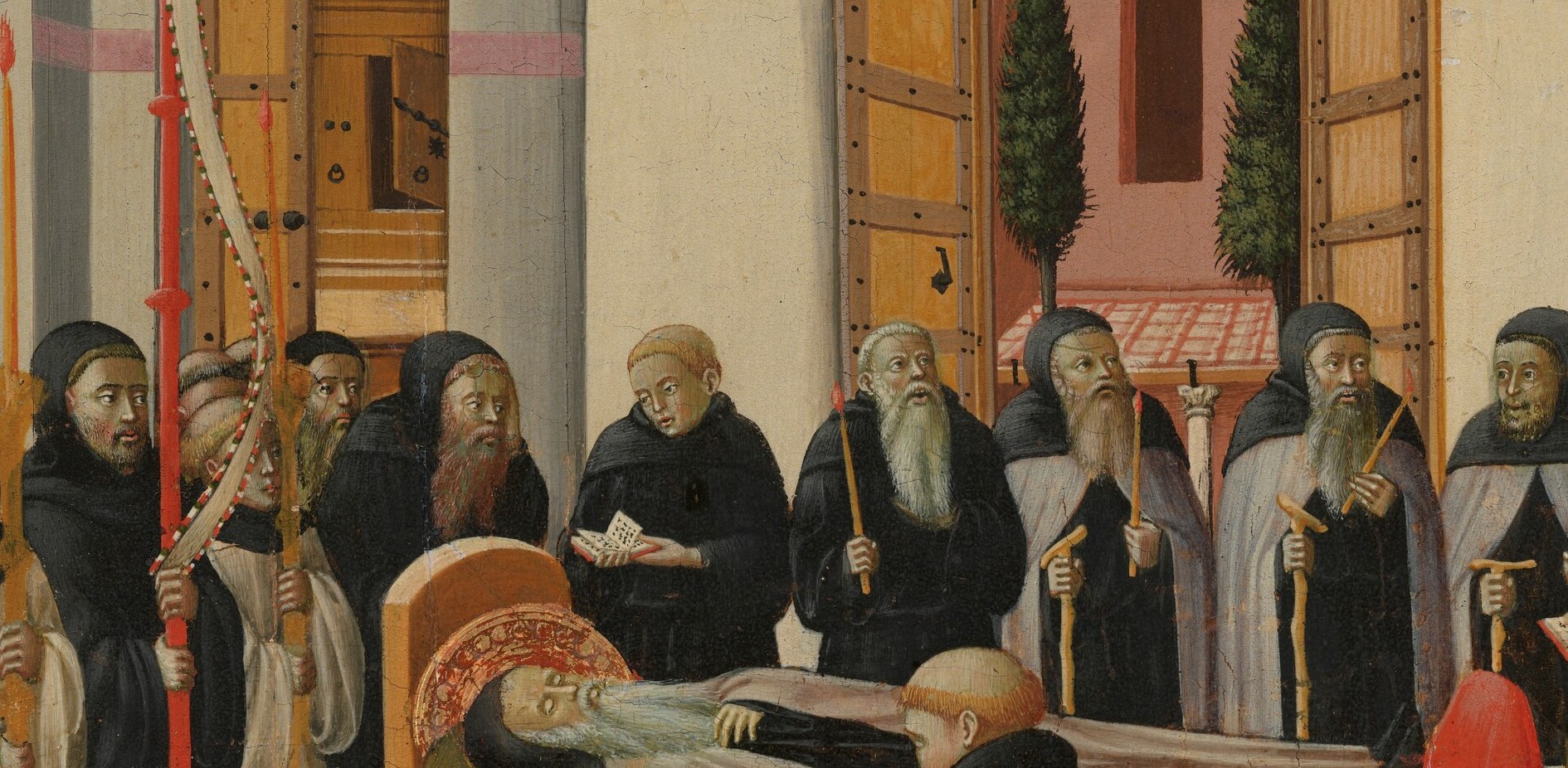
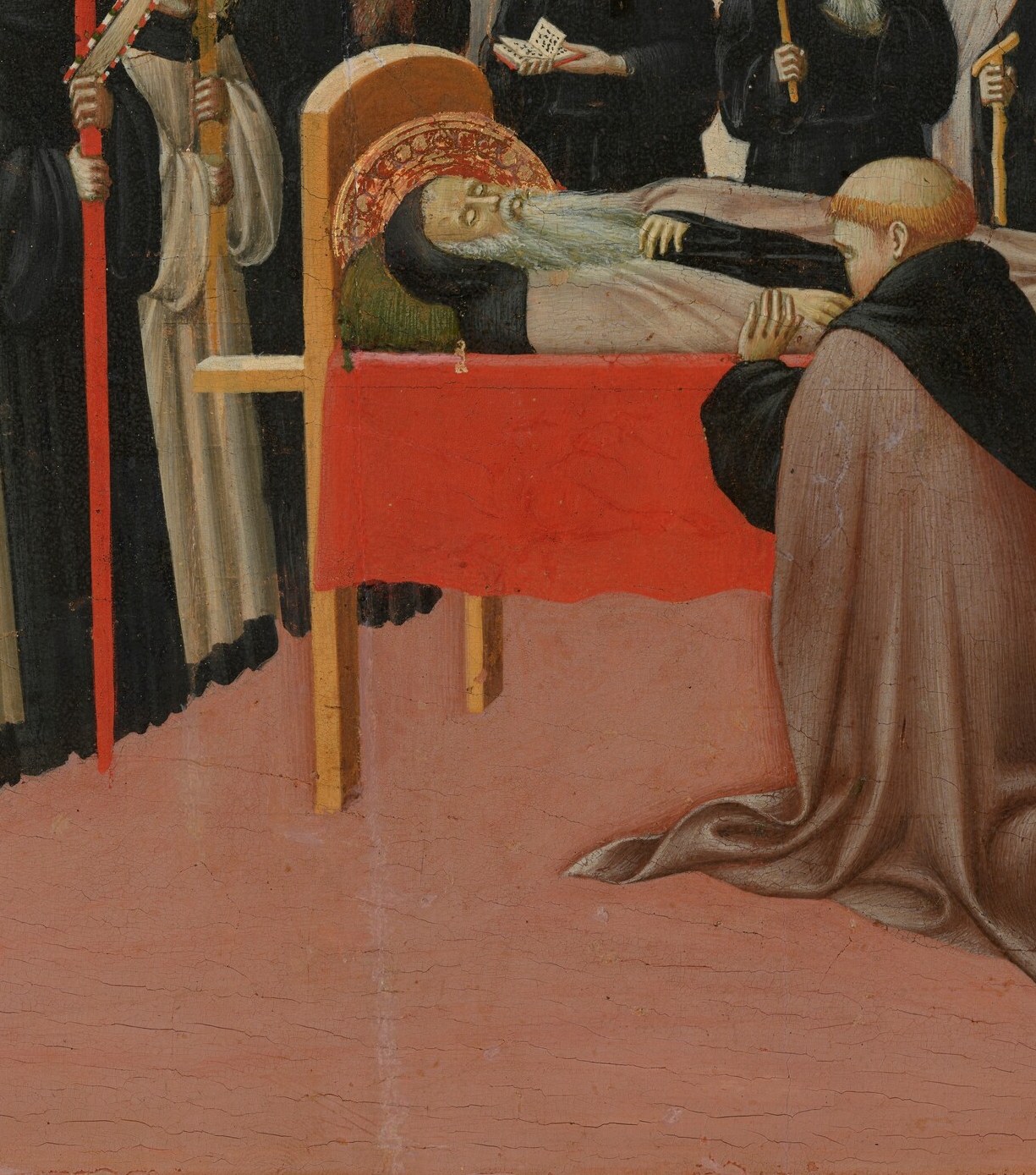
Look first at the red vertical staff rising through the dark crowd of monks. That is a tau cross, the specific symbol of Saint Anthony. It marks the scene as his, and its sharp chromatic accent draws the eye right to the heart of the composition. Then notice the figures in white robes on the left. Their habits set them apart from the dark-robed monks around the bier, a deliberate visual signal that multiple religious orders gathered to honor the saint.
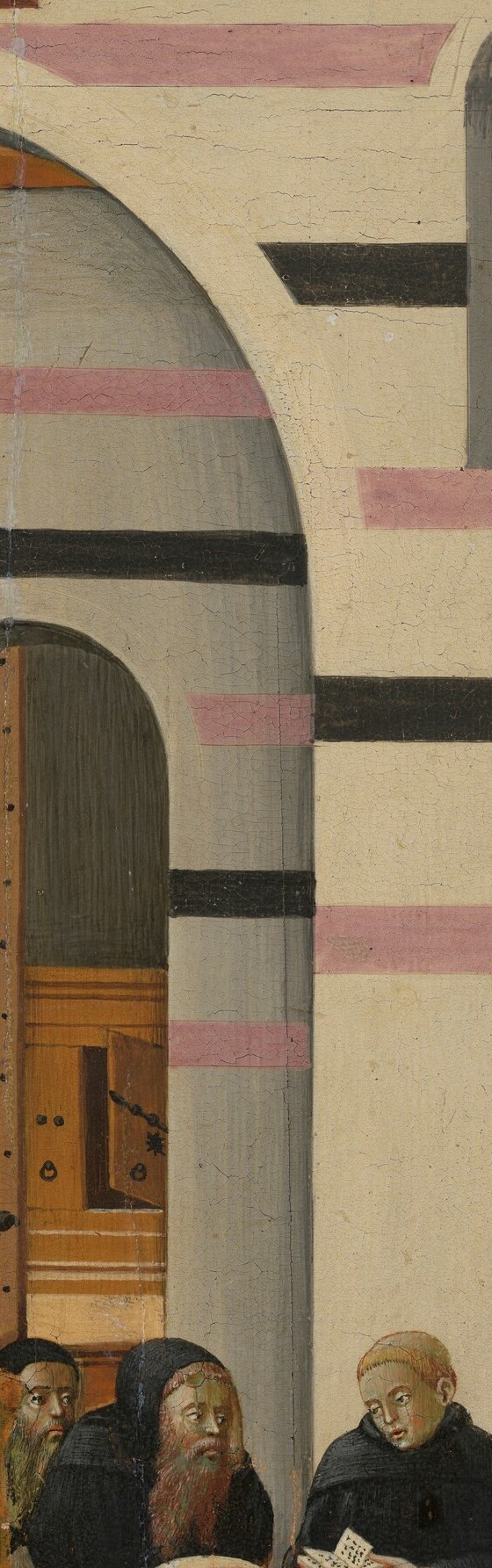
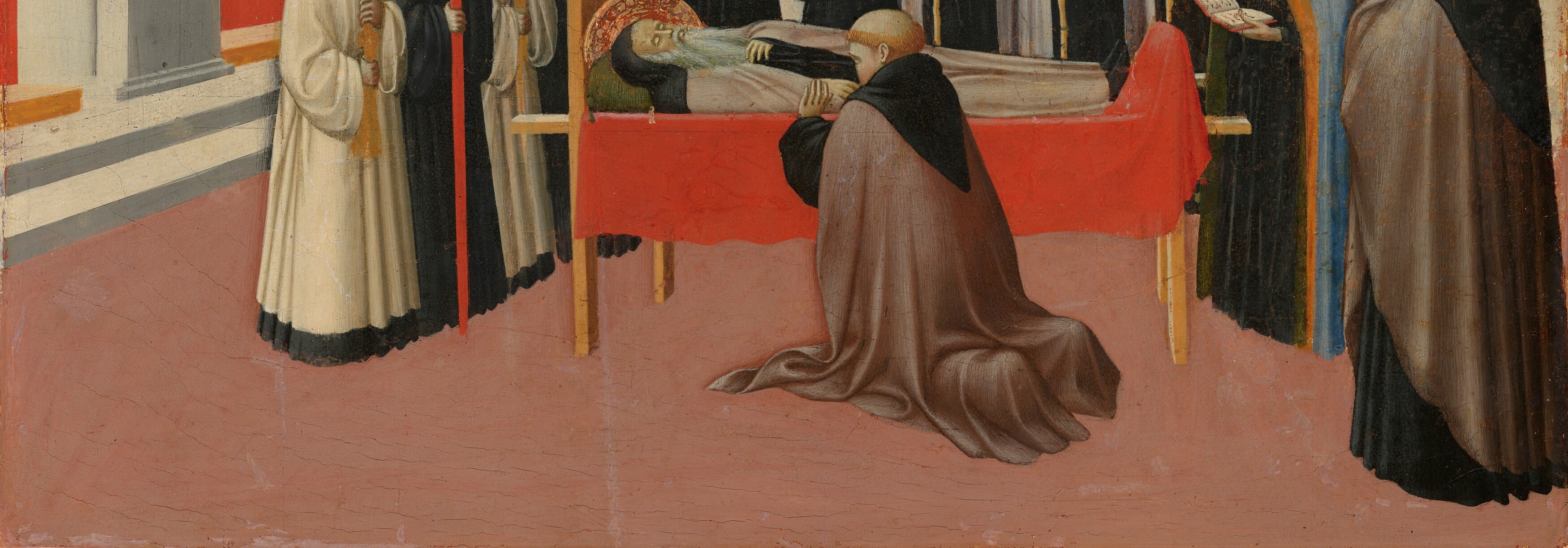
The anonymous painter was active in Siena in the early fifteenth century, working at a moment when the elegance of the late Gothic was beginning to absorb the naturalism and spatial logic of the early Renaissance. You can see the tension in the expressive, individualized faces of the mourners set against a floor whose receding pink tiles are an early perspective experiment.
The body rests not on a bed but on a raised bier. In Catholic iconography, this elevation transforms the saint’s corpse into an altar. He is no longer a dying man but a holy relic, an object of veneration the instant his soul departs. Every detail in this panel, the staff, the distinct habits, the altar-like bier, builds a coded argument: this is not an ordinary death. It is the foundation of a cult.
Details
Transcript
A saint's death, painted in Siena around 1432. This red staff rising through the crowd is a tau cross. It was the specific symbol of Saint Anthony the Great. The monks in white stand apart from the dark robes. They are likely Canons Regular, a different order, here to honor him. His body is elevated on a bier, not a bed. This lifts him into an altar, already a relic, an object of veneration.