Red Cherries by Dunning, Robert Spear
Red Cherries by Robert Spear Dunning, painted in 1866, is a small American still life that rewards a very close look. The painting lives in a private collection, but it was exhibited publicly in the years just after it was made.
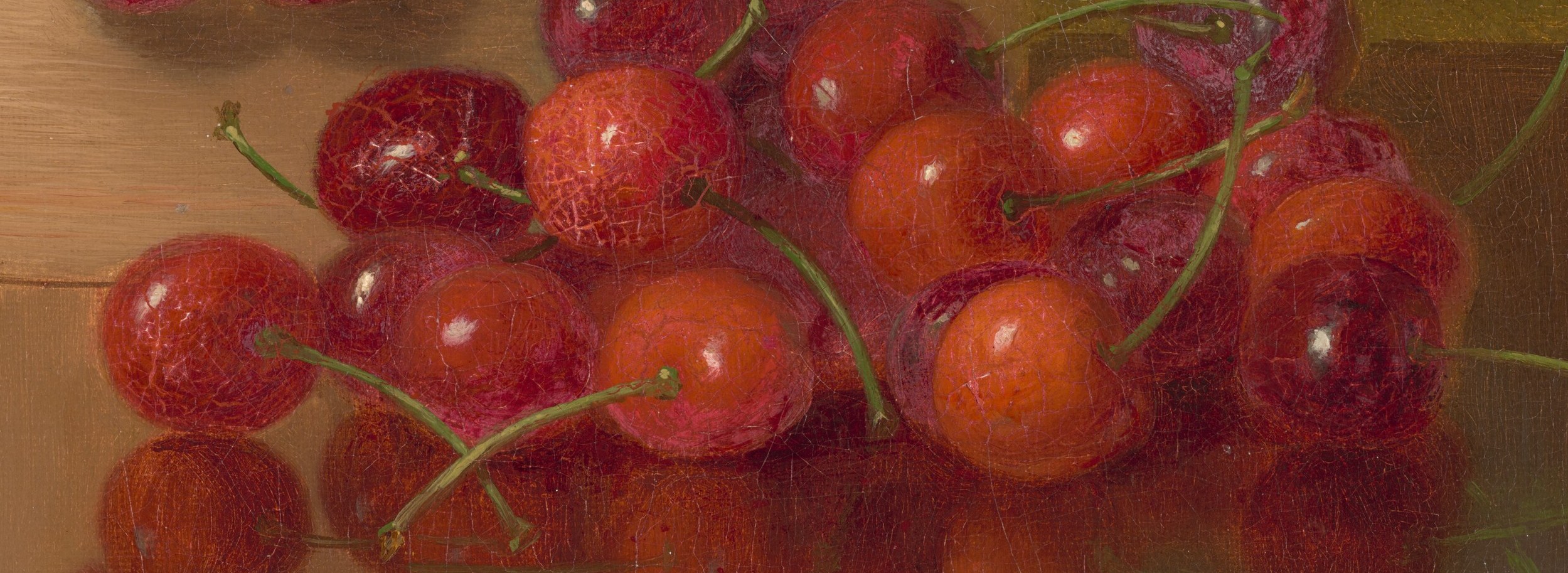
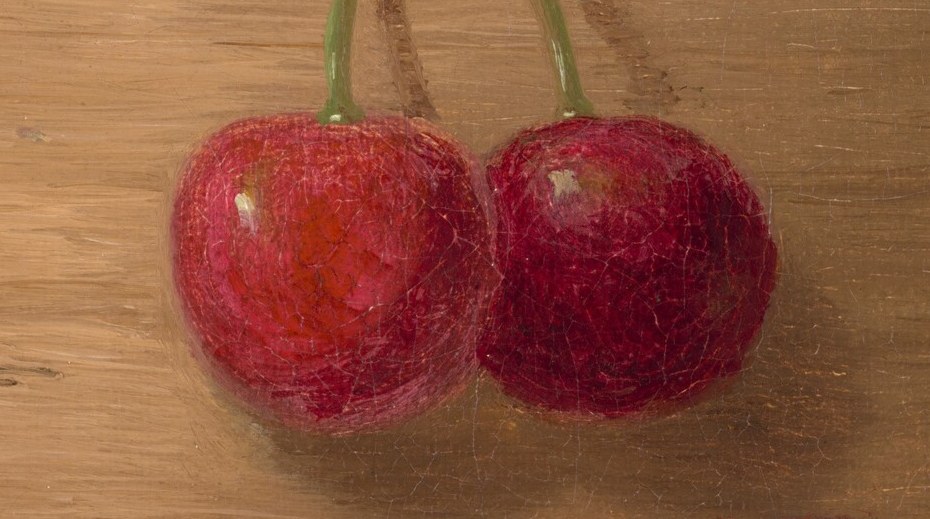
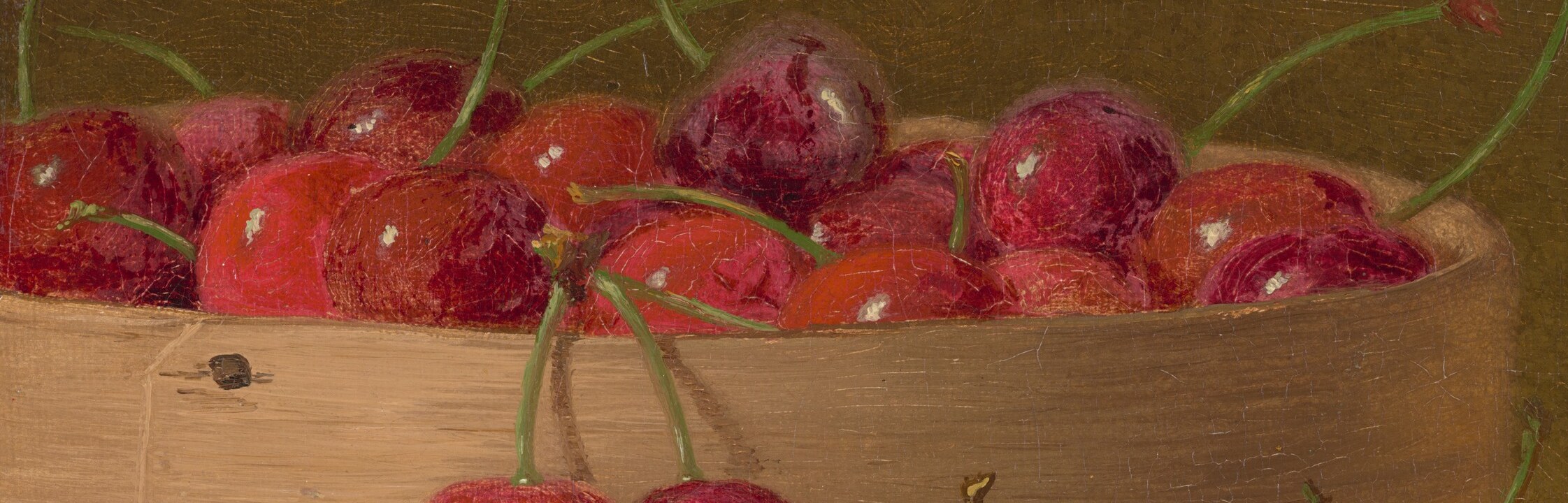
Dunning gives us a basket of cherries on a wooden table, lit from the left so every highlight pops. Look first at the fruit scattered beside the basket: most are glossy and whole, but one cherry is split open, its cracked skin catching the light in a completely different way from its perfect neighbors. Dunning is showing you he can paint both ripeness and decay in the same handful of fruit.
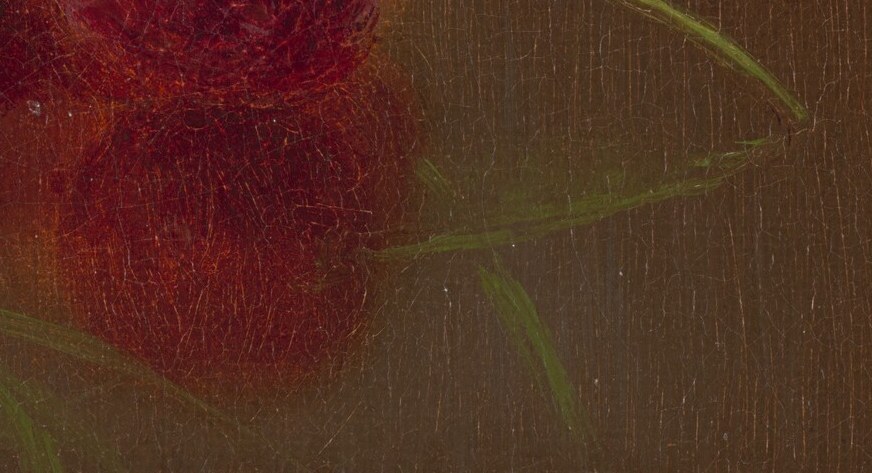
Then look at the polished table surface. Reflected in the wood, upside-down and tucked into the dark grain, is the artist’s own signature. It reads like a mark carved into the table rather than painted on top of it, a quiet, clever hiding place Dunning used in several still lifes.
Robert Spear Dunning co-founded the Fall River School in Massachusetts and spent his career painting exactly this kind of modest, carefully observed domestic subject. No drama, no grand narrative, just a basket of cherries he knew you would scroll past.
Details
Transcript
At first glance, just cherries in a basket. But the painter hid something in plain sight. Look closely at the cherries scattered on the table. One is split open. Its cracked skin catches the light. It is the only broken fruit. Everything else is perfect. Now look at the dark wooden tabletop, in the reflection. The artist signed his name upside-down, as if carved into the wood. Robert Spear Dunning painted this in 1866. A small, honest picture.