Two Cherokee Chiefs by Catlin, George
George Catlin painted 'Two Cherokee Chiefs' in 1865, long after his famous expeditions across the American frontier in the 1830s. It is an act of memory and advocacy, not a firsthand sketch. The painting lives at the National Gallery of Art in Washington, a quiet and dignified record of leadership during an era of immense loss.
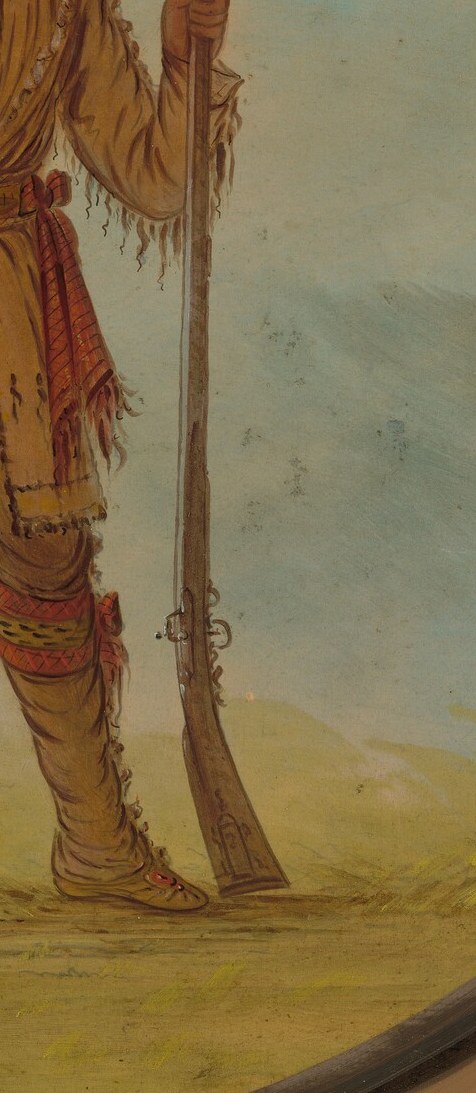
The two chiefs are a study in contrast. The man on the left meets your eye with a direct, stoic patience. The chief on the right seems to look past us, his gaze soft and interior. Their weapons carry the same tension: one holds a traditional spear adorned with feathers, the other a rifle, a symbol of the changing, often violent, world they were forced to navigate.
Catlin made it his life's work to document the faces and customs of Native American nations, driven by a desperate belief that they were being erased. By the time he painted this, the Cherokee had already survived forced removal and were rebuilding in new territory. He painted these two men in his studio, shaping them not as warriors defeated, but as leaders enduring.
The painting doesn't record a single moment. It holds decades of resilience in two faces, one looking at us, and one looking beyond.
Details
Transcript
They stand like brothers, but their gaze tells a different story. One faces the future, steady and unblinking. The other looks away, into a past he cannot return to. George Catlin painted them in 1865, decades after the Trail of Tears. He was an advocate, trying to preserve a world he believed was vanishing. The spear holds tradition. The rifle holds the new reality. He painted them not as a record, but as a plea to remember.