Courtesan-Dancer (Shirabyōshi) for the New Year by Isoda Koryūsai
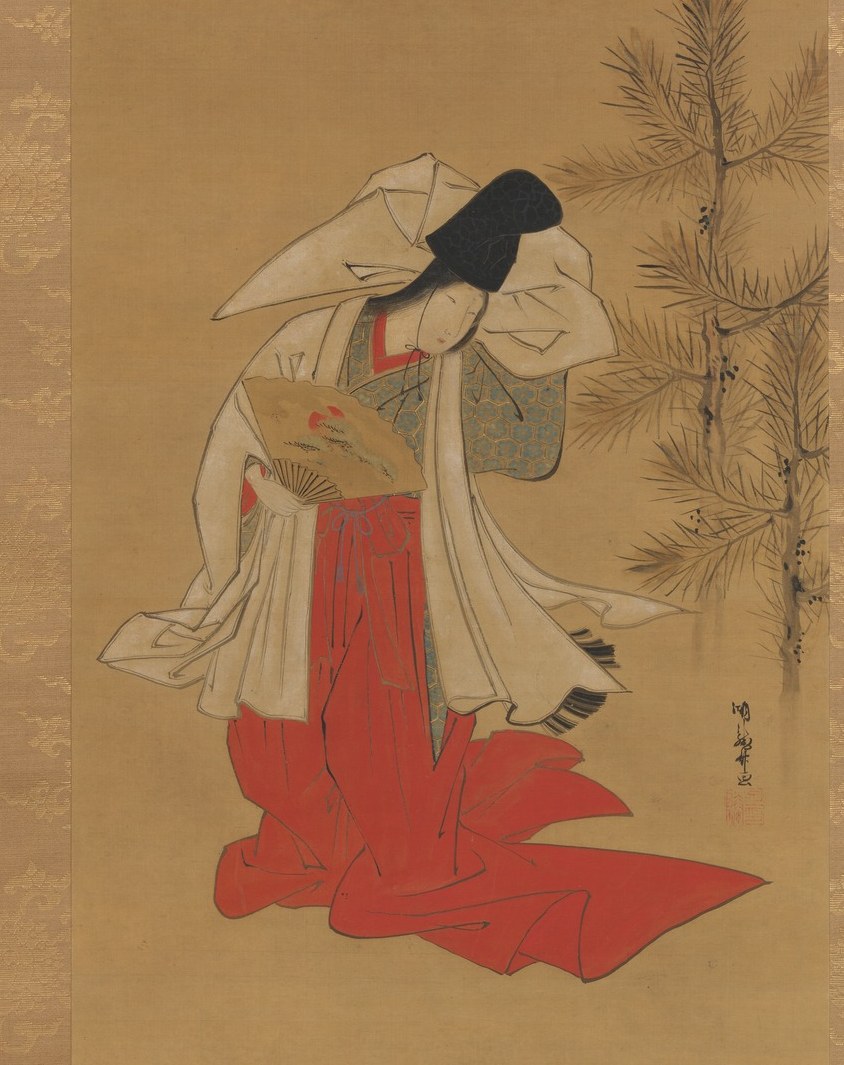
Isoda Koryūsai's "Courtesan-Dancer (Shirabyōshi) for the New Year," painted in 1776, captures a moment of elegant performance from 18th-century Japan. This work, held at The Metropolitan Museum of Art, showcases the refined aesthetic of ukiyo-e paintings.
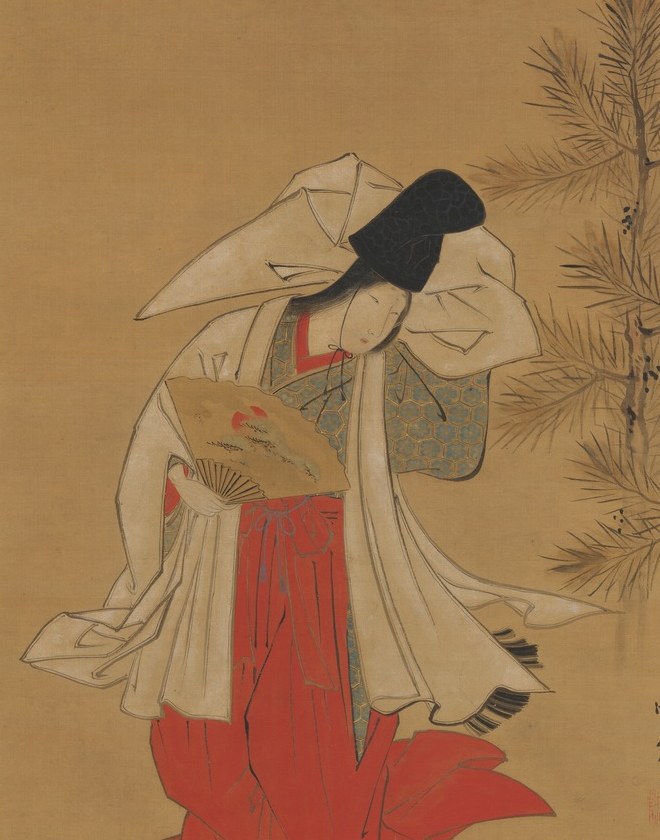
The painting features a shirabyōshi, a distinguished female performer, in a striking red kimono beneath a flowing white robe. Her delicate hand fan suggests movement and artistry, while her downcast gaze hints at deep concentration during her performance.
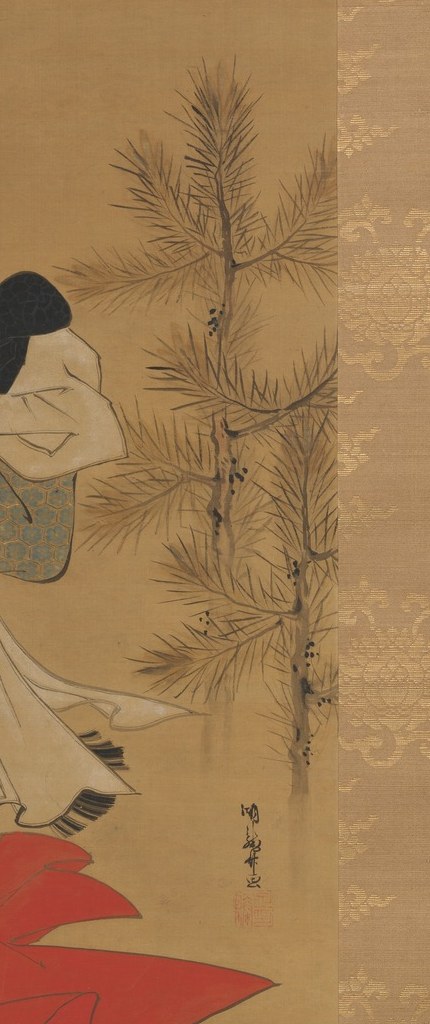
In the background, a pine branch, traditionally symbolizing longevity and renewal, reinforces the theme of the New Year. Koryūsai's meticulous attention to detail and color harmony highlights the grace and cultural significance of these celebrated dancers.
This piece offers a serene window into Japanese artistic practices and cultural traditions of the period. What details do you notice first?
Details
Transcript
This dancer celebrates the New Year, 1776, in Japan. She is a shirabyōshi, a female performer of the era. Her elaborate white robe layers over a vibrant red kimono. She holds a hand fan, a key prop in her graceful performance. The pine branch behind her symbolizes longevity and renewal. Her expression captures the focus of her art.