Mountain Range by James M. Hart
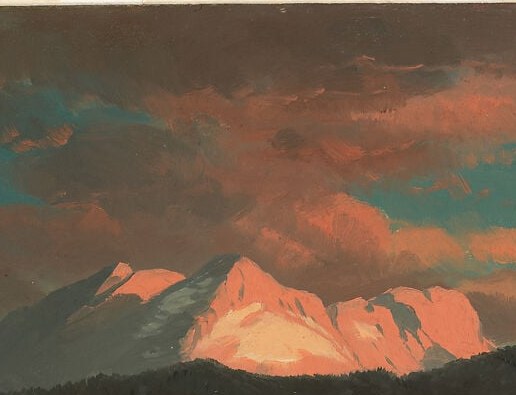
James M. Hart painted this quiet showstopper, "Mountain Range," around 1850 to 1855. It lives in the American Wing of the Metropolitan Museum of Art. What looks at first like a simple landscape is actually a technical masterclass in capturing one of nature's most fleeting phenomena: alpenglow.
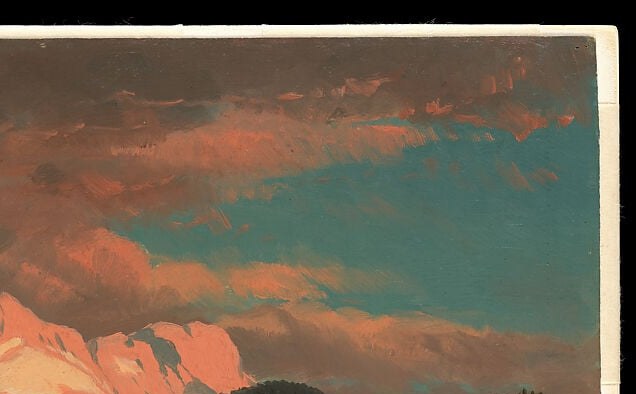
Find the central peak. At its very top, the snow burns a warm salmon-pink while the summit below it drops into cold shadow. This is alpenglow, a brief effect at dawn or dusk that lasts only minutes. Hart froze it. Look closely at the right edge of that same peak: the orange cloud bank bleeds directly into the lit rock face with no hard line. This lost-edge painting forces your eye to reconstruct where stone ends and atmosphere begins.
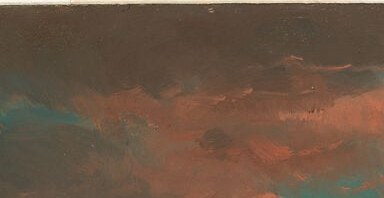
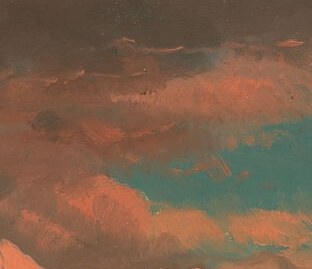
Hart was a committed Hudson River School painter, part of the mid-19th-century movement that made American wilderness the subject of serious art. Instead of stretching canvas, he chose wove paper as his ground. The thin paper let him apply oil paint with a watercolor-like delicacy, building the entire valley and those engulfing clouds out of soft translucency rather than heavy impasto.
This is a painting that insists you slow down. The longer you look, the more it reveals about how thoroughly a skilled painter can construct an atmosphere from almost nothing.
Details
Transcript
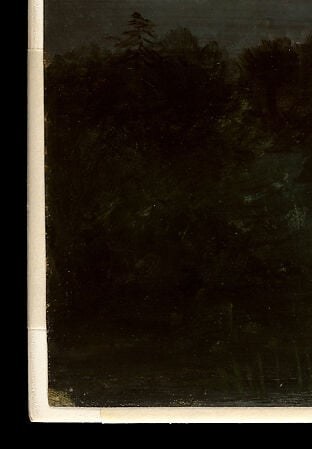
Look at the summit. That pink light is called alpenglow. It lasts only a few minutes. James Hart caught the exact moment warm light hit the cold snow. Now watch the right edge of the peak. The cloud and the rock dissolve into each other. You cannot find the seam. Hart built this entire composition to push your eye up and in. Dark tree silhouettes act like theater curtains around the mountain. He painted it on wove paper, not canvas, to get that soft, glowing haze.