The Laundresses by Steinlen, Théophile Alexandre
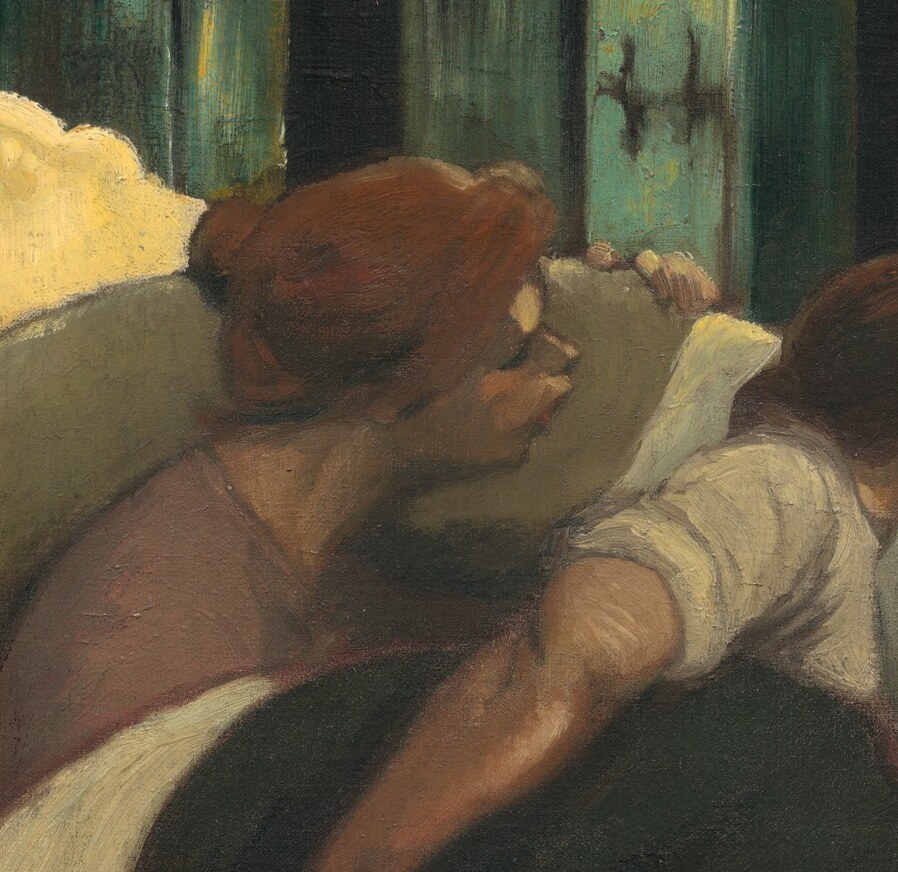
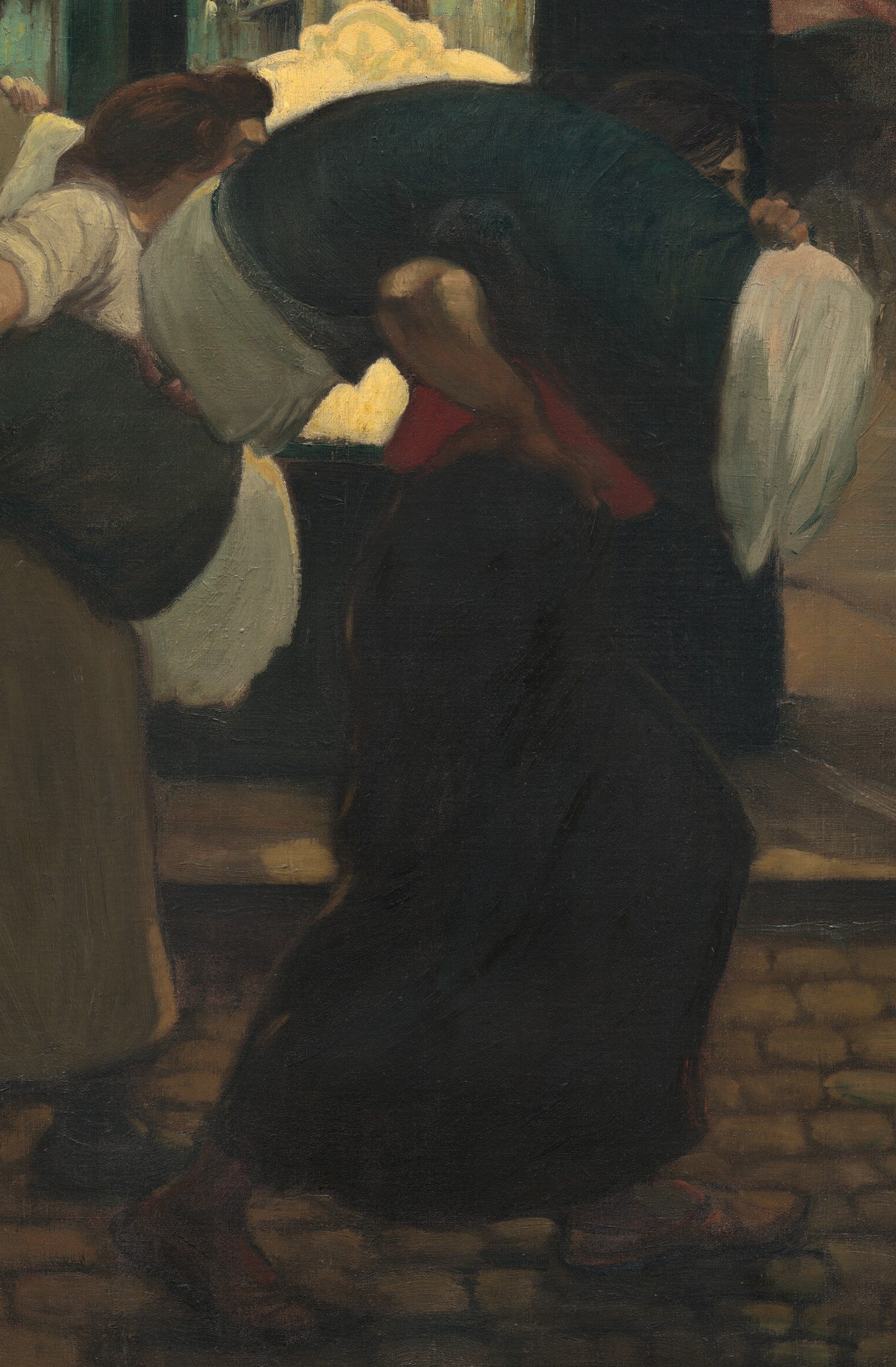
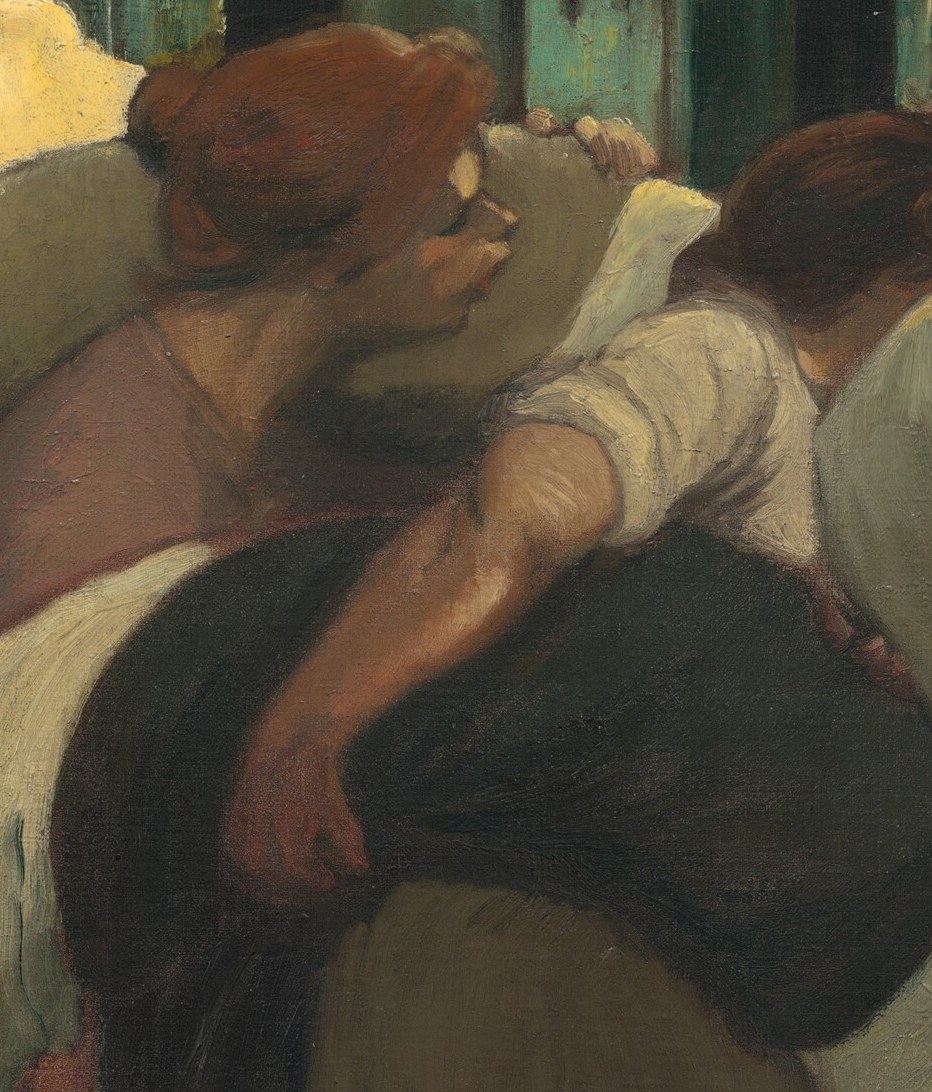
Théophile Steinlen painted The Laundresses in 1899, and he hid every face. The painting hangs today as a stark document of working-class life in fin-de-siècle Paris.
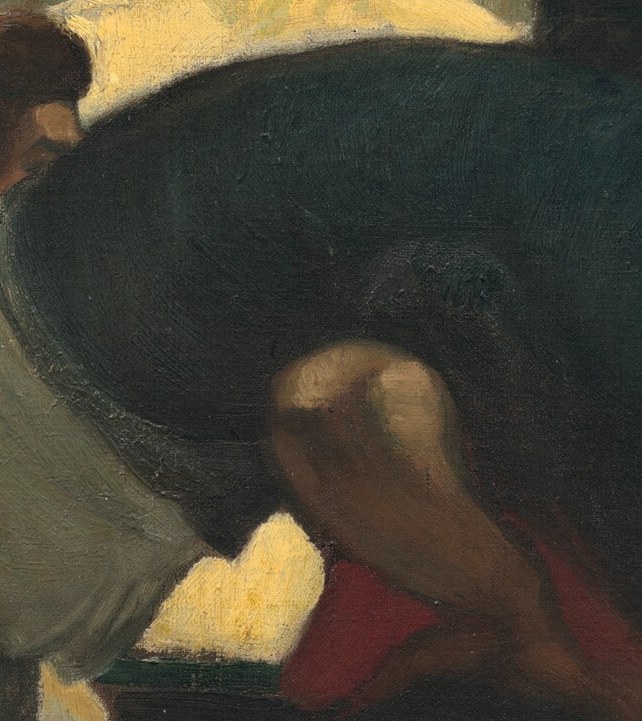
Look at the white bundles. There are four of them, each bent under the same weight. Steinlen turns laundry into a unit of labor, repeated across the canvas like a word that will not stop being spoken. Behind the women, warm window lights glow in the distance, belonging to rooms they will never enter.
Steinlen was Swiss-born but worked in France, contributing illustrations to anarchist and socialist publications. He knew these streets. The painting is not a generic lament; it is a specific, political act from an artist who believed art should look at who does the work.
What do you notice first, the women or the weight they carry?
Details
Transcript
Paris, 1899. The city needed clean linen. So every morning, women bent under white bundles. This bundle is not just laundry. It is a unit of weight. The painter hid their faces on purpose. A face would make her one woman. He painted all of them. The windows glow behind them. Warmth belongs to someone else. Steinlen signed it here. He worked for the anarchist press.