A Light on the Sea by Homer, Winslow
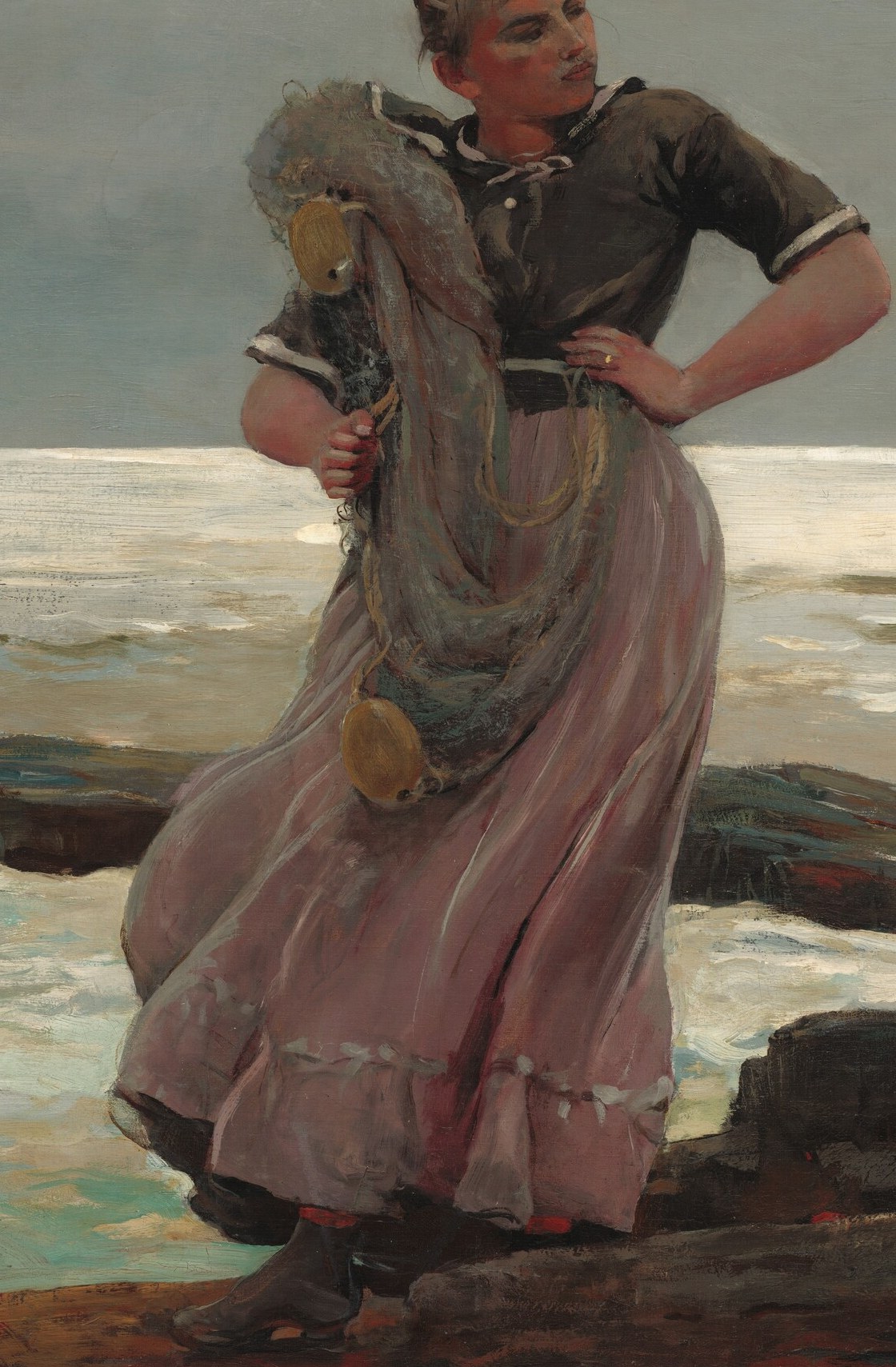
Winslow Homer painted "A Light on the Sea" in 1897, late in a career spent watching the Atlantic. It is not a portrait of a specific woman but a scene of everyday coastal labor: a figure in a pink dress holding a bundle of nets, a dark jacket over her arm, facing the churning surf.
Look at her face. Her gaze is steady but unreadable, fixed on the horizon line. Homer does not give us a story, only a moment of quiet vigilance. The loose, gestural brushwork in the waves and the white sea foam makes the water feel alive and restless against the dark, rocky shore.
By the late 1890s, Homer had moved away from his earlier, sunnier narratives of boys and sailboats. His sea grew stormier, his palette more muted. This painting belongs to that shift: a solitary figure against an indifferent ocean, rendered in grays, blues, and the soft pink of a dress that catches the last light.
There is a solitary seagull in the sky above her. It is a tiny detail, easily missed, but it does what seagulls do: it reminds you how small a human being is next to the sea.
Details



Transcript
1897. The American coastline was its own kind of factory. A woman in a pink dress grips her fishing nets. Her face is turned toward the churning water. Winslow Homer had spent decades watching the Atlantic. He knew the sea was not a backdrop. It was the main event. By now his palette had darkened into this. A quiet reckoning between a person and the indifferent surf.