The Connecticut Valley by Chambers, Thomas
View the artwork: The Connecticut Valley →
The Connecticut Valley by Thomas Chambers (mid-19th century) vanished from art history for nearly a hundred years. The painting was found in an attic, the artist's name unknown or dismissed, until mid-20th-century collectors and curators reassembled his scattered work. Today it hangs in the National Gallery of Art in Washington, D.C., a gift from Edgar William and Bernice Chrysler Garbisch in 1956.
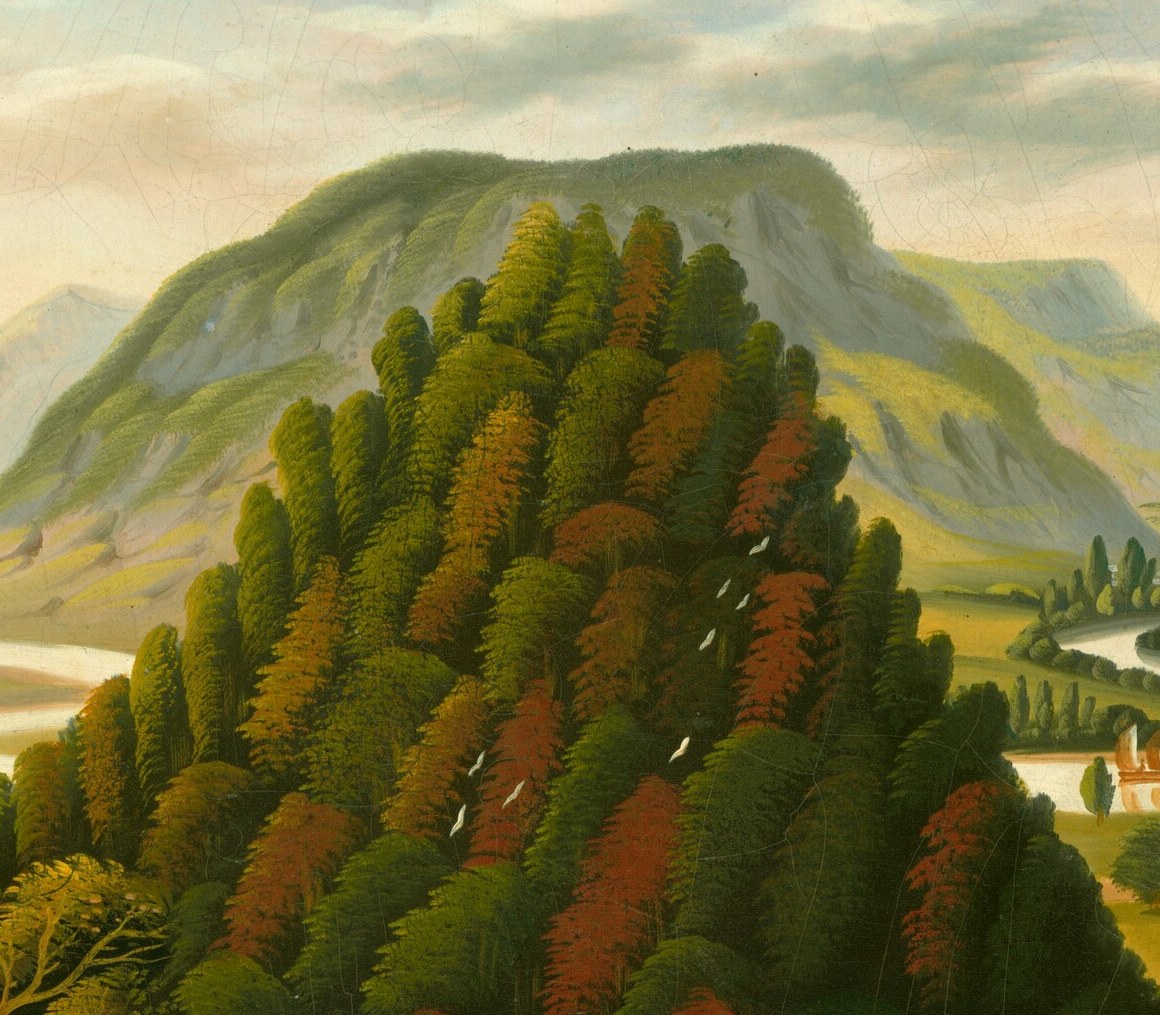
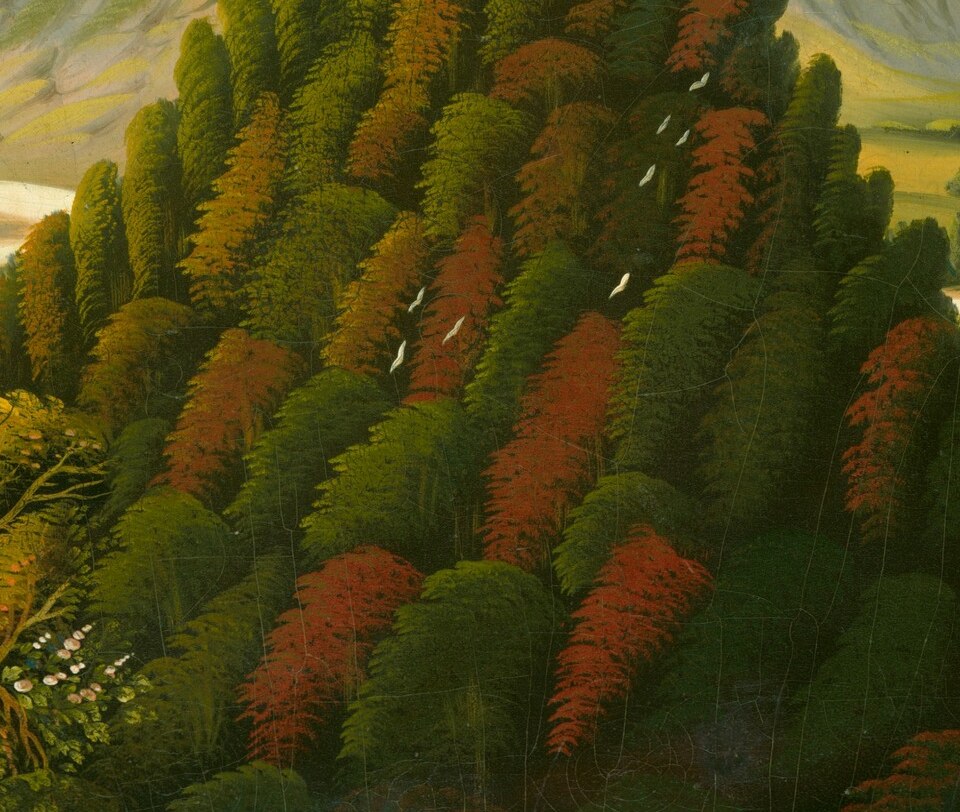
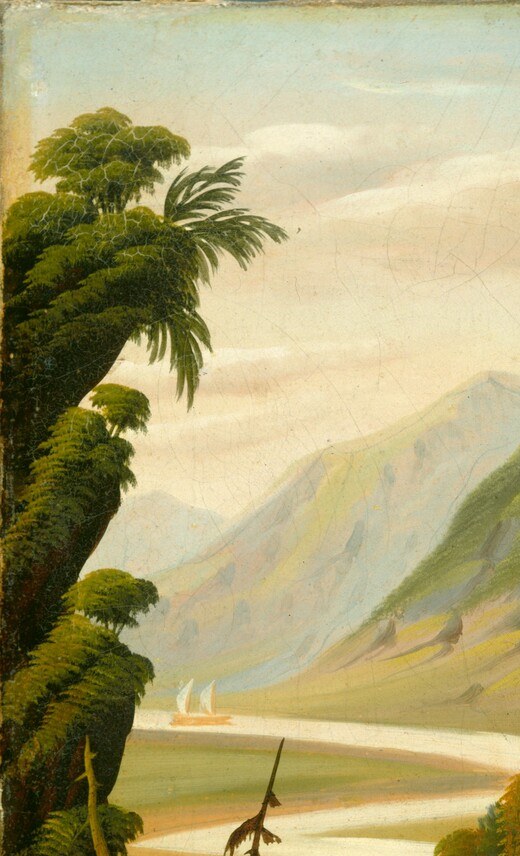
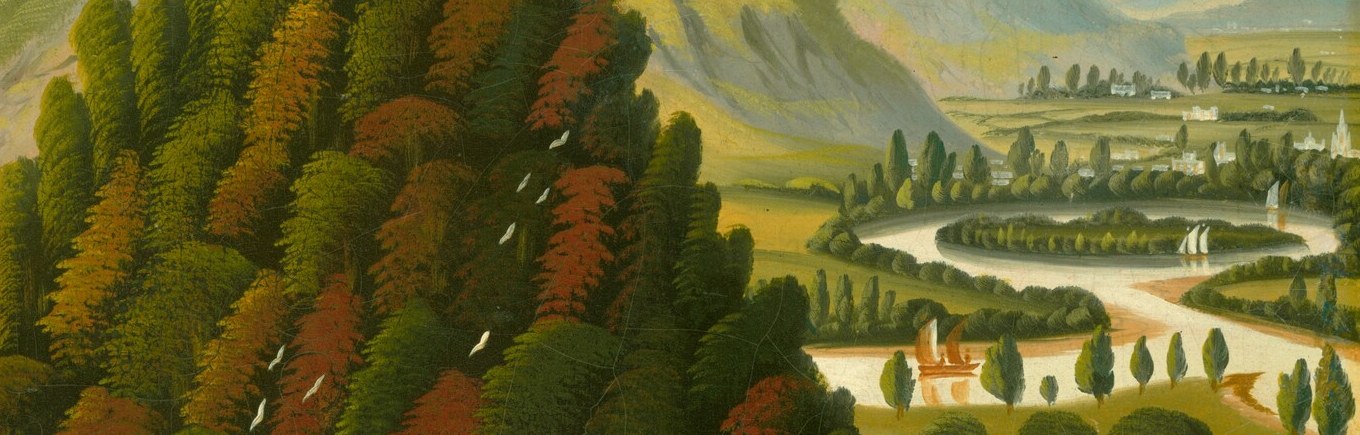
Look at the mountain. Chambers flattens the peak into an almost geometric silhouette, and the hillside in front of it is a deep, saturated rust-red, a color choice that has nothing to do with naturalism and everything to do with design. The river is a silver-white ribbon, the distant hills stack like tonal bands, and the trees have the rounded, rhythmic shapes of folk art. Every choice pushes back against the atmospheric illusionism of the Hudson River School.
Chambers was English-born, arrived in New Orleans in 1832, and worked in New York, Boston, and Albany, advertising "Fancy Painting of every description done to order." He drew on prints, not nature, and transformed them into bold, decorative compositions. He operated entirely outside the academic art world of his time, and his distinctive style, strong contours, vivid color, flattened space, was overlooked by his contemporaries.
In the 20th century, critics rediscovered him and called him "America's first modern." The first major museum survey of his work finally arrived in 2008 at the Philadelphia Museum of Art. A painter who worked outside the system ended up anticipating it by decades.
#arthistory #americanart #folkart
Details

Transcript
For decades, no one knew who painted this. It was found in an attic. The name on it meant nothing. But look at the mountain. Flattened like a stage set. And this hillside: the color of rust, not nature. The artist ignored the Hudson River School. He worked outside it entirely. A century later, critics called him America's first modernist.