Artwork
The Connecticut Valley
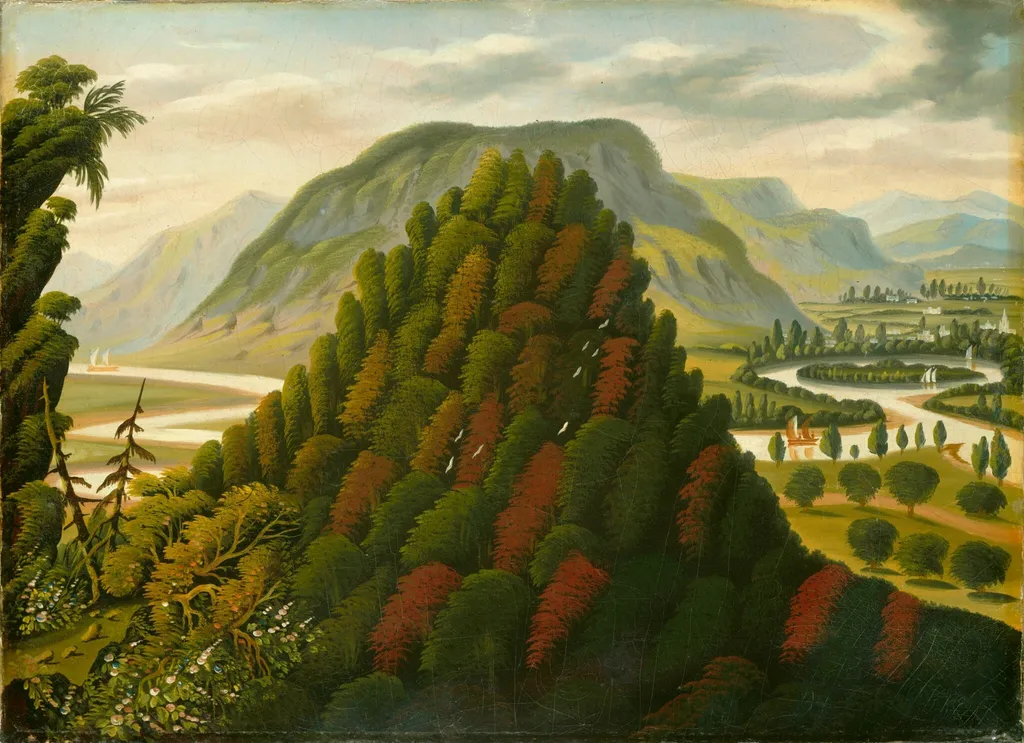
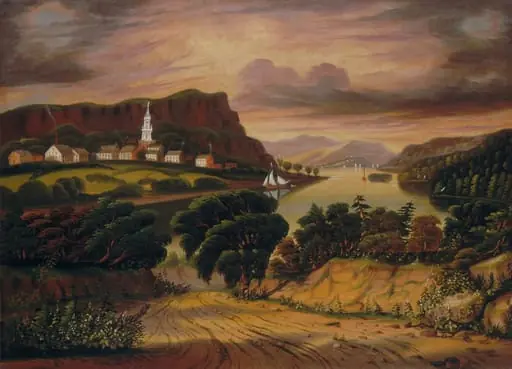
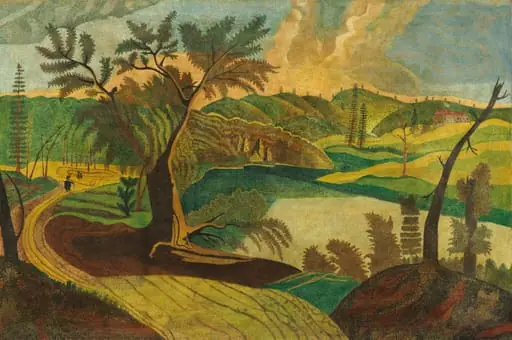
The Connecticut Valley is an oil painting by the American Impressionist artist Thomas Chambers. It dates from 1850 and is held in the collection of the National Gallery of Art.
About this work
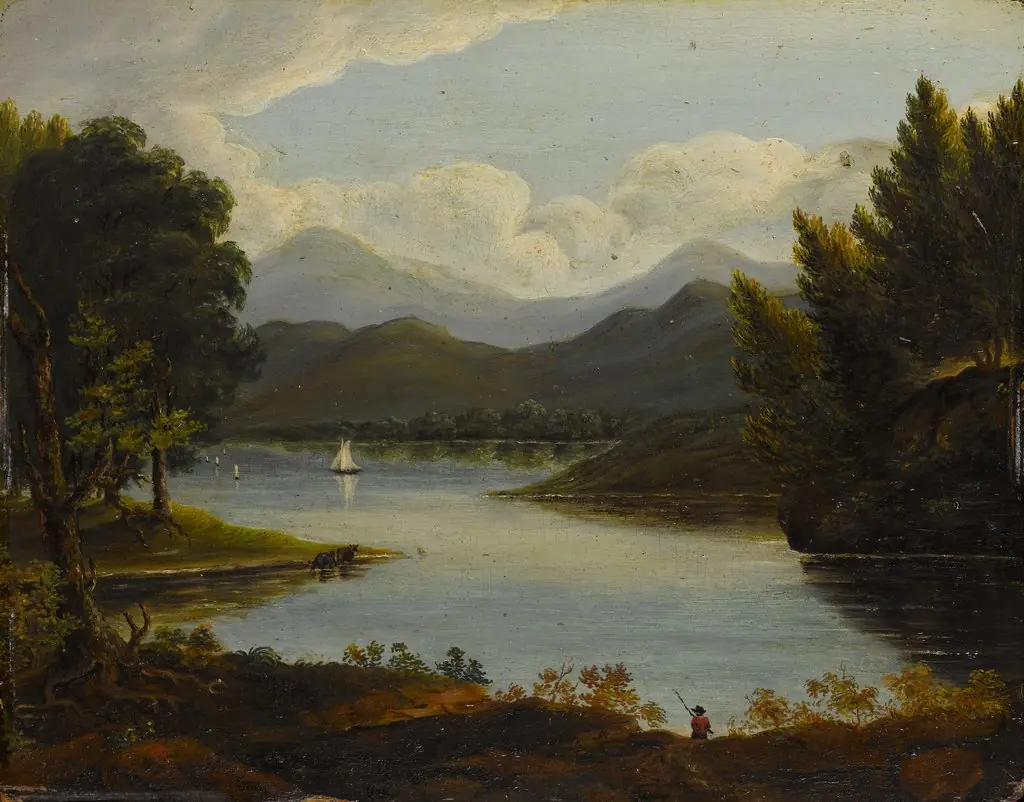
A stand of dark green trees frames a river winding through rolling hills toward distant mountains, rendered in the flat, vivid manner that led 20th-century critics to call Thomas Chambers "America's first modern." Painted in oil on canvas around the mid-1800s, this 18-by-24-inch view of the Connecticut Valley was once recorded as coming from the Hudson River Valley before collectors Edgar William and Bernice Chrysler Garbisch purchased it in 1949 and gave it to the National Gallery of Art in 1956.
Subject & Meaning
As a landscape painting, it represents a scenic view of the region, highlighting the natural features of the river, valley, and surrounding terrain.
The painting depicts the Connecticut River valley, including hills, mountains, trees, birds, and a sailboat. As a landscape painting, it represents a scenic view of the region, highlighting the natural features of the river, valley, and surrounding terrain. The composition presents a peaceful rural scene characteristic of mid-nineteenth-century American landscape art, with no overt symbolic narrative beyond its depiction of the locale.
History & Provenance
Thomas Chambers created The Connecticut Valley in 1850. The painting was purchased in 1949 by Edgar William and Bernice Chrysler Garbisch, who subsequently gifted it to the National Gallery of Art, Washington, D.C., in 1956. No commission or earlier ownership details are recorded in the available sources, and no specific accession number or exhibition history is documented.
Overview
Thomas Chambers created The Connecticut Valley around the mid-19th century. This oil on canvas painting, measuring 18 by 24 inches, depicts a sweeping landscape of a river valley. It entered the collection of the National Gallery of Art in 1956, where it remains an example of Chambers's distinctive approach to American scenery.
Technique & Style
Chambers developed a style distinct from the naturalistic trends of the Hudson River School. Operating independently of academic institutions, he advertised "Fancy Painting" and transformed source prints, such as those by William Henry Bartlett, into unique compositions. His approach emphasized rhythmic shapes, bold contours, and vivid, expressive color, resulting in a flattened, stylized aesthetic that resonated with later modernist sensibilities.
Legacy
Chambers's distinctive style, characterized by its bold forms and vibrant palette, garnered renewed attention in the 20th century. Art critics, noting its departure from conventional realism, retrospectively described him as "America's first modern" painter. This recognition culminated in the first major museum exhibition dedicated to his work in 2008, affirming his unique position in American art history.
Own this work as a print
Artist & collection