The Dinner Horn (Blowing the Horn at Seaside) by Homer, Winslow
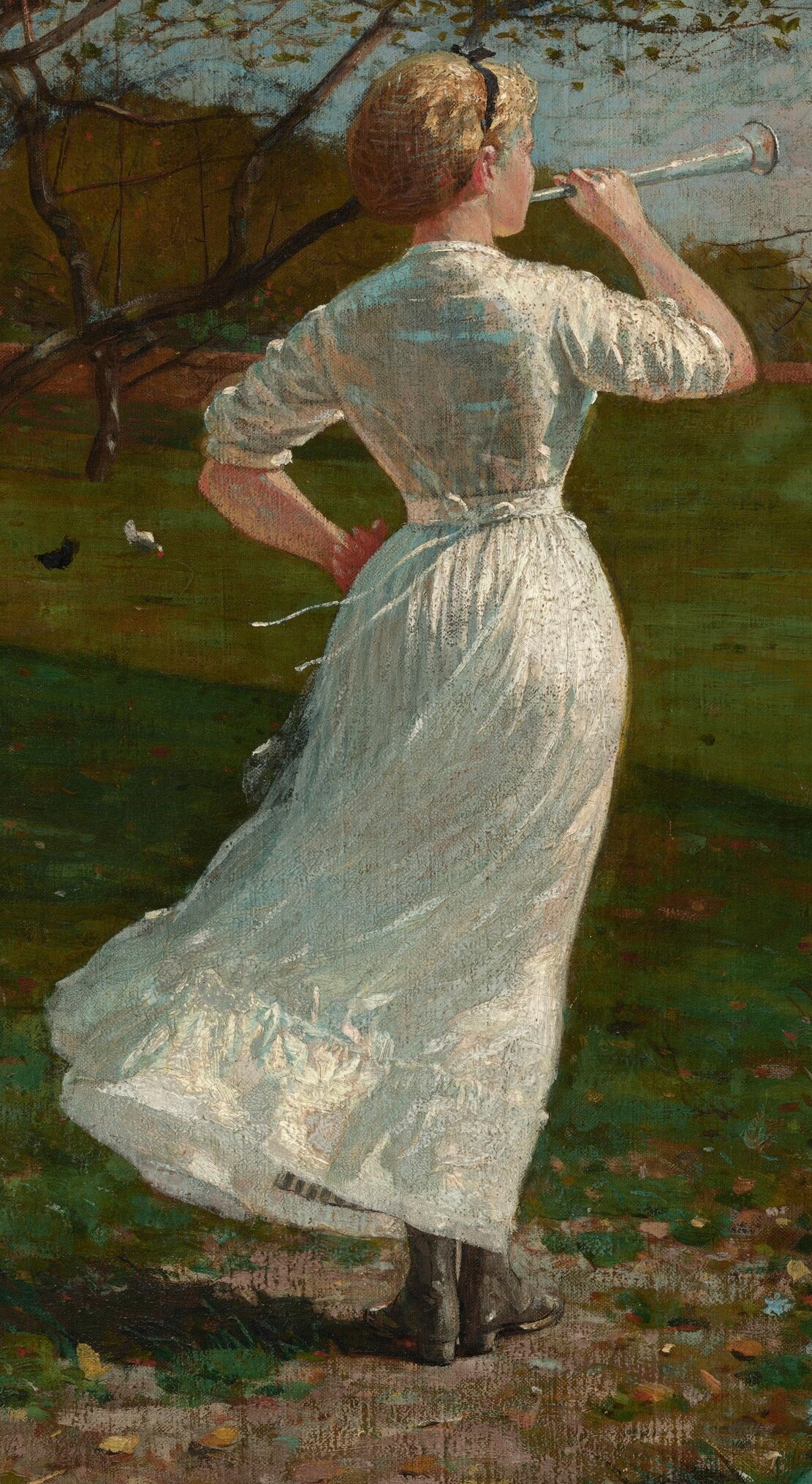
Winslow Homer painted 'The Dinner Horn' (Blowing the Horn at Seaside) in 1870, during his early transition from magazine illustration to fine art. The painting captures a moment that was already disappearing: before the telephone, a brass horn was how a farm wife called the hands to supper.
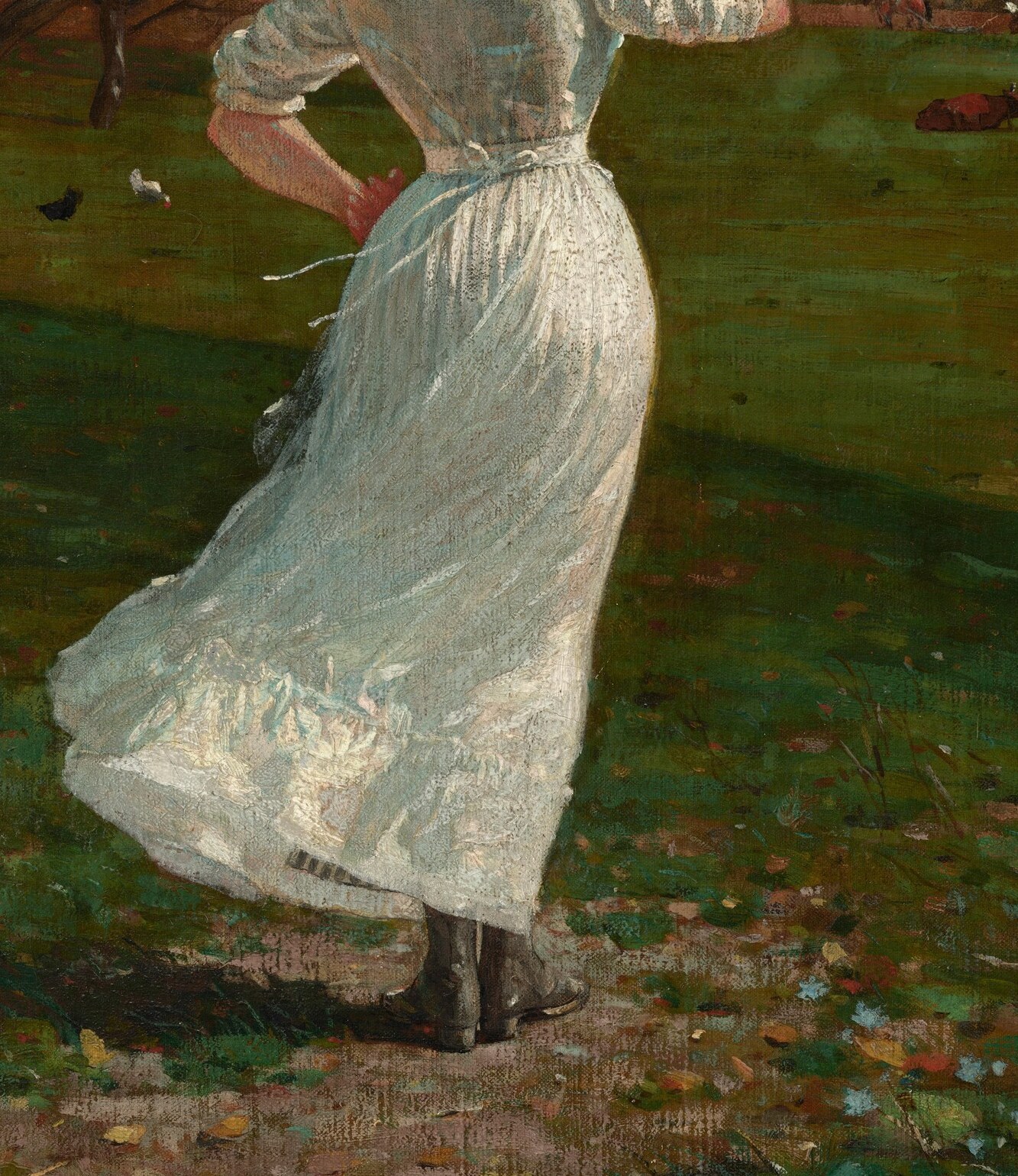
Find the woman in white at the center. She lifts the horn with the ease of long practice, her dress still catching the wind. The brass glints against the weathered wood of the building. Homer's brushwork is loose and quick, you can almost feel the light shifting. Look into the middle distance: two cows, a haystack, a pastoral world going about its business.
Homer spent years as a Civil War illustrator, drawing what he saw with a reporter's eye. After the war he began painting rural American life, favoring the unposed and the real over studio arrangements. This painting was made before he found his great subject, the sea. Here he is still watching the people who live on the land.
A small painting of a small moment, but the horn is a voice. It says: everyone is needed. Come home.
Details
Transcript
Before the telephone, one sound carried across the fields. A brass horn, blown from the kitchen door. The women of the house called the men from the harvest. Her dress is wind-swept. The horn is catching the light. Look past her. Two cows, a haystack, the fields. Winslow Homer painted this in 1870, before he turned to the sea. He was still an illustrator, learning how to paint the wind.