Mater dolorosa by El Greco
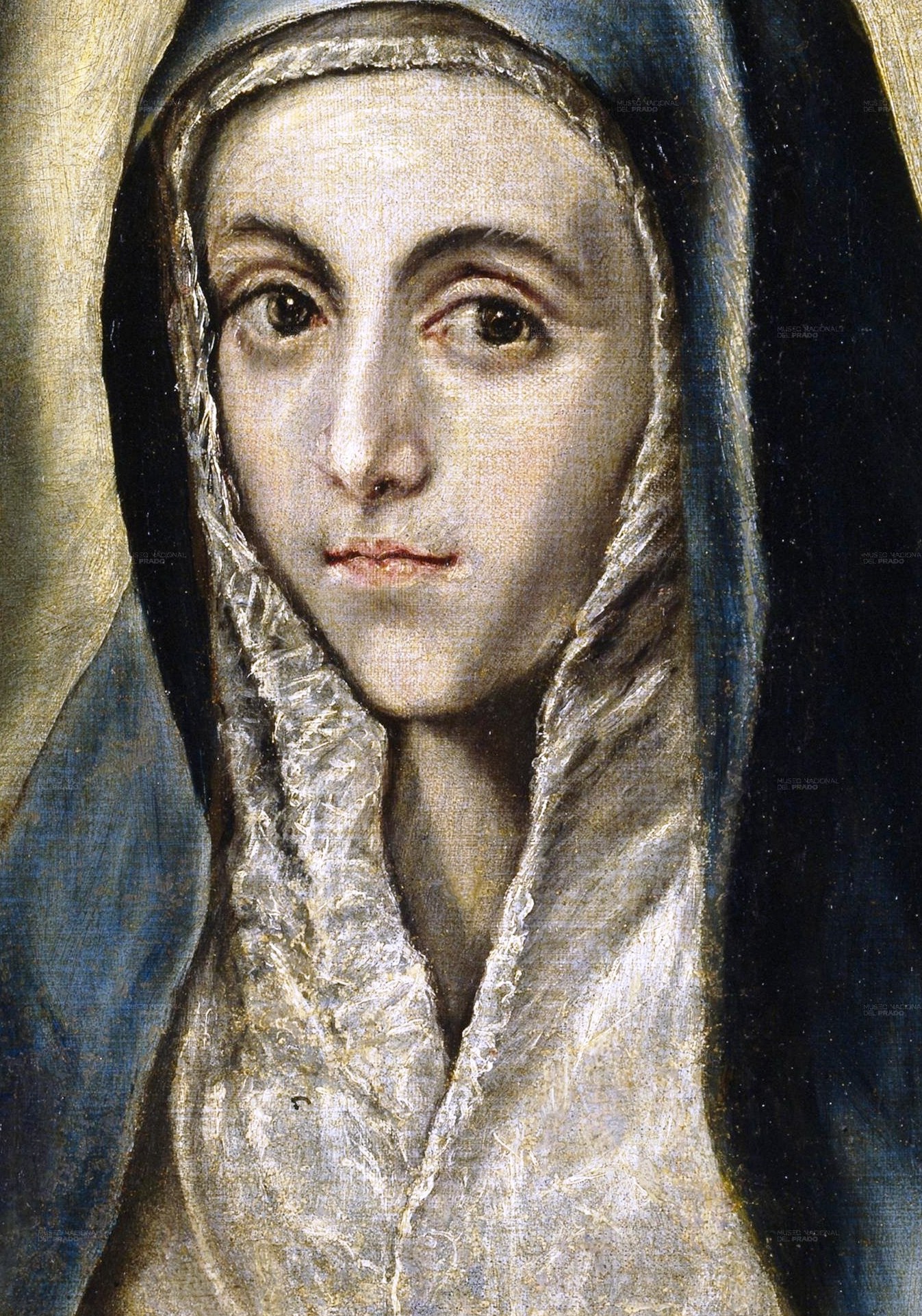
El Greco's Mater Dolorosa, painted around 1597, captures the Virgin Mary in deep sorrow, a poignant representation of the 'Our Lady of Sorrows' theme. This oil on canvas masterpiece is held in the Museo del Prado in Madrid.
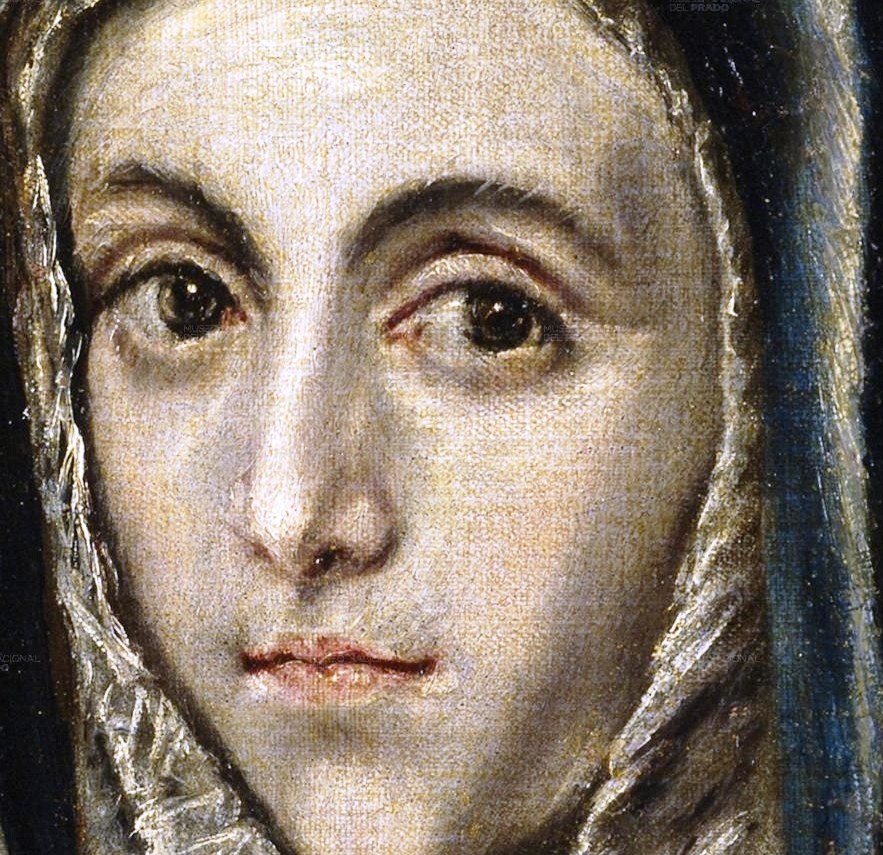
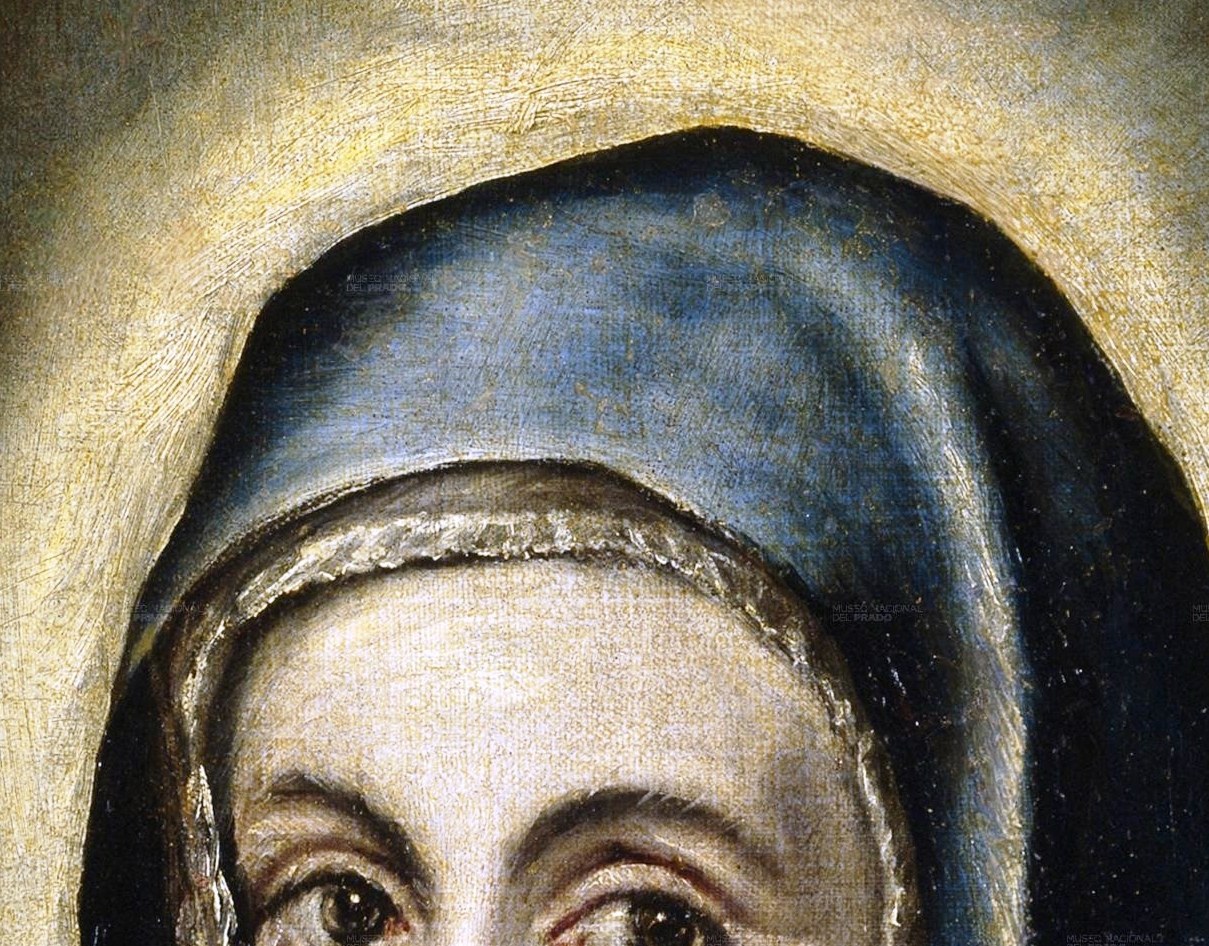
Notice the intense focus on Mary's face, where her direct gaze and slightly parted lips convey profound grief. El Greco masterfully uses chiaroscuro, strong contrasts between light and dark, to illuminate her features and draw the viewer into her emotional state. The delicate veil and dark robes emphasize her solemnity.
This painting is considered a later rendition of a similar composition by El Greco, with an earlier version housed in the Musée des Beaux-Arts in Strasbourg. El Greco, born Doménikos Theotokópoulos in Crete, developed a unique style, blending Byzantine traditions with Italian Renaissance influences, before settling in Toledo, Spain, where he created his most iconic works.
What emotions does Mary's expression evoke in you?
Details
Transcript
This is Mary, in her profound grief. She is the 'Mater Dolorosa,' Our Lady of Sorrows. Her direct gaze draws you into her suffering. The subtle parting of her lips suggests a suppressed cry. This painter used light and shadow to heighten her emotion. The work reflects El Greco's intense spiritual style.