The Legend of the Infant Servius Tullius by Bonifazio Veronese
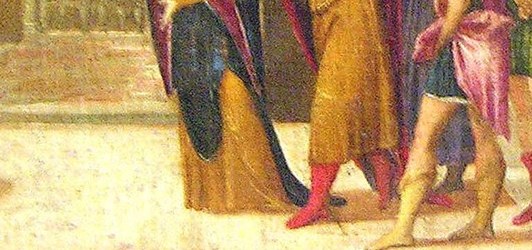
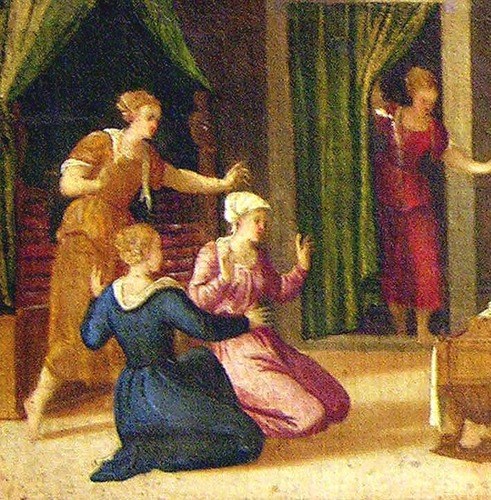
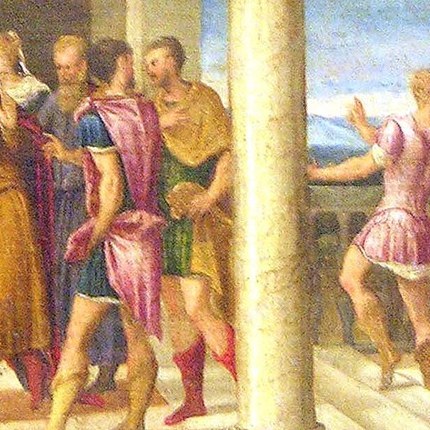
Bonifazio Veronese's "The Legend of the Infant Servius Tullius," painted around 1530, captures a miraculous moment from Roman history, now in The Metropolitan Museum of Art. The painting illustrates the story of Servius Tullius, a future Roman king whose humble beginnings were touched by divine favor.
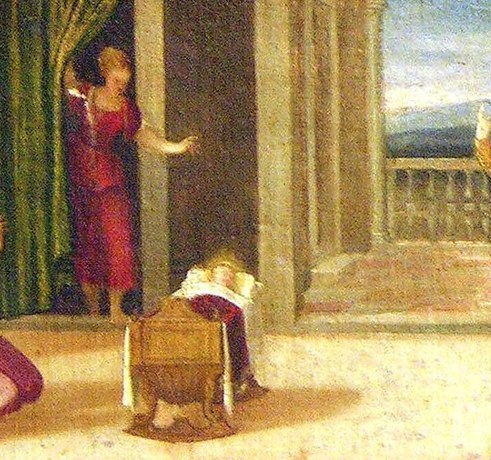
At the heart of the scene is the infant Servius Tullius, lying in his cradle. Above his head, a small, ethereal flame burns, a pivotal detail that most viewers might initially overlook. This divine fire was believed to prophesy his destiny, marking him as chosen for greatness.
Bonifazio Veronese was a significant Venetian painter of the 16th century, active during the High Renaissance. His work, characterized by its vibrant palette and dynamic compositions, influenced a younger generation of artists like Tintoretto. This painting is a testament to his skill in weaving grand narratives into compelling visual stories.
The flame, a subtle yet profound symbol, transforms an ordinary bedside scene into a moment of destined kingship. It reminds us how a single detail can unlock the entire meaning of a work.
Details
Transcript
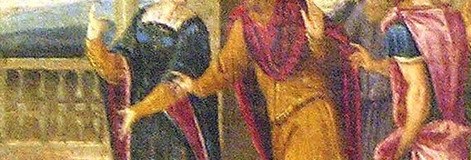
This is a pivotal moment in Roman legend, when a king is chosen. The future king, Servius Tullius, lies in his cradle. A noblewoman, Queen Tanaquil, interprets the divine omen. But look closely above the infant's head. A small flame burns, a sign of his destiny. This divine fire prophesied his rise from humble origins to king.