Le Havre by Boudin, Eugène
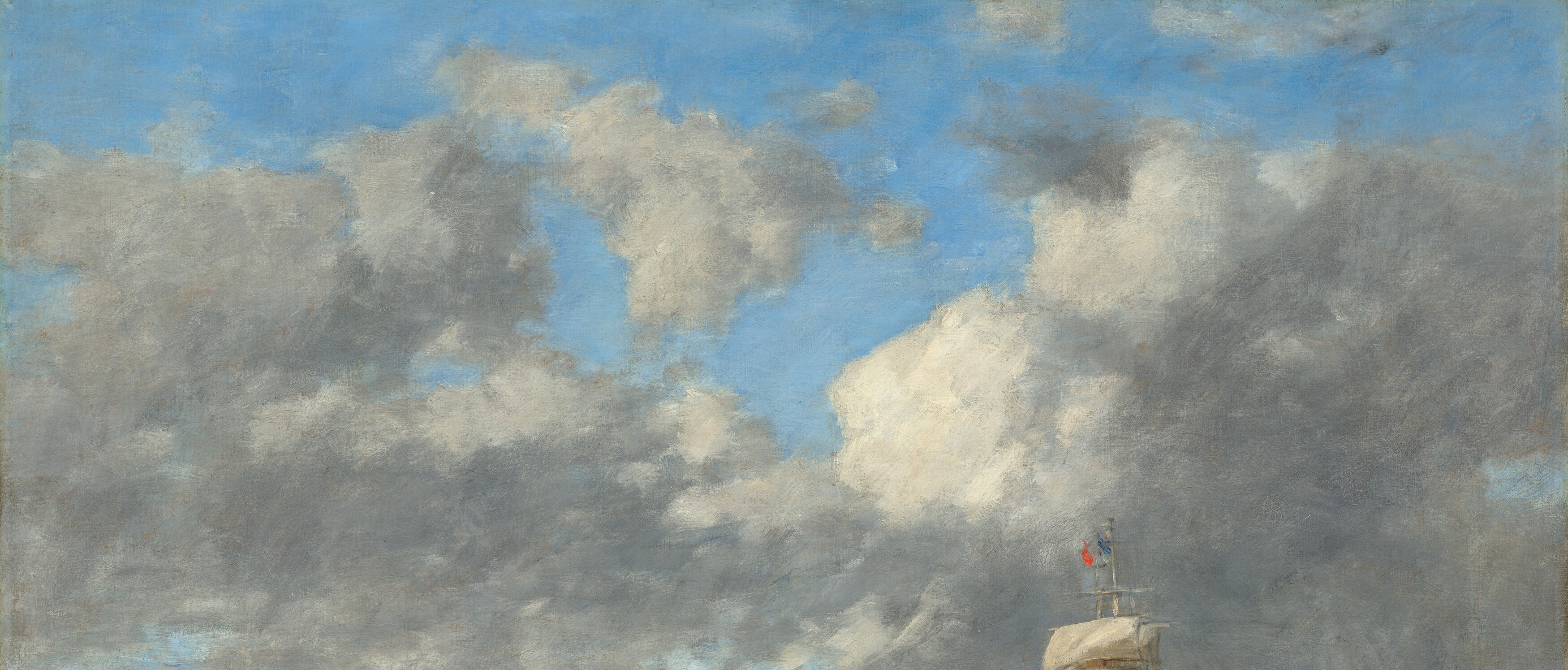
Eugène Boudin’s “Le Havre” (1883) is a masterclass in painting the open air, by the man who practically invented it. Before Monet made the practice famous, Boudin was setting up his easel on Normandy beaches, teaching a young Claude to look at light and water. This harbor scene distills everything Boudin loved: restless skies, choppy water, and the honest labor of boats and men.
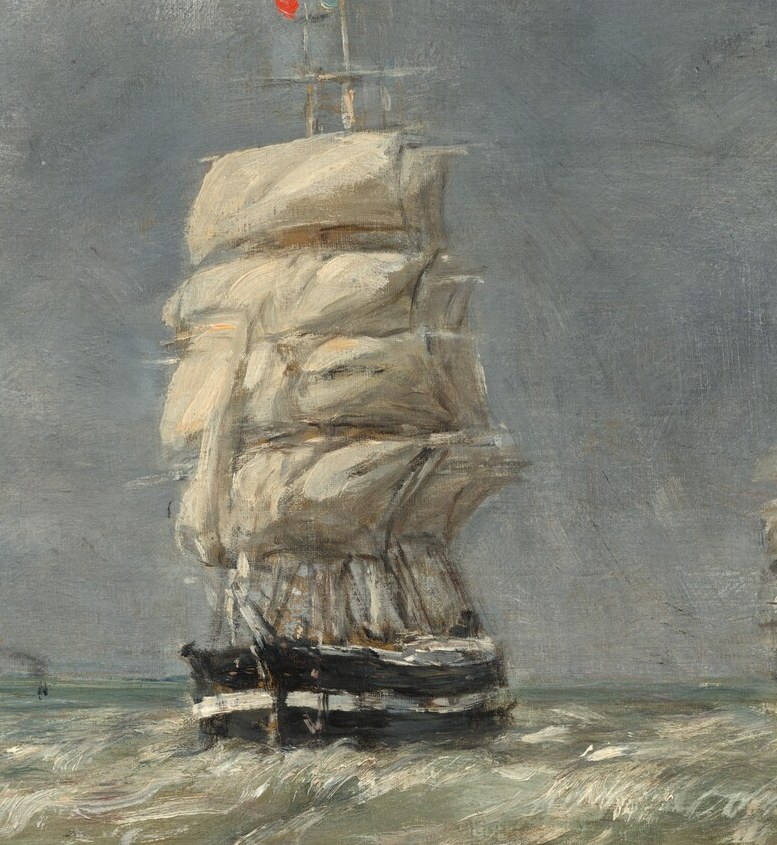
Watch the smoke from the central steamship. It streams sideways in a sharp breeze, the same wind that fills the sails and kicks up whitecaps. Boudin’s brushwork is loose but precise, building clouds with a few flicks of white and gray. The whole scene feels salt-sprayed and immediate, a single moment caught on canvas.
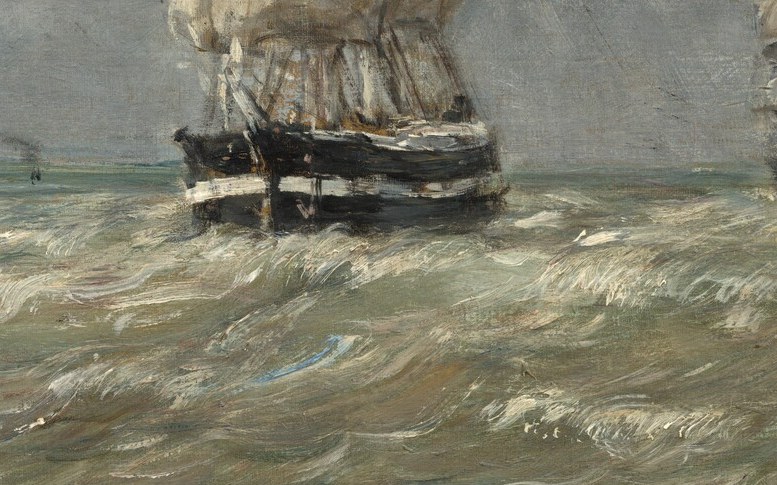
Then look down at the steamship’s hull, right near the waterline. Boudin signed his name and the date directly onto the dark paint of the vessel, an unusual, almost playful choice. It is a tiny detail most people scroll past, but it anchors the artist himself inside the scene he created.
Boudin died in 1898, largely forgotten outside France, but he left behind thousands of these small, luminous windows onto the coast. What humble detail in a painting has changed the way you see the whole work?
Details
Transcript
A busy port, painted in a wind that you can feel. Eugène Boudin was one of the first painters to work outdoors. Baudelaire admired him. Corot called him King of the Skies. He painted this harbor at Le Havre in 1883. A steamship cuts through, smoke trailing into a moving sky. Look at the hull of that steamship, right at the waterline. He signed his name here, as if branding the ship itself.