The Holy Family by Bronzino, Agnolo
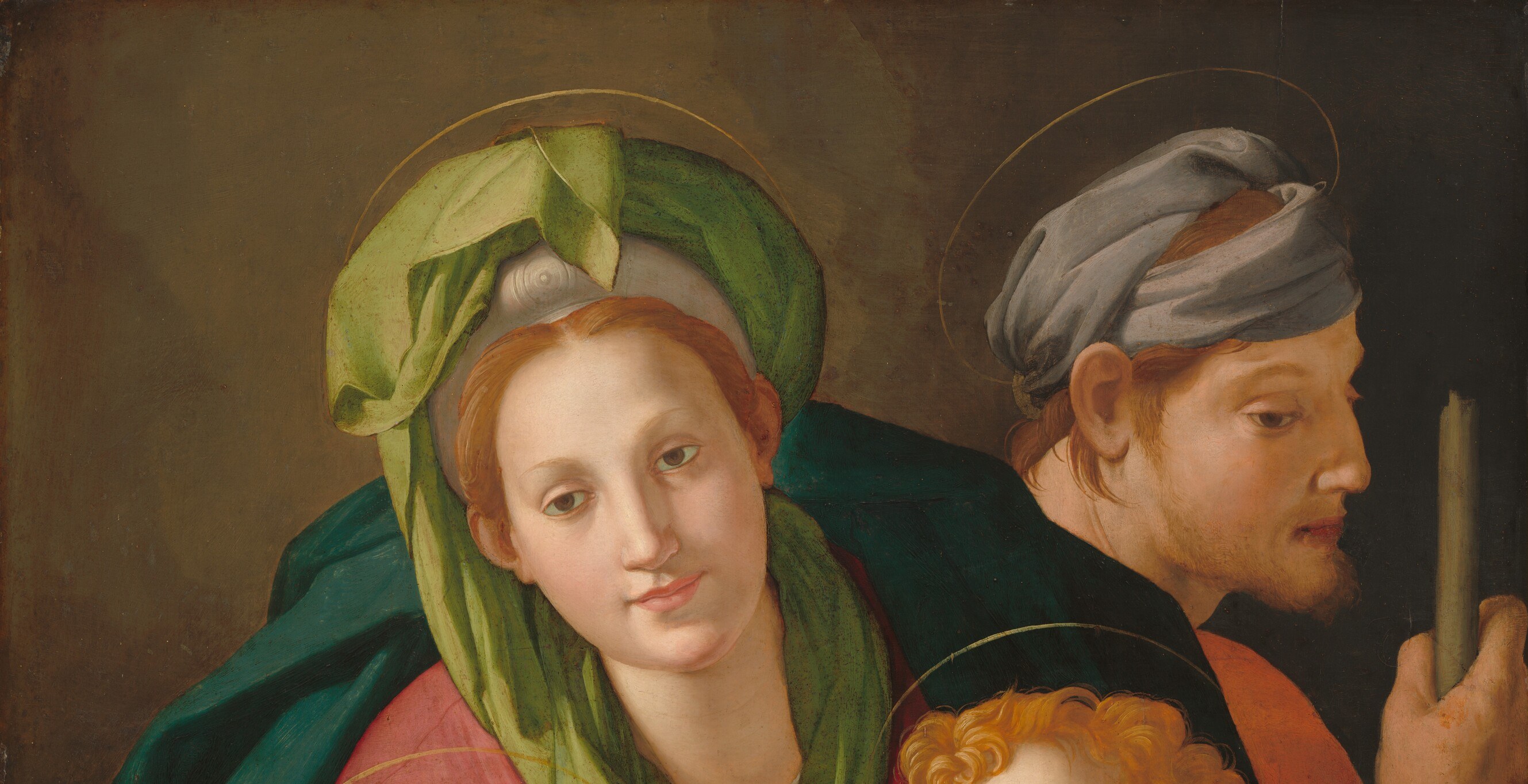
"The Holy Family" by Agnolo Bronzino, painted around 1527/1528, is not a tender domestic scene. It was made during one of the worst plague outbreaks in Florentine history, a year when the city was locked down and death was everywhere.
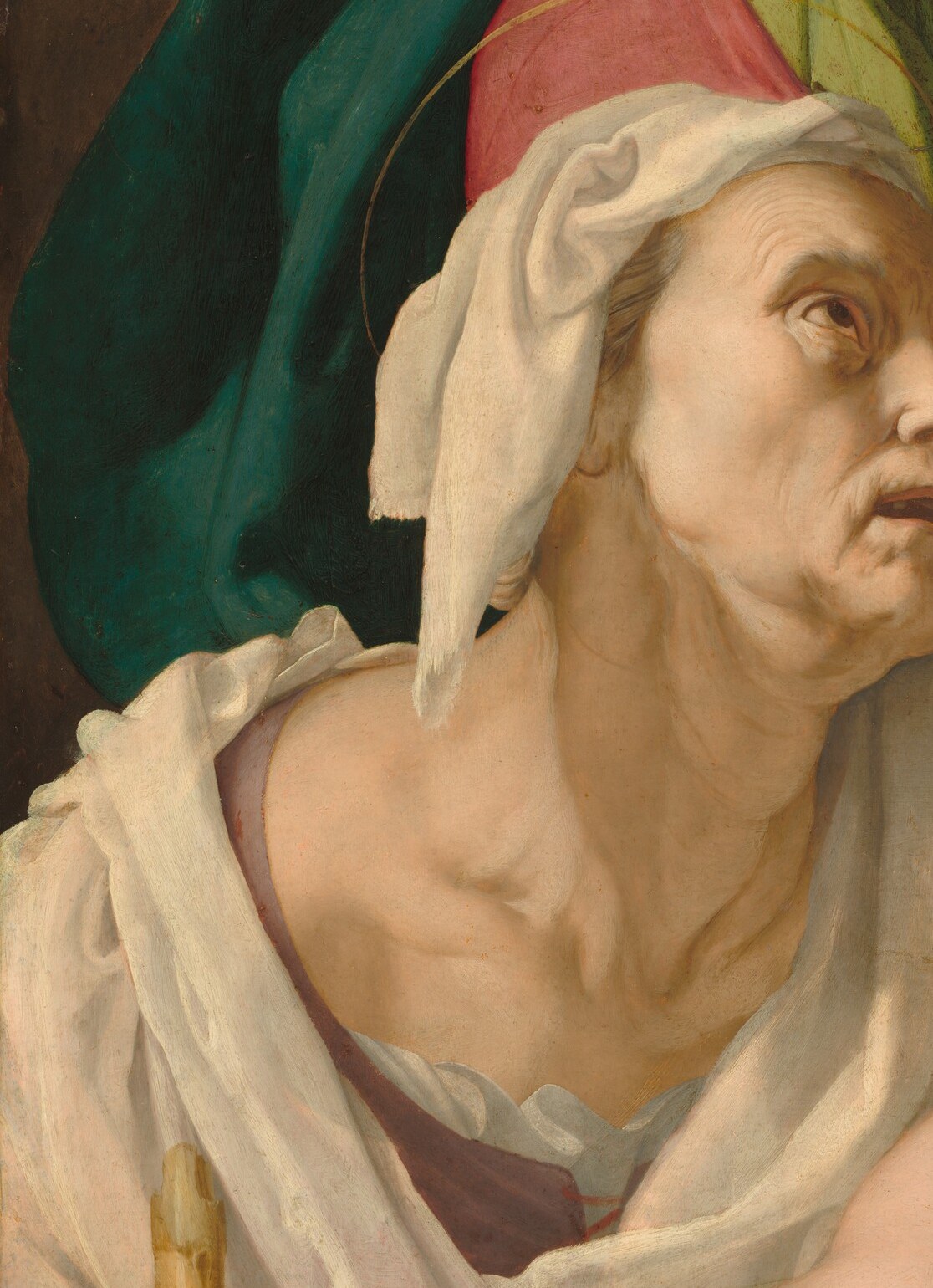
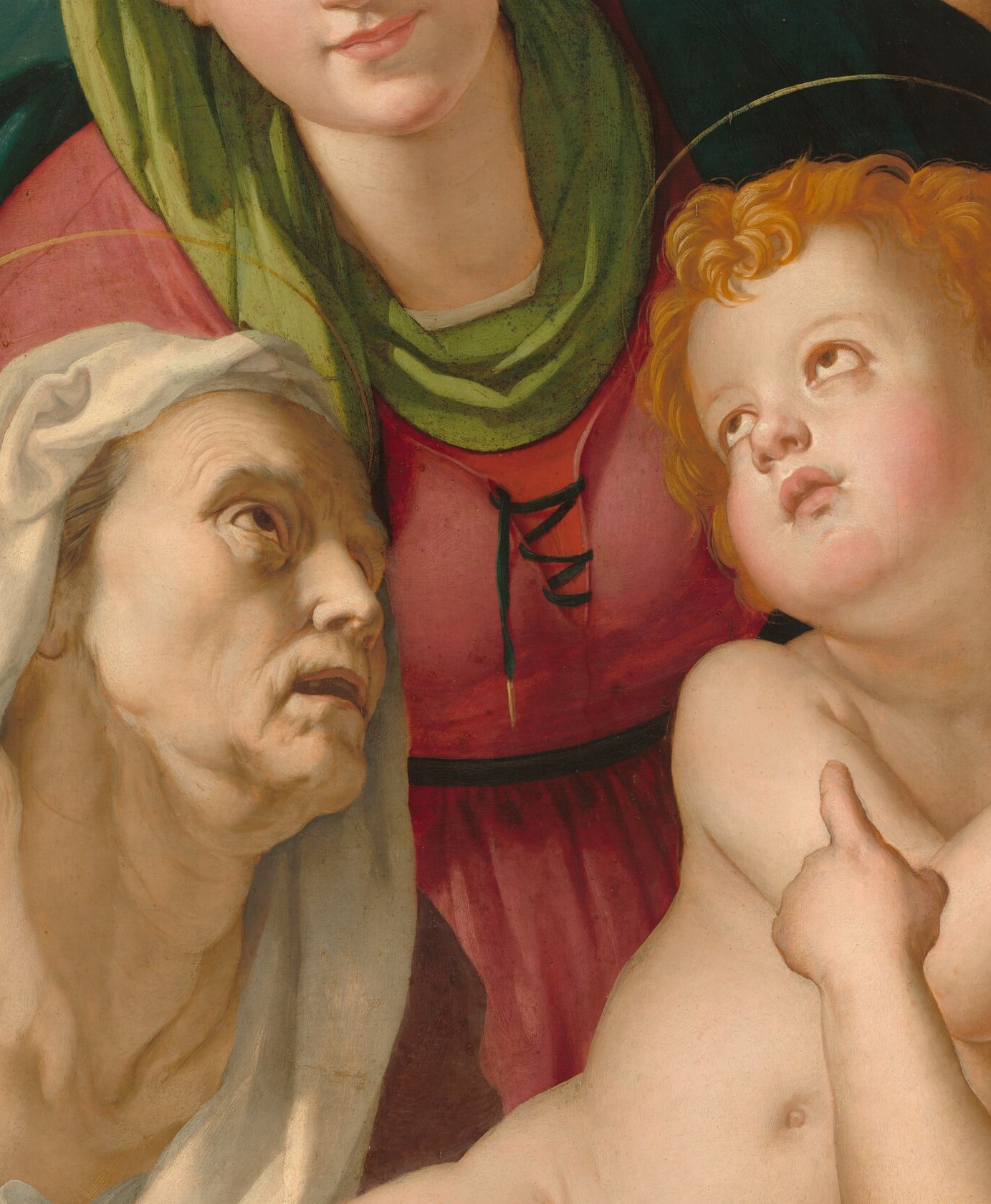
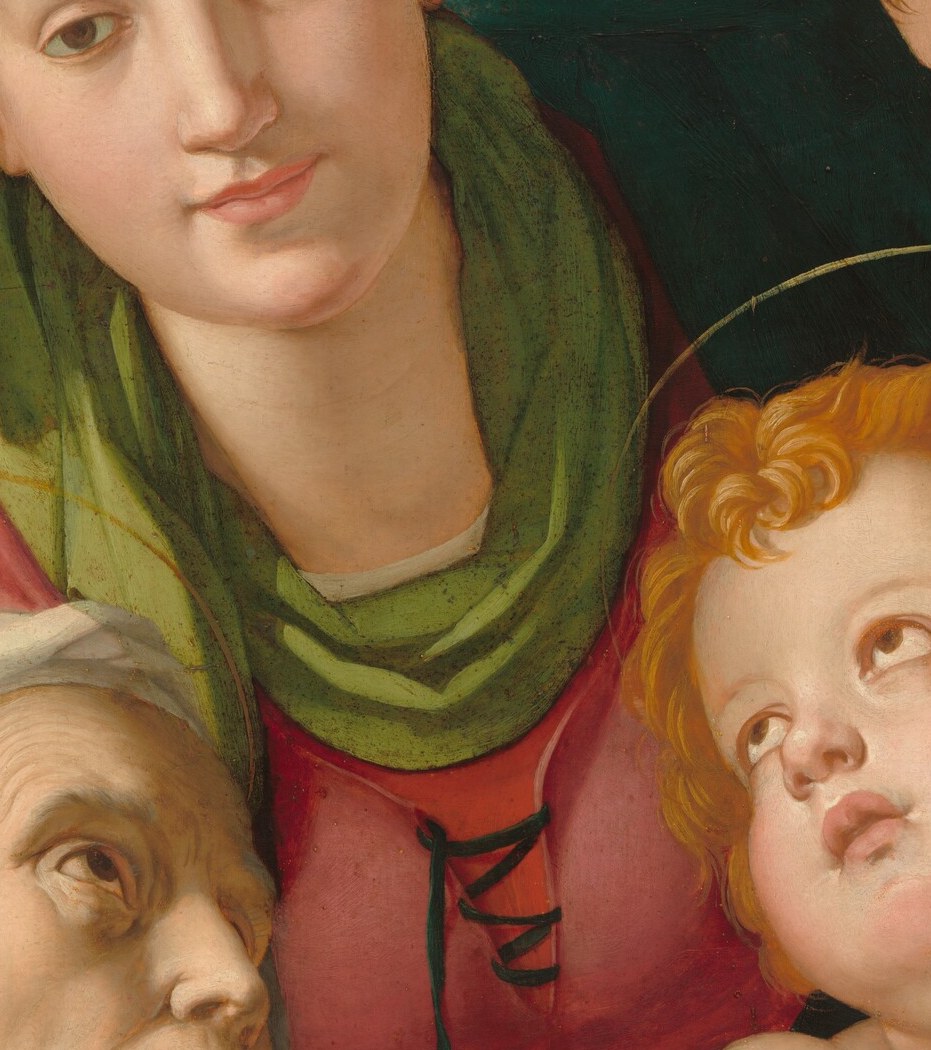
Look at Saint Anne, the older woman in the lower left. Bronzino gave her the most particular face in the painting. The deep lines around her mouth, her heavy-lidded upward gaze, the bright white wimple framing her weathered skin. In a composition of idealized Mannerist beauty, she is the one fully human presence, aged by a lifetime in a city under siege.
Bronzino was only about 24 when he painted this panel. He would later become the court painter to Cosimo I de' Medici, famous for icy, flawless portraits of aristocrats. But here, early and still learning, he chose to linger on the face of an old woman who has lived long enough to know loss and still looks up toward the child.
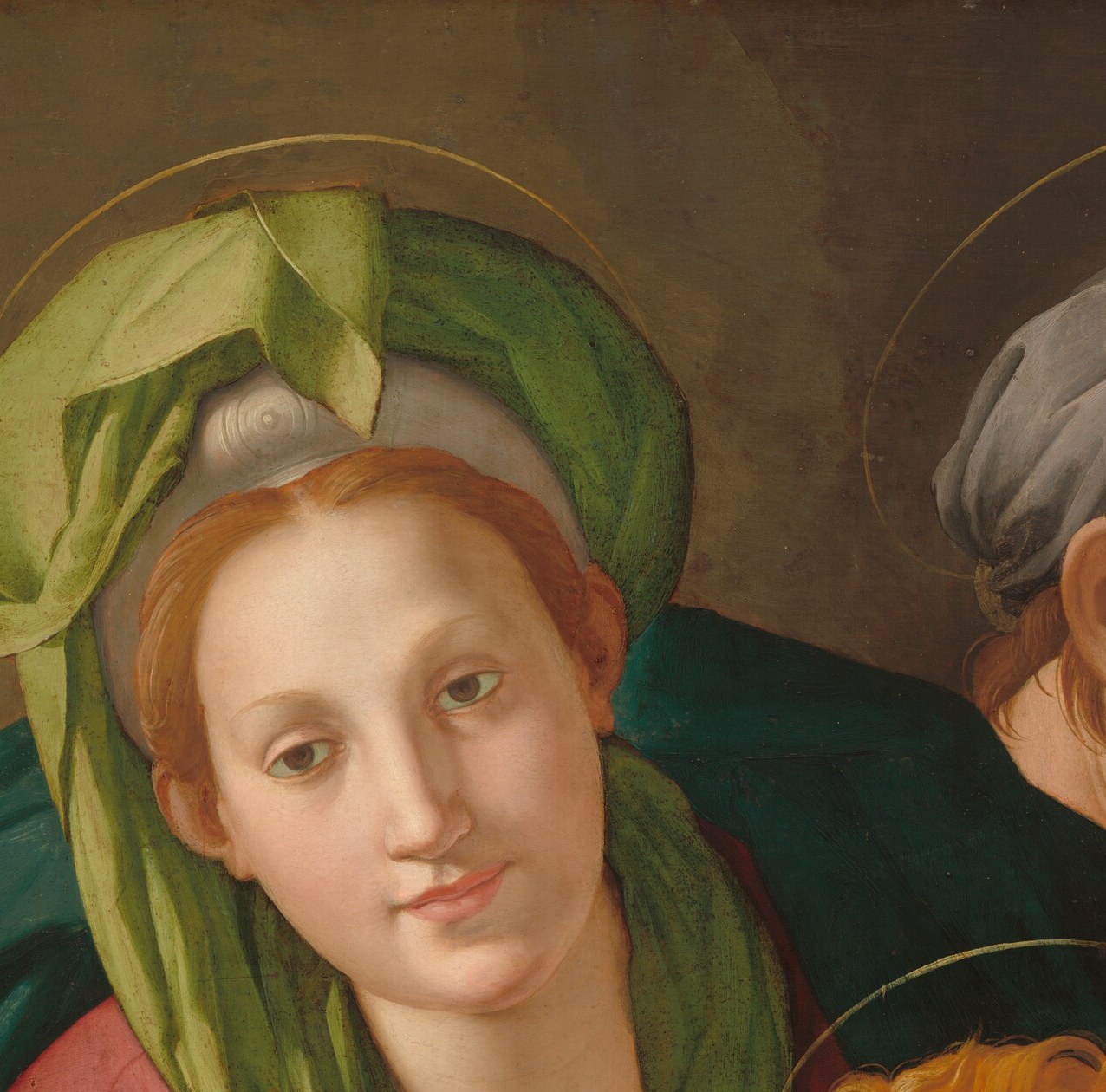
The darkened background, a signature Mannerist device, removes any comforting landscape. There is no horizon, no escape, just five figures holding each other in a compressed, airless space. The Christ Child's raised hand breaks the stillness, a small gesture of attention or blessing, while his wide eyes are the only truly alert ones in the room.
What do you see in Saint Anne's face?
Details
Transcript
Florence, 1527. The plague has shut the city down. A young painter, barely 24, sits in a quiet studio. He paints the Holy Family, but he gives the oldest face in the room his full attention. Beneath a bright white wimple, her skin is deeply lined. Bronzino painted her with the gravity of someone who has watched a city suffer. Her eyes look upward, past the infant, toward something she trusts. This was his first major commission. A family praying through a plague year.