Saint John the Baptist by Sellaio, Jacopo del
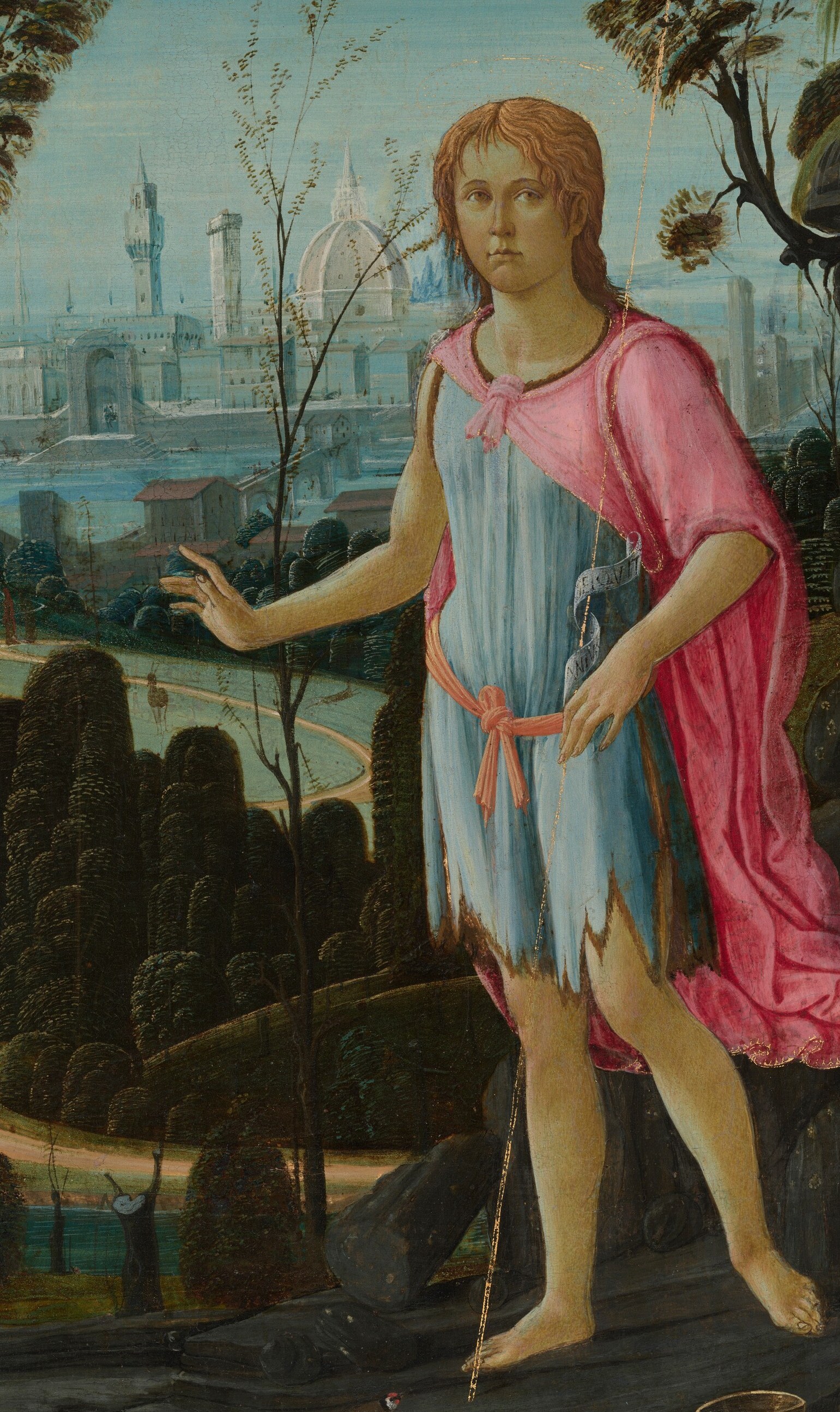
This is Jacopo del Sellaio's "Saint John the Baptist," painted in Florence around 1480, now housed in a private collection. It is a devotional image, but not one made for a monastery or a cathedral. It was made for a private home, and it bends a wild desert ascetic into a beautiful, idealized youth to suit the tastes of a wealthy Florentine patron.
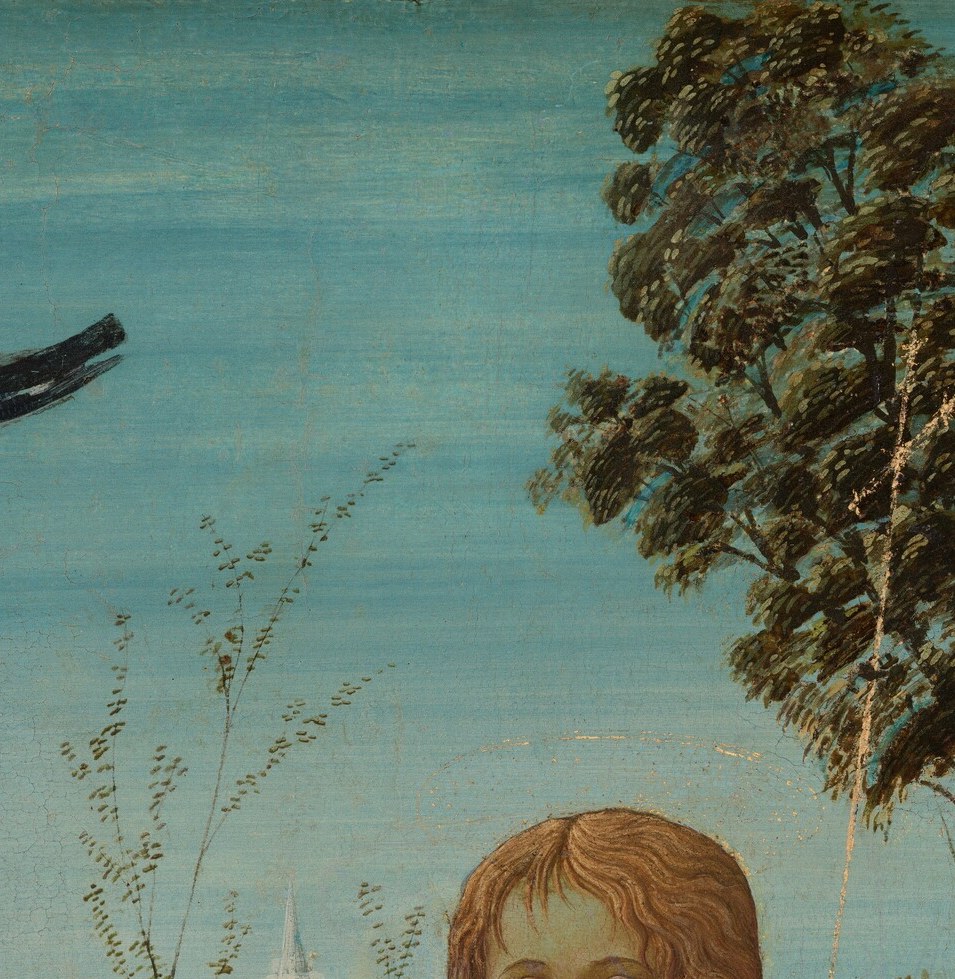
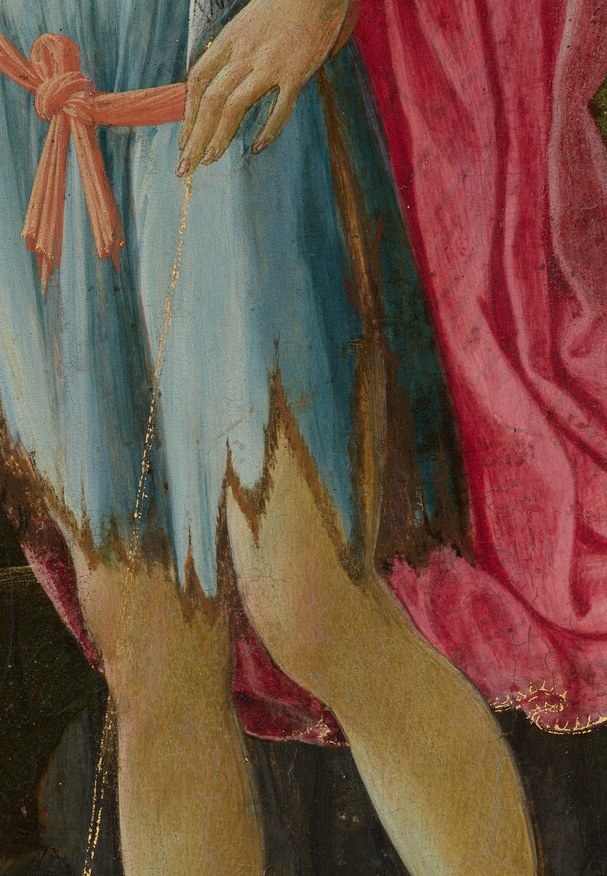
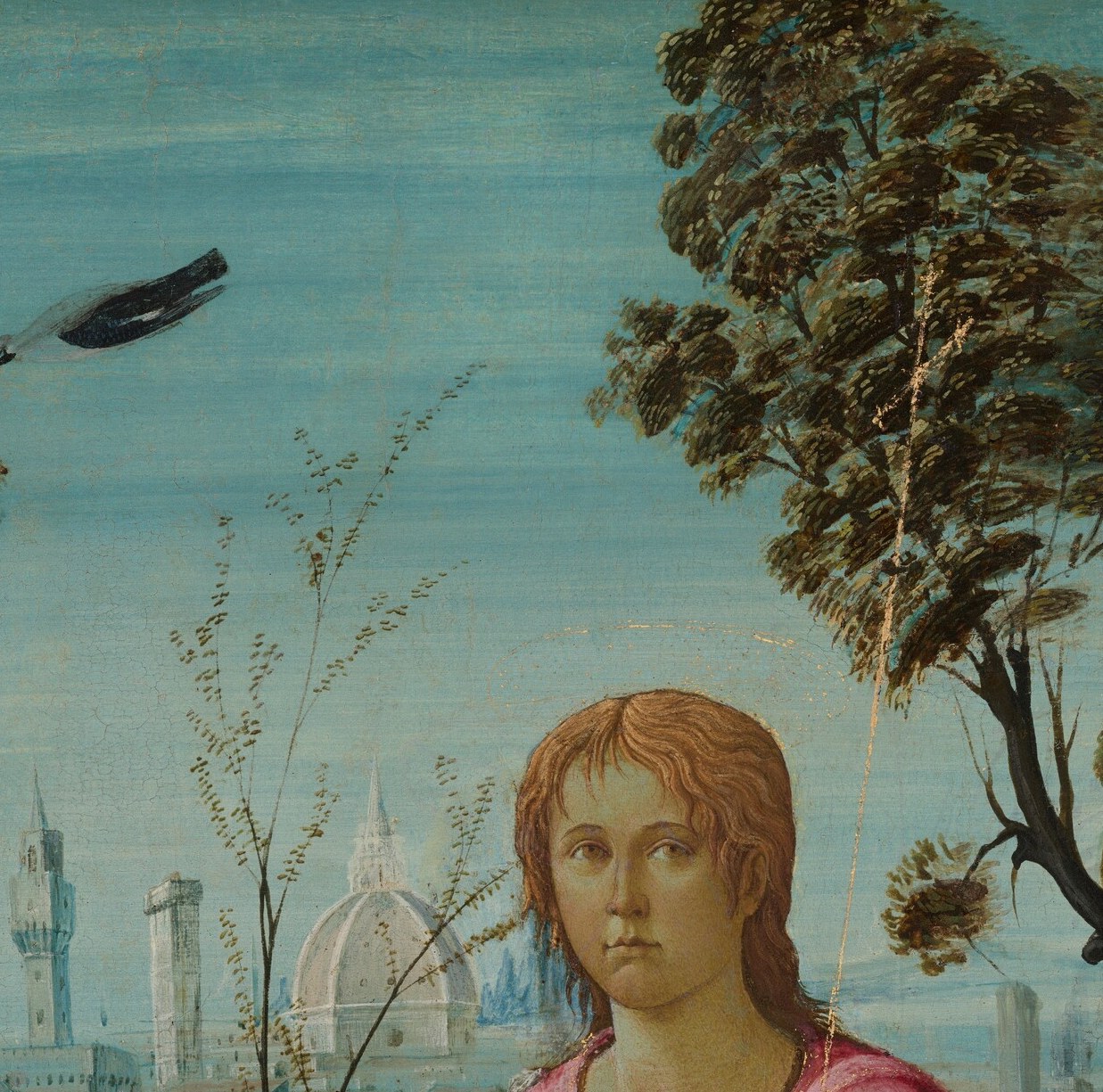
Look at the face. He is not gaunt, not sun-scorched. He is a gentle boy with downcast eyes and polished auburn curls. The vivid rose-pink cloak is a shocking luxury for a man who famously wore camel hair. Sellaio paired it with a cool blue-grey tunic, a jewel-like complementary set that announces the painting's real purpose: an object of beauty for a private chamber.
The traditional iconography is still present if you look closely. His extended right hand signals the herald's call to behold something greater than himself. His left hand grips the reed cross, his primary attribute, but its slender form nearly disappears into the folds of the pink drapery. The distant city and blue horizon visible behind him show the civilization he has renounced, while bare feet anchor him in the wilderness he chose.
Jacopo del Sellaio was a product of the Florentine workshop system, a capable painter who supplied the thriving domestic market for devotional art. Works like this one hung in bedrooms and private chapels, where a saint was expected to look less like a threatening prophet and more like a companionable, celestial presence. The painting ultimately reveals as much about 15th-century patronage as it does about the Bible. What does looking at this polished face do to the idea of a prophet?
Details
Transcript
You would expect a man who ate locusts in the wilderness. Instead, a gentle-faced boy with flowing auburn hair. His right hand directs you to look beyond him. His left holds a reed cross. You almost miss it against the pink cloak. This was not made for a church. It was made for a palace. A wealthy Florentine wanted a saint who looked like an angel in his bedroom. Sellaio gave the market exactly what it wanted: beauty over austerity.