The Miracles of Saint James the Greater by Nöel-Nicolas Coypel
Step into the dramatic world of "The Miracles of Saint James the Greater," an oil painting created by French artist Nöel-Nicolas Coypel in 1726, now held at The Cleveland Museum of Art.
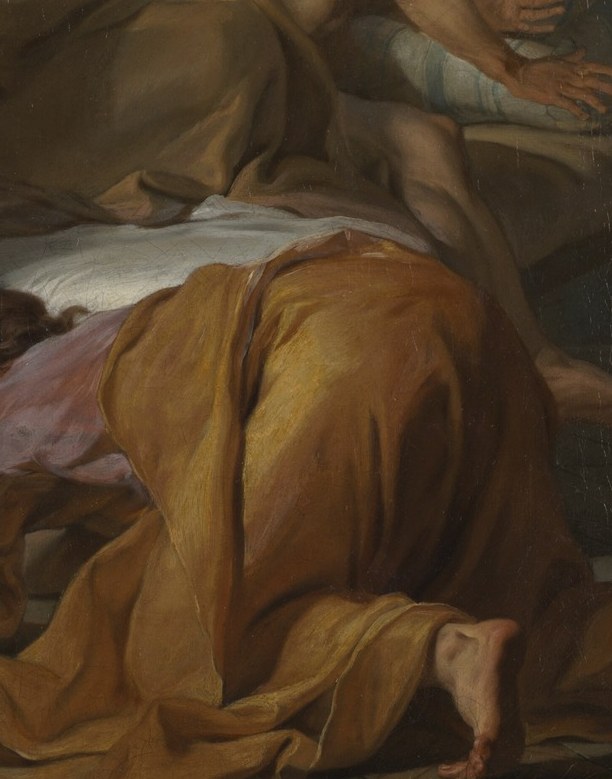
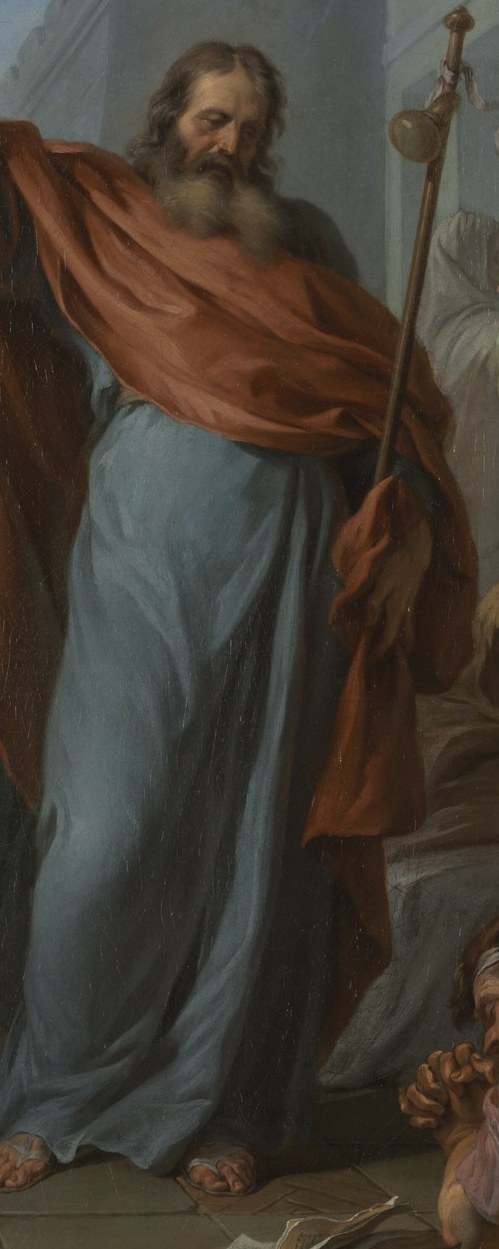
Coypel masterfully uses strong chiaroscuro, contrasting the luminous blue robe of Saint James with deep, defined shadows to heighten the emotional intensity. Observe the reactions of the figures around the saint, from astonishment to reverence, and the subtle details like the open book on the ground, which suggest the interplay of faith and scripture.
This work is a prime example of early 18th-century French religious narrative painting. Coypel, part of a family of painters, skillfully employed theatrical gestures and dynamic lighting to convey spiritual awe, a common practice in post-Rococo religious art.
What details do you find most compelling in this powerful depiction of divine intervention?
Details
Transcript
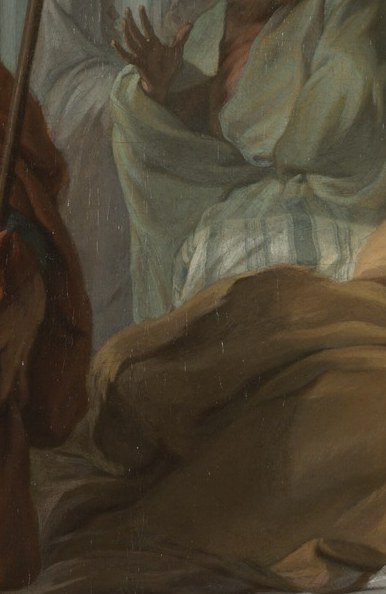
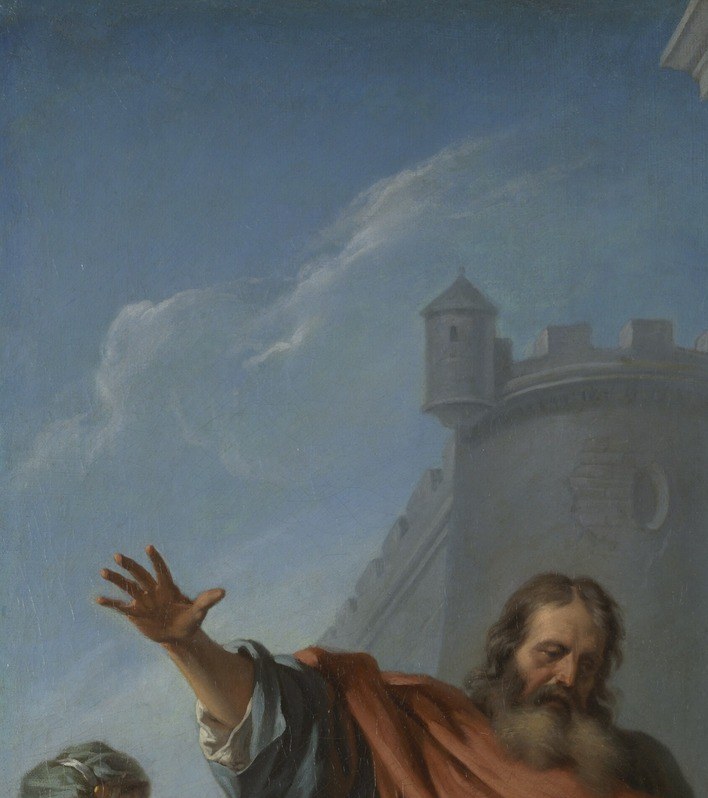
This painting shows a miracle. Can you feel the drama? Dramatic shadows heighten the emotion of the moment. Saint James commands the scene, his robe a luminous blue. His outstretched hand seems to invoke the divine. Around him, figures react with astonishment and awe. This work was painted by Nöel-Nicolas Coypel in 1726. It exemplifies early 18th-century French religious art.