The Resurrection by http://www.wikidata.org/.well-known/genid/224ca122055ffcc52fe79749ed5dcf50
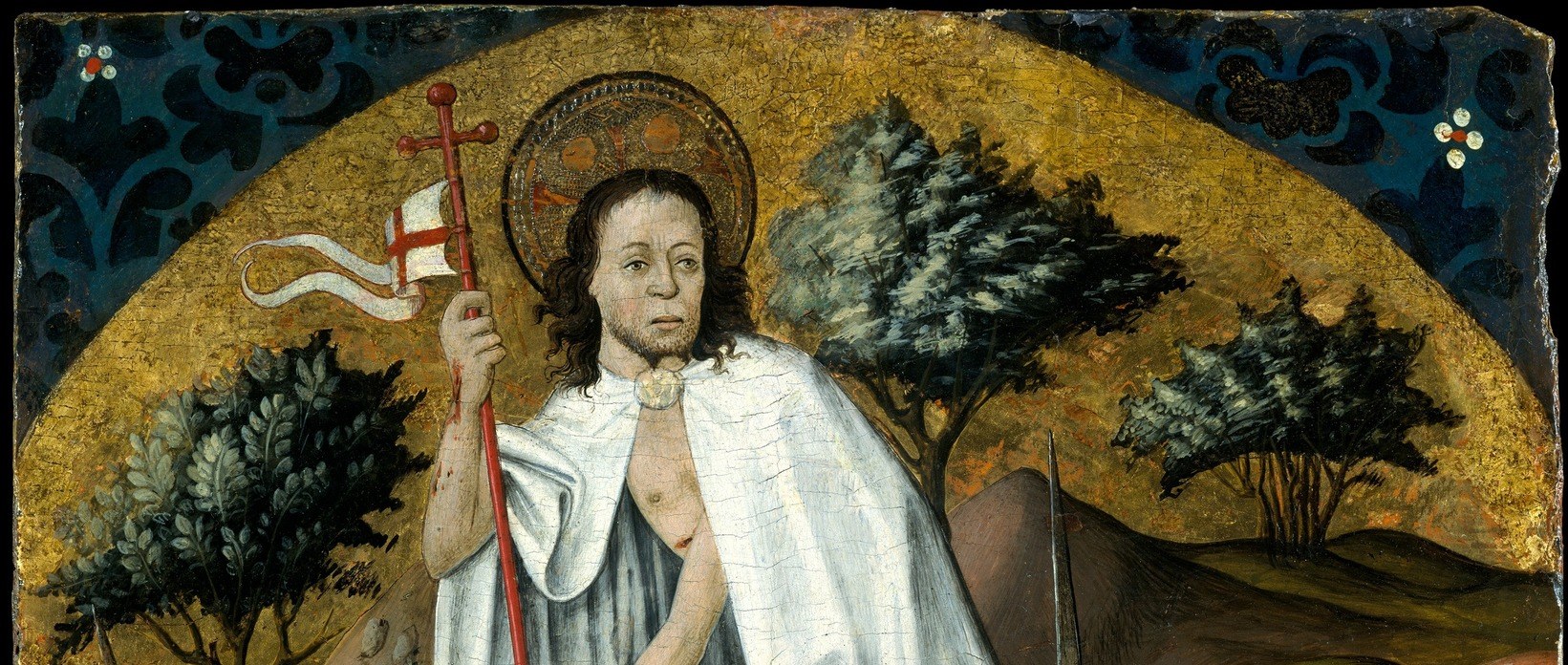
This is "The Resurrection," painted around 1500 by an artist known only as the Master of the Mansi Magdalene. It now hangs in the National Gallery, London.
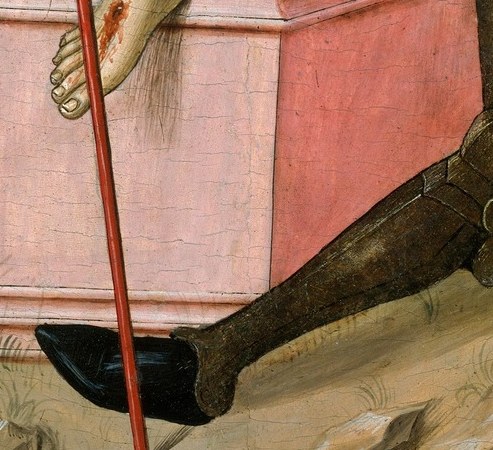
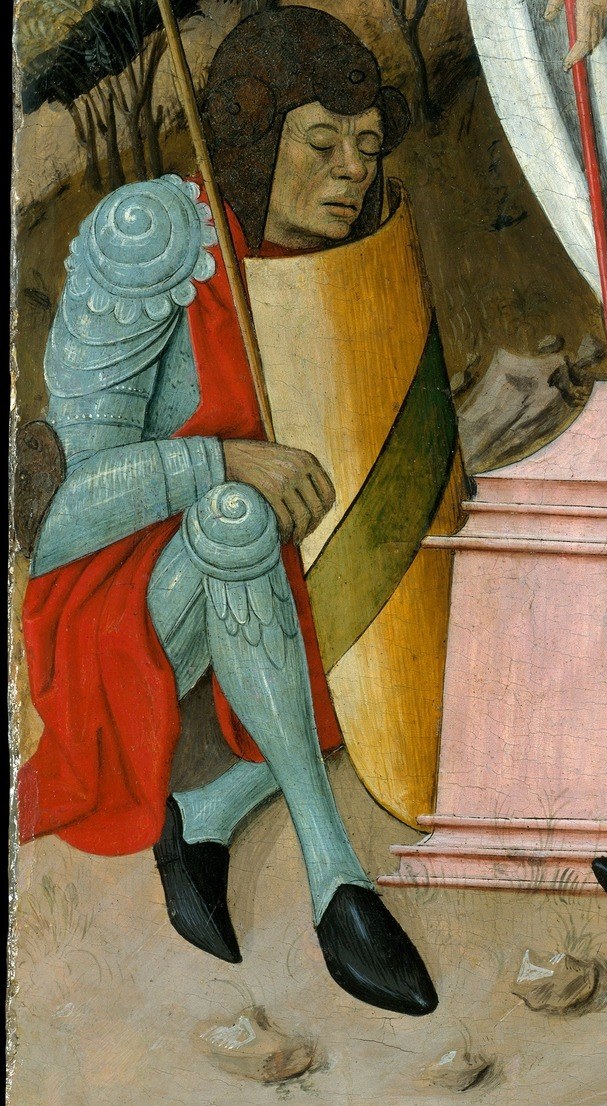
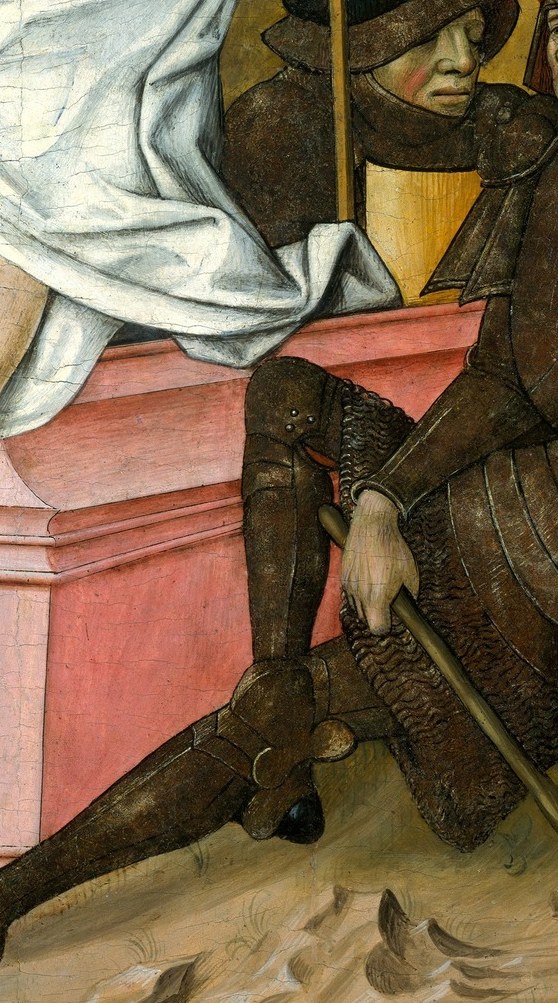
Look at how the artist places Christ's bare feet squarely on the edge of a pink stone sarcophagus. That warm, almost tender color of the tomb is unusual. The white banner with the red cross marks this as the moment of victory, not grief. Below, four armored soldiers react with a mix of dazed confusion and quiet awe, their weapons suddenly useless against the unarmed figure rising above them.
In 1815, this painting sold at auction for 260 pounds to William Beckford, the wealthiest man in England. Beckford had recently fled polite society after a public scandal and was living in self-imposed exile, constructing a vast tower called Fonthill Abbey where he kept his art collection behind locked doors. That 260-pound sale price, roughly 22,000 pounds in today's money, was widely reported in the press. For early 19th-century Britain, a sum like that for an Old Master sacred painting was genuinely newsworthy.
A Renaissance image of a mystery, sold to a disgraced millionaire and sealed in a private tower. What do you think the anonymous painter would have made of that?
Details
Transcript
A resurrection, painted in oil around 1500. Christ stands barefoot on a pink stone tomb. In 1815, a British collector bought it for 260 pounds. That is about 22,000 pounds today. The winner at auction was William Beckford. He was the richest man in England, fresh from scandal. He hung it in his tower, locked away from the public. The price made news. Sacred art, bought like land.